
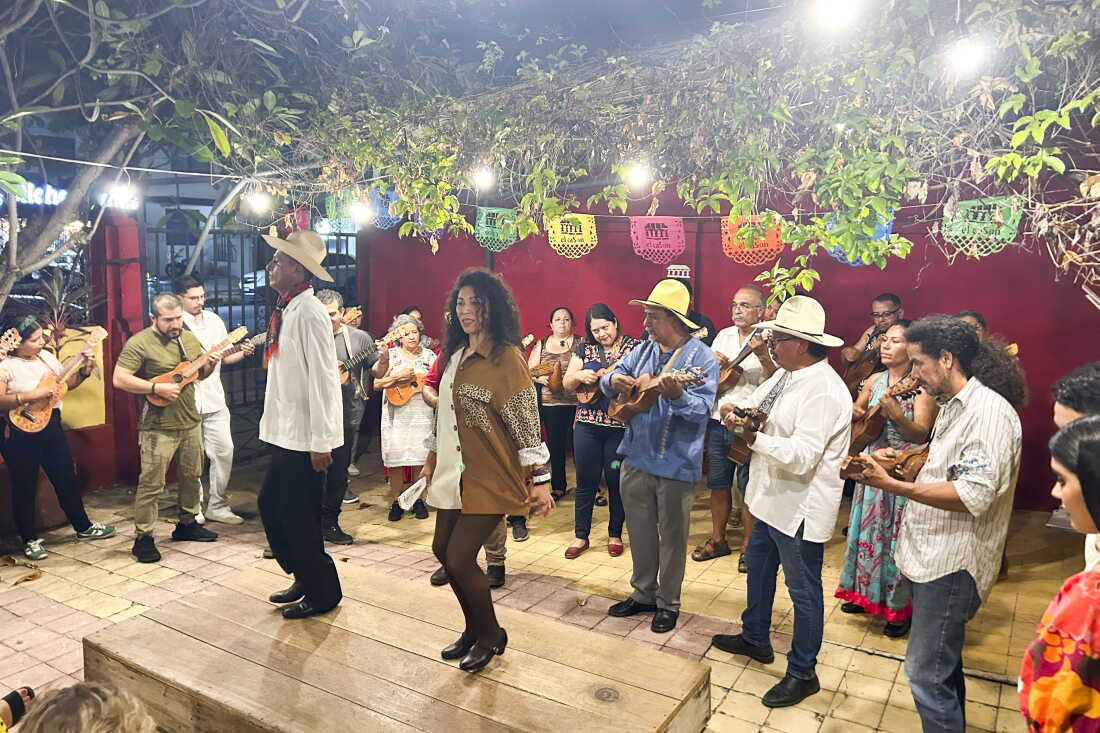
In Veracruz, Mexico, music is a source of local pride and identity. The city’s clock tower chimes ‘La Bamba’ on the hour, every hour. Unlike the 1958 rock ‘n’ roll version by Ritchie Valens, the rendition in Veracruz is rooted in tradition. This iconic song belongs to the regional music genre known as son jarocho, which is central to the communal festivities called fandangos.
The Origin of Fandangos
The fandango has deep historical roots. It emanates from the diverse populations that settled along the Gulf of Mexico after Hernán Cortés founded Veracruz as Mexico’s first port in the 1500s. Fandangos embody a lively mix of European, Caribbean, and Indigenous influences. These gatherings, where musicians, dancers, and spectators come together, have been around for over 300 years and are becoming internationally popular.
A Typical Fandango Night
A Veracruz fandango is a vibrant affair. On a warm August night, couples dance on wooden platforms called tarímas, their movements punctuating the rhythm of the music. Performers use a variety of instruments, like the quijada, a donkey’s jawbone, and the jarana, a small eight-string guitar made from Spanish cedar. As the night progresses, audience members join these jam sessions, turning the gathering into a celebration of music and dance.
A Rebirth of Son Jarocho
In the 1960s and 1970s, son jarocho faced decline. It was deemed unsophisticated, akin to the delta blues in American juke joints. Fandangos were small, family-centric events. Gilberto Gutierrez, a pioneering figure in son jarocho and a founder of the band Mono Blanco, recalls this period of dormancy.
Modern-Day Resurgence
Today, a search for authenticity is fueling the resurgence of son jarocho. In Veracruz, fandangos honor life events such as baptisms, birthdays, and saints’ days. At the core of the music is el zapateo, a form of tap dancing that serves as both expression and percussion. As Ada Veronica, a veteran dancer, explains, stepping onto a taríma signifies both respect and proficiency.
Global Spread and Community
Son jarocho is transcending borders, echoing in countries like Spain, Finland, and the United States. In cities like Los Angeles and New York with large Latino communities, it finds a new audience. Essential to the fandango experience is a sense of community, or convivencia, which translates to ‘alive together.’
Paloma Rizo, a 28-year-old teacher and passionate jarana player, captures this sentiment: ‘You simply feel it, you live it.’ The collaborative spirit invites participants to become part of something larger.