
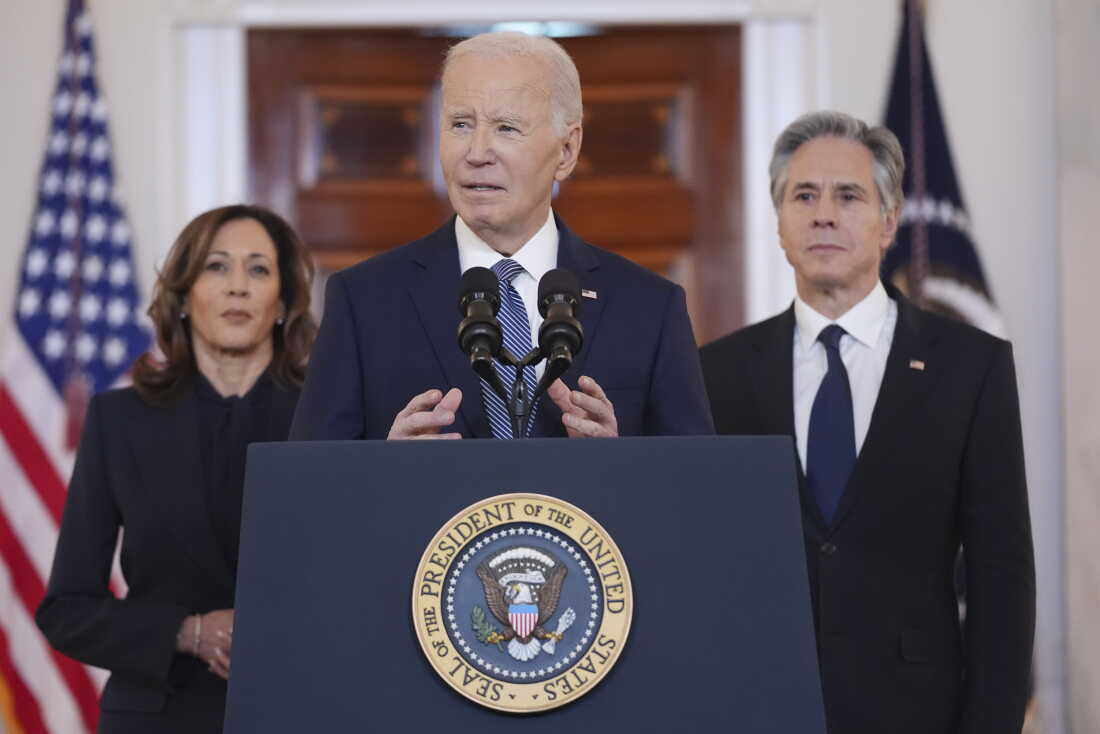
On January 15, 2025, President Joe Biden, joined by Vice President Kamala Harris and Secretary of State Antony Blinken, addressed the White House to discuss a new ceasefire deal in Gaza. This marked a notable moment in ongoing global diplomacy.
Journalist Akbar Shahid Ahmed, known for scrutinizing U.S. commitments and actions, has concentrated his efforts on this topic over several years. At HuffPost, he covered Biden’s promise to isolate Saudi Arabia and in 2019, reported from Israel and Gaza. Following the Hamas attack on Israel on October 7, 2023, and the intense Israeli military response in Gaza, Ahmed turned his attention back to Washington. He found that experts voiced objections, dissent was documented in memos, but ultimately a small circle around Biden decided the course of action.
Ahmed’s findings led him to write Crossing the Red Line: Biden, His Advisors, and Israel’s War in Gaza. This book draws from interviews with over 150 officials involved in U.S. policy to dissect the Biden administration’s backing of Israel and the resulting impacts on Gaza. Ahmed stated the administration often responded slowly, allowing decision-making to rest with top-level officials.
After the U.S. presidential election in 2024, discussions occurred among key figures about possible U.S. complicity in war crimes. Individuals like Brett McGurk and Jack Lew engaged in these talks. Despite public narratives suggesting restraint, internal discussions indicated Israel’s intent to continue its campaign, even as it reached Rafah. Ahmed highlighted a culture of avoiding clear conclusions about Israeli actions, hindering timely pressure to modify Israel’s approach.
The topic remained pertinent after Biden’s term. In September 2025, a U.N. commission concluded that Israel committed genocide in Gaza, a finding Israel rejected. The country denies war crimes allegations, citing its own investigations into misconduct.
Ahmed’s narrative points out the U.S. provided substantial military aid to Israel, impacting the ongoing conflict. Biden’s promise of consequences for crossing a ‘red line’ turned out to be more flexible than initially stated.
President Biden expressed skepticism about Palestinian casualty reports, while some senior officials questioned the severity of conditions in Gaza. Ahmed implies that an internal lack of empathy towards Palestinian suffering might have influenced policy outcomes, despite efforts to address these issues from various perspectives within the administration.
Several officials from this era remain active and plan to publish their own accounts in book form. Ahmed insists that understanding the private deliberations, doubts, and responsibilities of U.S. policymakers is crucial.
Ahmed believes Biden’s actions in the region had broad consequences, potentially reshaping America’s approach to foreign policy. Officials continue to hold leadership roles, suggesting an ongoing influence on future U.S. policies.
The adaptation of this interview, edited by Adriana Gallardo and Majd Al-Waheidi, provides further insights into the complexities of U.S. engagement in Gaza during the Biden administration.