
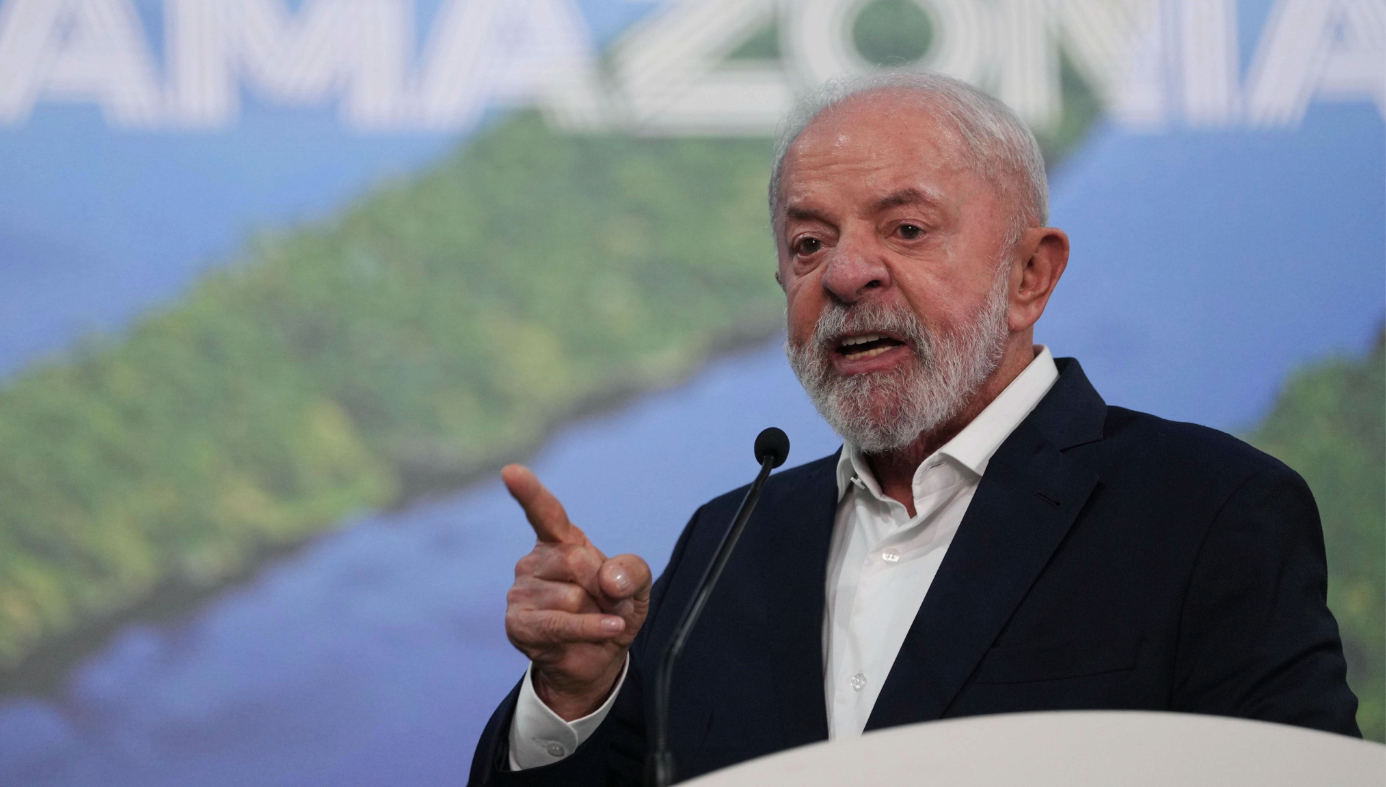
Brazil, under the leadership of President Luiz Inacio Lula da Silva, stands at a critical juncture as the largest nation in Latin America prepares for an important election in October. This election will test the influence of President Trump’s new Monroe Doctrine across the continent.
Recent elections in Colombia, Peru, Honduras, Costa Rica, and Chile have already felt the Doctrine’s impact. October, however, represents a significant test as Brazilian citizens decide whether to continue with Lula or shift towards a more conservative leadership.
The application of the Monroe Doctrine in Brazil is challenging. The authoritarian regimes in Cuba, Nicaragua, and Venezuela serve as stark warnings of the consequences associated with left-leaning governance, which could help U.S. efforts against Lula. Despite a current low point in U.S.-Brazil relations, an olive branch was extended by President Trump to Lula in September 2025. Their promising brief encounter and subsequent chemistry did not last.
In early May, Lula had a closed-door meeting with Trump in the White House to evade any complications similar to the ‘Zelensky effect.’ Following this, significant changes occurred. In late May, Secretary of State Marco Rubio identified Brazilian criminal factions, Primeiro Comando da Capital and Comando Vermelho, as foreign terrorist organizations. This move was viewed by Lula as a precursor to potential U.S. military intervention, reminiscent of the action against Nicolas Maduro.
Matters escalated in July when Rubio declared a 25 percent tariff on Brazilian imports, criticizing Lula’s alleged failures in economic policy and negotiation. In response, Lula adopted a patriotic stance against U.S. pressure, gaining domestic support, but his strategy lost momentum closer to the elections. Complicating factors included President Javier Milei’s support for Lula’s opponent, Senator Flavio Bolsonaro, and criticism of Brazil’s judicial system.
Lula’s reaction involved expelling the Argentine ambassador and downgrading bilateral relations, impacting a $31 billion trade exchange. Alongside these diplomatic strains, Lula has continued economic ties with China, Brazil’s top trading partner. Despite geopolitical pressures, Lula retains popularity thanks to social welfare programs in health, education, and housing. But security concerns loom large, posing challenges to his leadership.
The dilemma with Lula is not strictly his political alignment but his association with China, Russia, and Iran, along with support for authoritative regimes. With the election looming, Brazil faces a decision: whether to reinforce alliances within the Americas or potentially open to adversaries like China, Russia, and Iran.
Arturo McFields, an exiled journalist and former Nicaraguan ambassador, offers these insights. McFields is affiliated with the National Defense University’s Security and Defense Seminar and has participated in Harvard’s Leadership course.