
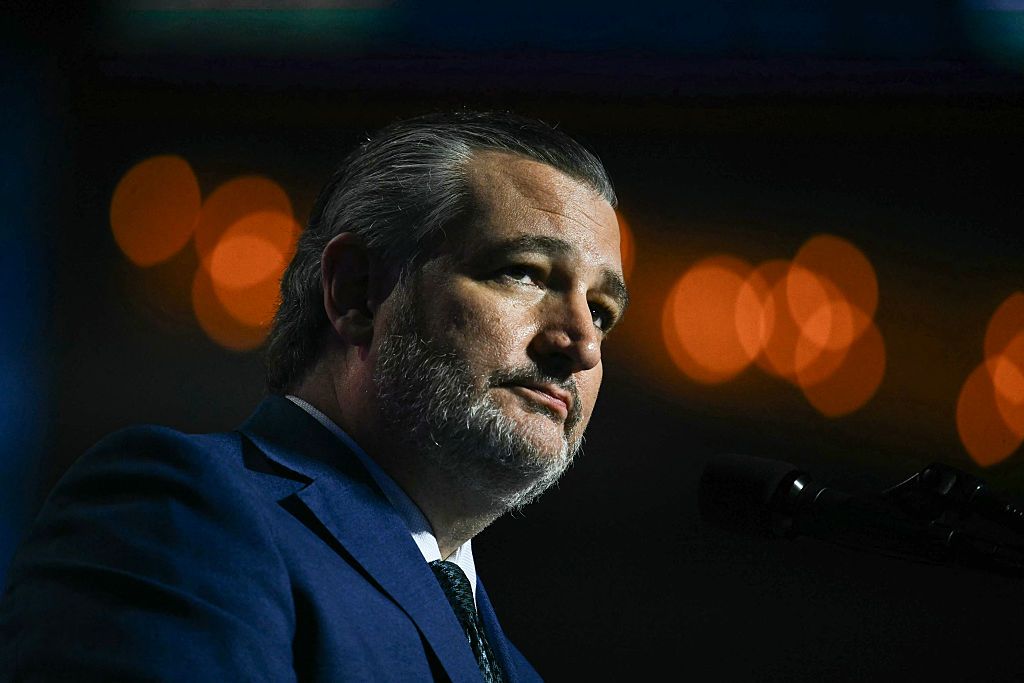
Texas Senator Ted Cruz is intensifying criticisms targeting Democratic Senate nominee James Talarico through his podcast, where he warns supporters of Talarico’s potential influence if elected. Cruz asserts that the 37-year-old would become “the most woke left-wing senator the country has ever seen,” drawing parallels to Bernie Sanders. Sanders has consistently held the highest approval ratings among U.S. senators, based on Morning Consult’s national tracking.
In the Texas U.S. Senate race, Talarico confronts Texas Republican Attorney General Ken Paxton, with implications for voters, national Democrats, and broadcast networks. This race is becoming a focal point in the larger discourse around media access, federal regulation, and the limits of political rhetoric, particularly as controversies mount over FCC interference with late-night shows and aggressive heckling at the GOP midterm convention.
Cruz Positions Talarico as a Progressive Similar to Sanders
Cruz made the Sanders comparison in a comprehensive critique of Talarico’s previous statements during his podcast, Verdict with Ted Cruz. He suggested Talarico is engaging in a strategy aimed at deceiving voters before gaining power. “Lie to the voters, then get in power,” Cruz emphasized, warning listeners that Talarico, if successful, would emulate Bernie Sanders while being young enough to influence politics for decades.
Sanders as a Benchmark
For many years, Bernie Sanders has ranked as America’s most popular senator, according to Morning Consult, regularly securing approval ratings above 60 percent. His reputation is founded on long-standing activism, including two presidential campaigns and a legislative commitment to democratic socialism. His policy priorities encompass universal health care, tuition-free college, decisive climate change measures, and enhanced labor rights, contributing to the Democratic Party’s leftward movement since 2016.
Sanders is both widely favored and distinctly defined, and Cruz’s mention of him signals Talarico’s potential as a non-moderate Democrat but rather a sustained progressive force. Sanders’ extensive history, from civil rights activism to leading the Congressional Progressive Caucus, presents a comparison Cruz intends voters to scrutinize. Sanders is 85, while Talarico is 37, a point Cruz underscores concerning potential long-term influence on national politics.
‘Lie to Voters, Then Get in Power’
Cruz communicated to his supporters that he perceives Talarico is attempting a political rebranding, adjusting previous statements on gender, capitalism, and transgender issues. Cruz anticipates Talarico may further this transformation, albeit sarcastically suggesting Talarico might adopt Trump-like rhetoric, which he doubts will occur. Nonetheless, “that’s the theory—lie to the voters, then get in power,” Cruz concluded.
Talarico’s recent media interactions, wherein he retracts or explains remarks regarding “six biological sexes,” the notion of “God as nonbinary,” and critiques of capitalism, signify to Cruz a strategy shift rather than authentic ideological change. He also posits Talarico’s generational identity as crucial to understanding his political stance. Unlike older Democrats who have sidestepped pandemic-era cultural debates, Cruz asserts Talarico “supports this nonsense” and would enact legislation in line with these views.
Media Battle and FCC Controversy
The Talarico campaign is simultaneously embroiled in an unprecedented media conflict as late-night host Jimmy Kimmel disclosed that his Talarico interview would remain unaired on ABC due to Federal Communications Commission threats. Kimmel accused the FCC of penalizing networks over equal-time stipulations post-President Trump’s return to office, categorizing their actions as retaliatory and unlike anything seen in his 20-year career. Consequently, the interview appeared solely on YouTube.
Earlier in the year, similar challenges emerged when Stephen Colbert revealed CBS legal strategies preventing Talarico’s appearance on The Late Show, restricting the interview to online dissemination. Moreover, ABC and Disney have initiated legal action against the FCC, accusing them of First Amendment violations and corrupt targeting of network editorial decisions, claims which the FCC has disputed.
Cruz’s Warning Related to Texas and National Politics
By characterizing Talarico as a youthful, ideologically steadfast progressive akin to Sanders with potential longevity, Cruz reframes the Texas race as a broad ideological encounter, transcending a local matter. Texas voters are prompted to appraise both Talarico’s present stances and Cruz’s articulated long-term ramifications of electing a senator poised to evolve into a left-oriented generational leader.
Broadcast networks now grapple with escalated FCC scrutiny influencing political interview broadcasts, placing Talarico at the heart of this clash. A Sanders-style progressive securing statewide victory in Texas would trigger a major transformation in the national political landscape.