
Impact of Ice Loss on Switzerland’s Glaciers
A troubling trend has emerged in Switzerland, where glaciers lost more than 5% of their ice in 2026. This rapid decline is part of a global pattern, with glaciers worldwide shrinking as temperatures rise. Matthias Huss, head of Switzerland’s glacier monitoring network GLAMOS, has been tracking this phenomenon. His observations report significant ice loss, peaking in 2022 with a record 6% decline in a single year.
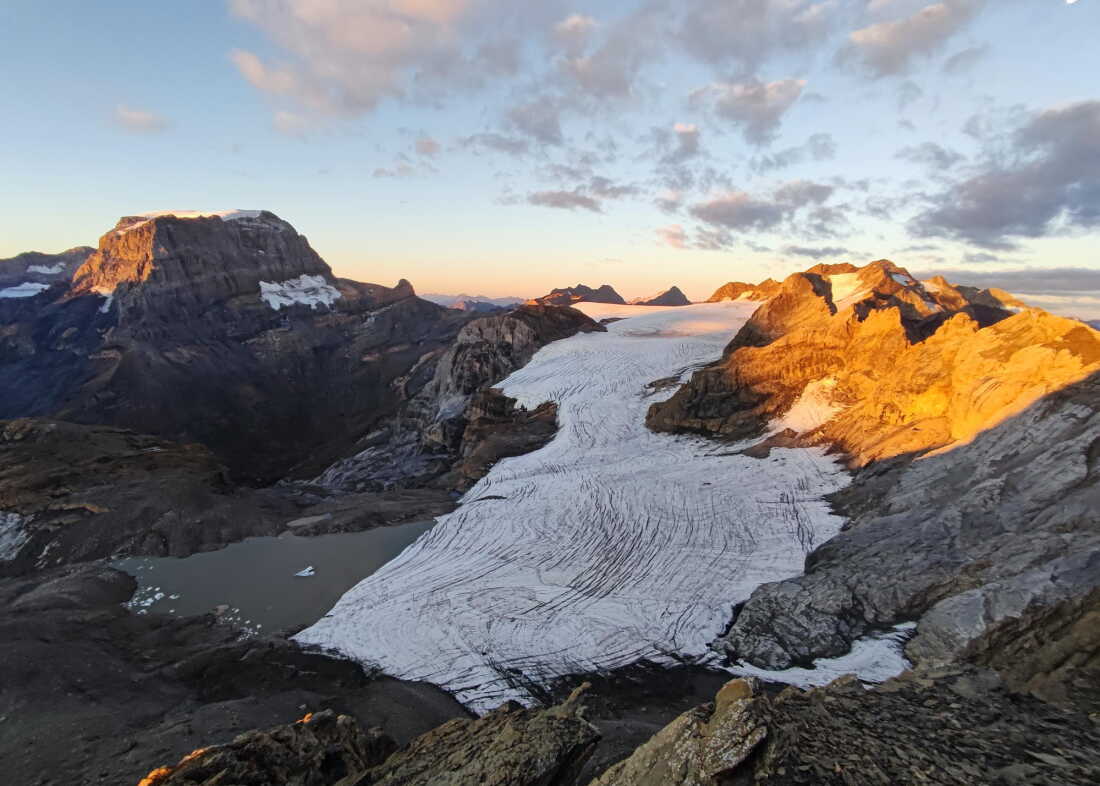
After another warm summer, Huss returned to the Swiss Alps to find glaciers reduced to bare rock. These landscapes, once filled with extensive ice fields, now appear dry and empty. Small ice blocks remain, melting under the hot sun, while alpine plants have started to grow in previously ice-covered areas.
Consequences of Melting Glaciers
The glacier monitoring report for 2026 noted a 5.5% ice loss, slightly less than 2022 due to more winter snow. However, major glaciers like Rhône and Aletsch experienced unprecedented losses. These ice fields, known as Europe’s ‘water towers’, store and gradually release melted snow, feeding key waterways such as the Rhine and the Danube. These rivers are vital for agriculture and transportation.
As summer river levels drop, freight transport halts, and nuclear power stations, relying on river water for cooling, close temporarily. If glaciers continue to melt, the potential drought poses a severe threat to European agriculture. In the past 50 years, 1,200 smaller glaciers have vanished, emphasizing this threat.
Stability and Risks
Alpine glaciers and permafrost play a crucial role in mountain stability, acting as natural adhesives. Their loss increases risks like landslides and flooding. The Swiss village of Blatten exemplifies such danger, wiped out by a glacier that collapsed, dragging down part of the mountain. Fortunately, monitoring ensured the evacuation of its residents before the disaster, although they remain displaced with homes buried under ice and debris.
This summer, a glacier collapse on the Nepal-Tibet border caused floods, killing over 1,400 people. Matthias Huss, while cautious about directly linking such events to climate change, acknowledges that warmer temperatures can trigger natural disasters, acting as catalysts.
The Call to Action
Huss urges action against climate change, dismissing claims that it doesn’t exist. Observing glaciers should act as a wake-up call. He argues that clear evidence of climate change has been present for decades, urging immediate action. Without intervention, Europe’s alpine landscape could soon transform drastically. Predictions indicate total disappearance of all glaciers by the century’s end if warming persists.