
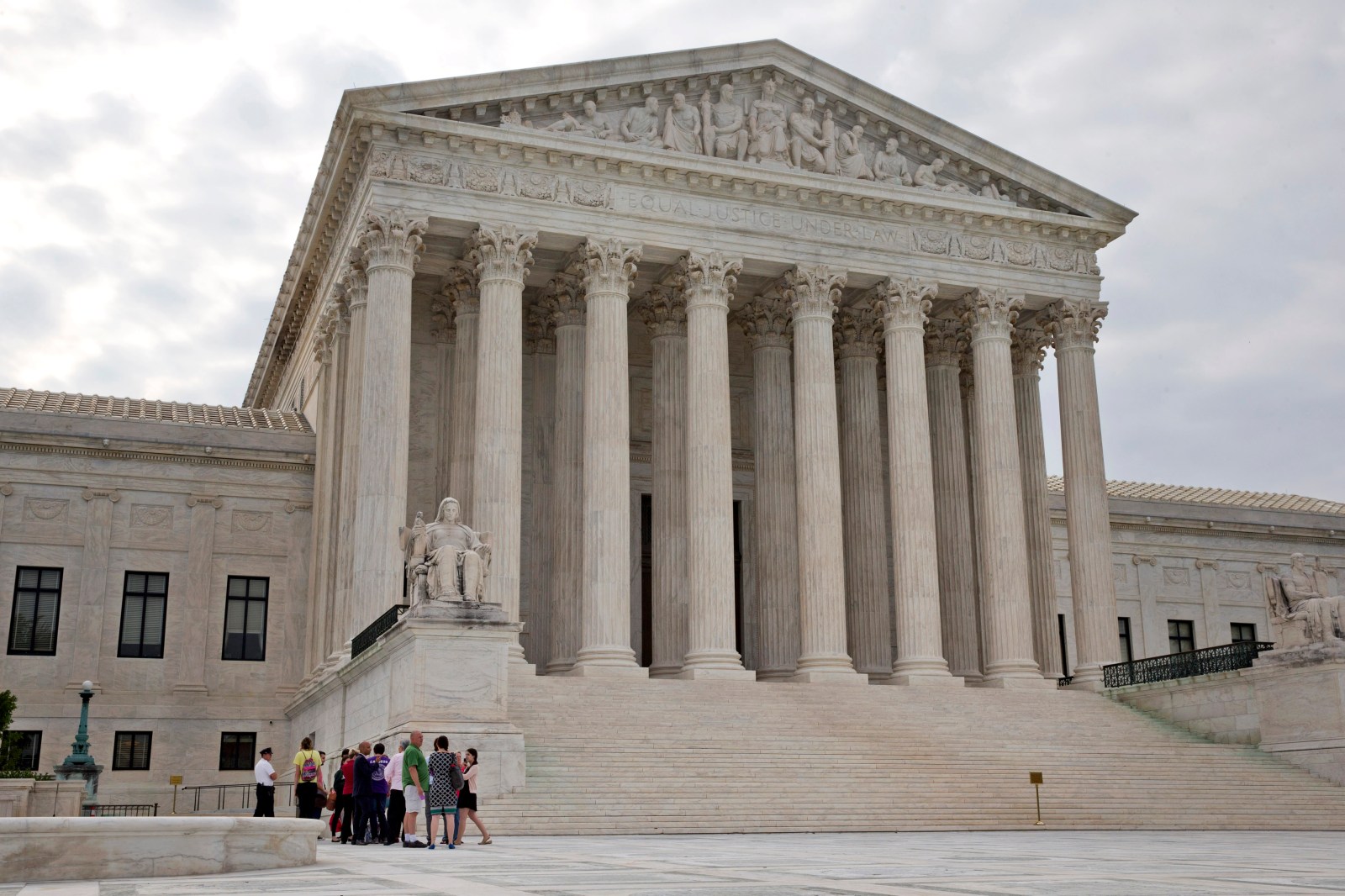
The Supreme Court’s conservative majority has delivered a ruling against a Rastafarian inmate who had his dreadlocks forcibly shaved by prison officials. This decision could complicate enforcement of religious freedom protections for other federal prisoners.
Details of the Decision
In Landor v. Louisiana Department of Corrections and Public Safety, a 6-3 decision prevented Damon Landor from seeking monetary damages from Louisiana prison officials alleged to have violated his religious rights under the Religious Land Use and Institutionalized Persons Act (RLUIPA). This ruling contrasts sharply with previous court decisions that favored religious liberty pursuits.
Incident Description
Landor, a committed Rastafarian, stated his dreadlocks were shaved forcibly in 2020 despite his assertion that his religious beliefs required him to keep his hair uncut. He reportedly showed a prior court ruling acknowledging similar religious protections to prison officials, who allegedly disregarded it. The Supreme Court recognized the gravity of the alleged violation but focused on a narrower legal question regarding monetary damages sought under RLUIPA.
The Supreme Court ruled that individuals cannot recover money damages from state employees under these circumstances, since RLUIPA stems from Congress’s Spending Clause authority.
Majority Rationale
Conservative Justice Neil Gorsuch, in writing for the majority, concluded that the statute does not permit individual liability for prison officials, as they did not personally consent to federal funding conditions. The court framed the issue around consent, highlighting that personal liability requires voluntary agreement to federal spending law terms.
Dissenting Opinion
Justice Ketanji Brown Jackson countered, alongside other liberal members, arguing that the ruling denies victims of religious-liberty violations a significant remedy. She emphasized that such a decision undermines Congress’s intentions to safeguard religious practices in prisons.
Reactions from Activists
Human rights activists have decried the ruling. Daniel Mach, from the ACLU’s Program on Freedom of Religion and Belief, called it a blow to the dignity and religious freedom of incarcerated individuals.
Mach stated, “By denying Mr. Landor a meaningful remedy, the Supreme Court has made it harder to hold prison officials accountable when they violate the rights of people in their custody.” The ACLU remains committed to advocating for the religious freedoms of incarcerated individuals.
Context of Supreme Court’s Decision
This decision contrasts with recent Supreme Court actions which have predominantly favored religious claimants. The court’s history over the past decade includes siding with various religious entities, especially during challenges to public-health measures amid the COVID-19 pandemic.
Cases like Roman Catholic Diocese of Brooklyn v. Cuomo and Kennedy v. Bremerton School District have fortified religious exercise protections. However, the Landor case differs due to its focus on Congress’s Spending Clause authority, not on the value of religious freedom itself.
About Damon Landor
Landor, a former Louisiana inmate, has practiced Rastafarian beliefs for nearly 20 years. During a brief incarceration for drug possession, early prison facilities respected his religious dreadlocks. The dispute emerged post-transfer to a new facility, shortly preceding his release.
Landor’s description of the forced shaving incident equates it to a traumatic assault, revealing the emotional impact of the violation. His litigation efforts against Louisiana officials followed his release.
Understanding Rastafarianism
Rastafarianism evolved in Jamaica during the 1930s, emphasizing spiritual autonomy, African heritage, and resistance to oppression. Haile Selassie I holds special spiritual significance among followers who regard Ethiopia symbolically.
Dreadlocks serve as a significant religious symbol, reflecting biblical teachings and uncut hair as expressions of faith. Notably, Bob Marley’s music brought global attention to the Rastafari movement.