
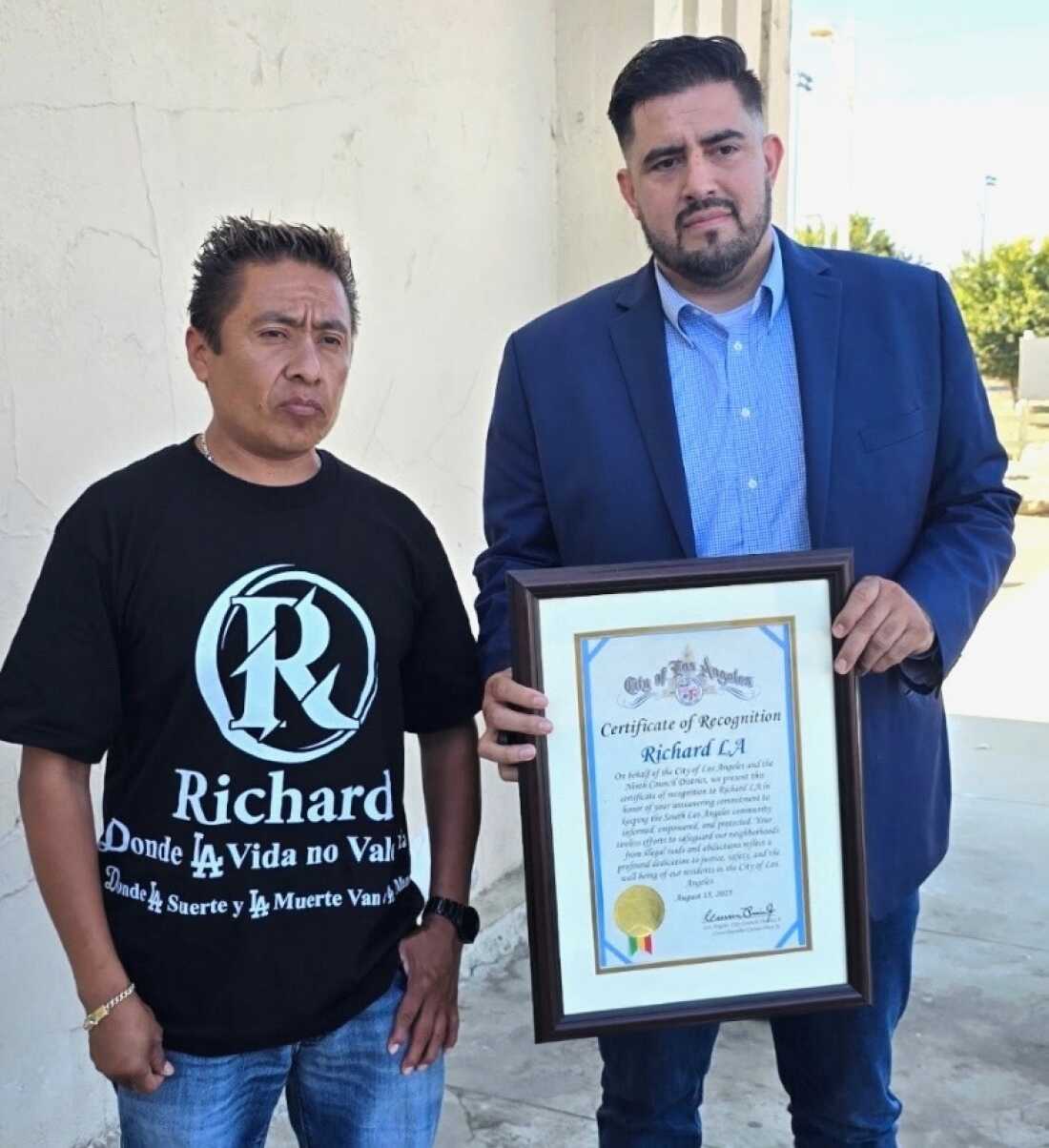
Carlitos Ricardo Parias received a certificate of recognition from Jose Ugarte, chief of staff to Los Angeles City Council member Curren Price, in August 2025. Despite this recognition, Parias now faces significant challenges while detained at the Adelanto Detention Center in California.
Every Saturday, Ulises Parias travels two hours to visit his father. They discuss family life and his father’s health issues, including arm pain and headaches. Over eight months ago, Parias was shot by federal agents during an immigration enforcement arrest in Los Angeles. His lawyers claim he isn’t receiving proper medical care.
An incident in October escalated when federal officers blocked Parias’ car. Body camera footage shows agents smashing his car window and threatening to shoot. Parias was injured in the encounter and is now dealing with health complications.
‘There are not enough people, and there’s not enough concern. And that’s leading to permanent disability and death.’
Parias entered the U.S. illegally in 2002 and lived in Los Angeles with his children. He gained a social media following by documenting immigration arrests. This activism brought him to ICE’s attention.
Legal and Medical Struggles
Parias’ attorneys have tried to secure his release, but so far, they’ve been unsuccessful. His case highlights the limited resources and oversight within the judicial and agency levels after being injured by federal officers. Legal avenues are nearly exhausted.
Medical records from November to May detail Parias’ persistent pain and reduced mobility. Despite being assessed by medical staff, his treatment has been minimal. DHS claims Parias receives pain management and mobility exercises, but records suggest ongoing issues.
Legislation and Policy Impacts
Following the shooting, Parias was held on charges of assault on a federal officer. Initially treated in a hospital, he was transferred to ICE custody. The Laken Riley Act, which prioritizes certain detainees, influenced his detention.
In December, charges against Parias were dismissed due to inadequate legal representation. However, the government appealed. Parias remains in custody while court proceedings continue.
Limited options exist for intervention. Rep. Sydney Kamlager-Dove, D-Calif., visited Parias and advocated for his medical treatment. Despite communication with DHS, Kamlager-Dove expresses frustration at the lack of adequate care for Parias.
Congressional Republicans allocated $70 billion to immigration enforcement, but oversight offices remain unfunded. Democratic lawmakers, limited in options, are seeking change in upcoming elections.
Family Impact and Future Hopes
Ulises, Parias’ son, manages household responsibilities amid legal complexities. He strives for personal achievement while holding hope for his father’s release. The detention affects family life, including the absence during shared cultural experiences like the World Cup.
‘This is the first World Cup where I’m experiencing it alone. And it feels wrong.’
Parias’ case presents a significant example of the challenges immigrants face in the legal and detention systems. His family awaits a resolution that will hopefully reunite them soon.