
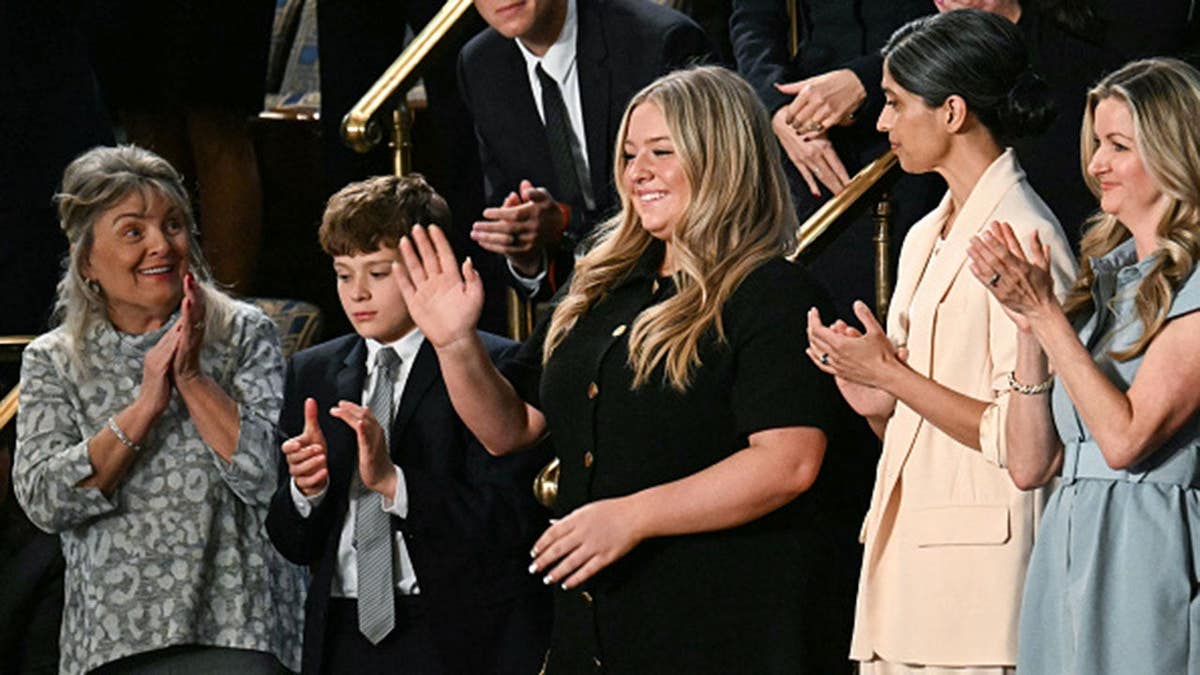
Before the efforts of Indiana Fever guard Sophie Cunningham brought nationwide attention to women’s sports, Payton McNabb was already experiencing the impacts firsthand. Her life took a dramatic turn due to a high school volleyball match, which has now brought her advocacy all the way to the U.S. Capitol.
Watch Payton McNabb’s full interview with OutKick:
McNabb, who sustained a traumatic brain injury and partial paralysis on her right side from a spike by a transgender opponent, has taken her cause from a North Carolina court to Washington. She has testified before lawmakers in support of Title IX and women’s sports.
In 2025, at a joint session of Congress, McNabb was acknowledged by former President Donald Trump. She continues to fight for the integrity of women’s sports, inspired by figures like Sophie Cunningham.
Now 21, McNabb sees Cunningham’s battle reaching the WNBA, exposing what she calls a double standard. Speaking to OutKick, McNabb praised Cunningham for her stance and criticized Minnesota Lynx head coach Cheryl Reeve for supporting transgender inclusion.
“I started speaking out at 18,” McNabb stated. “Now, at 21, why should I have to explain the biological differences to Congress? It is a basic fact.” McNabb has passionately defended women’s sports, testifying at Congressional hearings about the importance of maintaining separate categories for male and female athletes.
Cunningham’s courage has especially resonated with McNabb. As the Fever guard gains prominence, McNabb highlights how her willingness to speak out is significant.
“What Sophie Cunningham is doing is truly brave,” McNabb remarked. “To speak up now, as her career lifts off, is quite special. Few athletes are willing to face the backlash that comes with this stance, even though many recognize the truth she expresses.”
McNabb notes the criticism Cunningham endures for voicing a widely shared belief, underscoring how essential Title IX has been for women’s sports.
“Critics try to vilify her for saying what most people think but are too scared to admit,” McNabb said. “Without Title IX, we wouldn’t have the WNBA, we wouldn’t know Cheryl Reeve, Sophie Cunningham, or other athletes like them.”
Cheryl Reeve has defended transgender participation, even wearing a “Trans Kids Belong” shirt during a game, which McNabb finds baffling.
“Cheryl Reeve’s stance is perplexing,” McNabb asserted. “Young girls come to games, inspired by players standing up for their opportunities and rights. Coaches like Reeve, who undermine female athletes, are undermining those hopes and dreams.”
McNabb argues there is a hypocrisy in pushing for female empowerment while inviting biological men into women’s sports.
“You can’t lament the lack of opportunities and viewership, then turn around and endorse men taking over these spaces,” McNabb explained.
McNabb speculates that the perspective around this issue might change dramatically if a biological male enters the WNBA and challenges existing players.
“When a male athlete steps onto a WNBA court and overpowers the current players, perhaps views will shift,” McNabb suggested. “I don’t root for it, but it might force a reevaluation.”
Not wishing destruction upon the WNBA, McNabb advocates for protection of female athletes, even those who oppose her views.
“I strive to ensure all female players, even critics, have protection and opportunity,” she emphasized. “Even if they don’t see the risk.”
McNabb calls for consistency, suggesting that if transgender athletes participate in female sports, they should also coach, even suggesting a transgender coach could replace Reeve.
McNabb also reflects on Caitlin Clark’s influence. While Clark focuses on her basketball career, McNabb believes her involvement could provide profound support to female athletes.
“Caitlin Clark’s influence is undeniable,” McNabb stated. “It would mean a lot for her to involve in this conversation, inspiring the next generation.”
Years after her volleyball injury, McNabb’s health has reached a positive turning point.
“Doctors were unsure if I’d ever recover fully, but after three years, I’ve seen real progress,” McNabb said.
Once struggling with public speaking, McNabb now champions women’s sports vehemently, aiming to prevent others from facing similar challenges.
“I didn’t plan for a political path,” McNabb revealed. “But my story has resonated because it’s real, impacting a family and community. I hope to raise awareness to protect others.”
Contributors: Alejandro Avila. Contact Alejandro Avila via email at [email protected] or on X: @alejandroaveela
Alejandro Avila is an experienced writer from Southern California.