
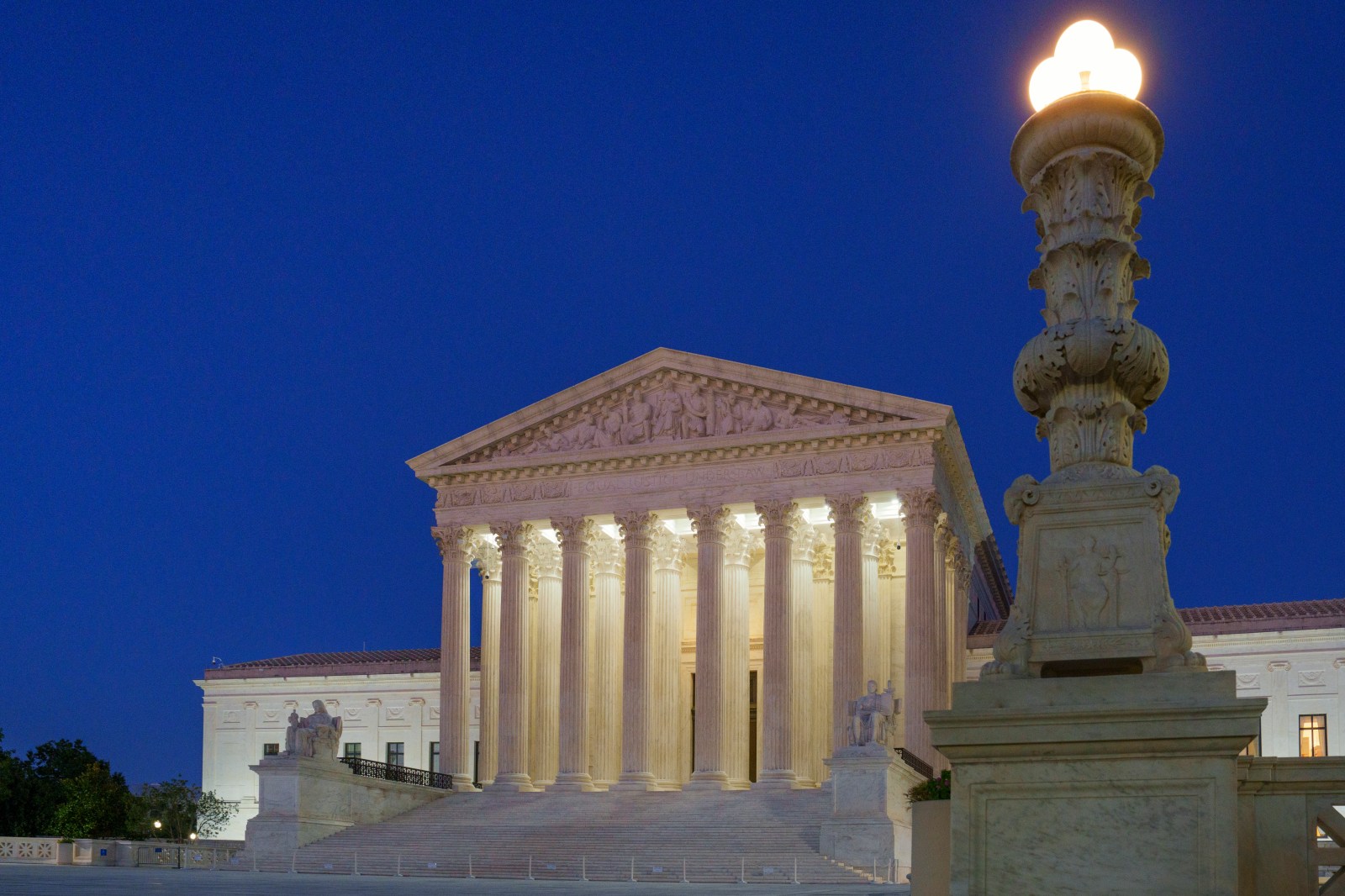
The United States Supreme Court will review a case that may allow veterans to bypass the Veterans Affairs’ review system and directly sue in federal district court. This case, titled Johnson v. United States Congress, has arisen from a Florida veteran’s objection to a federal law decreasing disability benefits for imprisoned veterans.
The broader implication of this case could affect all veterans disputing similar benefits reductions. The government states there is an existing system for contesting decisions, which the plaintiff did not initially use.
This case, though technical, is crucial as it addresses veterans’ fundamental rights to contest the constitutionality of the law, which only federal courts can do.– Alison Weir, Executive Director of Connecticut Veterans Legal Center and U.S. Air Force Veteran, told Newsweek.
She added that she does not believe the Veterans’ Judicial Review Act (VJRA) of 1988 was intended to restrict this right and hopes the Supreme Court supports their 1974 ruling in Johnson v. Robison.
Newsweek has contacted Johnson’s attorney and the U.S. Department of Justice for comments and is waiting for a response.
Background on Johnson v. United States Congress
Floyd D. Johnson, a U.S. Army veteran from 1983 to 1985, was convicted of state felonies in Florida around 2013 and sentenced to 40 years. While incarcerated, Johnson was diagnosed with PTSD related to his service and subsequently sought disability benefits from the Department of Veterans Affairs.
Initially granted a 70% rate, it increased to 80%, but due to a benefits cap for veterans imprisoned for over 60 days, it was reduced to 10%. Johnson self-filed a lawsuit claiming the benefits cap was unconstitutional. However, the District Court dismissed his claim in 2022, and the 11th Circuit Court of Appeals upheld this dismissal in 2025, partly because Johnson filed against Congress instead of the VA.
The court indicated challenges to benefits decisions should follow the VA’s system, involving the Court of Appeals for Veterans Claims and then the federal Court of Appeals under the VJRA guidelines.
Johnson’s argument draws from the Supreme Court’s 8-1 decision in 1974’s Johnson v. Robison, which excluded constitutional challenges from that process.
Why the Supreme Court Accepted the Case
The Supreme Court’s acceptance of this appeal indicates potential conflicts regarding the VJRA and its adherence to older Supreme Court rulings such as Johnson v. Robison.
Lower federal courts disagree on whether the Veterans’ Judicial Review Act prevents cases from going directly to federal district court and whether 1974’s decision is still applicable.– Kristin E. Hickman, McKnight Presidential Professor in Law, University of Minnesota Law School.
Johnson contends the 1974 ruling confirmed the district courts’ power to hear constitutional challenges, a power not clearly revoked by the VJRA.
The government argues the VJRA provides a specialized review track, signaling veterans should adopt this procedure before escalating claims through the dedicated courts.
Potential Impact on Veterans
The Supreme Court’s ruling will decide if veterans can immediately challenge federal benefits laws’ constitutionality in federal district courts. A ruling in favor of Johnson may allow direct constitutional challenges in these courts, offering a vital recourse against potentially unconstitutional laws enacted by Congress.
Advocacy groups argue that the VJRA was designed to widen, not limit, judicial review options. Military-Veterans Advocacy’s brief states, The purpose of the VJRA was to expand, not constrict, avenues for judicial review.
If the government prevails, veterans must continue using the VA review system, delaying their access to the courts until administrative appeals conclude.
The Supreme Court will hear the case’s oral arguments on Monday, with a ruling anticipated in the 2026/2027 term.