
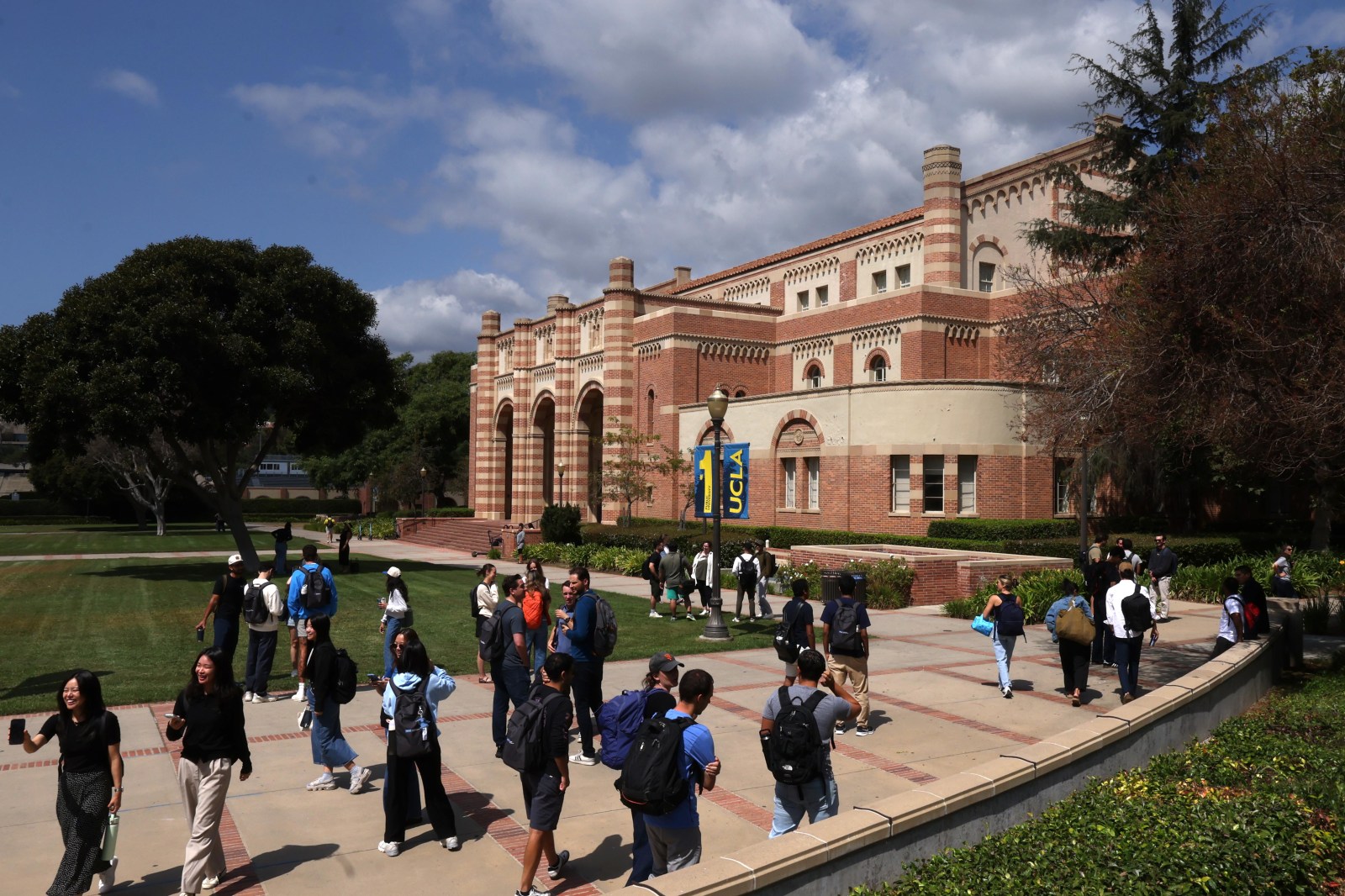
Juan Rosales Jr., in his 30s, returned to higher education due to dissatisfaction with unfulfilling jobs. Now a full-time student at Long Beach City College, he juggles part-time work while pursuing an associate degree in film, television, and multimedia. Despite his efforts, Rosales questions the decision. ‘Honestly, nothing has convinced me that getting a degree is going to get me something financially or professionally better,’ he shared with Newsweek.
Rosales embodies a long-standing American axiom: self-investment through education enhances opportunities. However, he describes this journey as a ‘leap of faith,’ uncertain of its bottom-line outcome. This sentiment captures the contemporary American college landscape in 2026.
Historically, college promised a reliable exchange: invest time and money to become better educated, more employable, and socially connected, preparing for adulthood. While this promise endures, each element faces increasing pressure, particularly the financial investment.
Rising Costs and Tuition Concerns
The College Board predicts that in 2025-26, the average in-state public four-year college student will require $30,990 annually, while private nonprofit college costs average $65,470 per year. Over four years, this totals over $260,000. Although financial aid often reduces actual costs, the tuition sticker price has surged over three decades. Adjusted for inflation, public four-year tuition jumped from $5,940 in 1995-96 to $11,950 today, and private nonprofit college tuition increased from $25,820 to $45,000.
Prospective students also weigh the opportunity cost of attending college. Enrolling at 18 means forgoing four years of potential earnings and experience. So, is higher education financially viable?
In general, it pays off. According to the Bureau of Labor Statistics, in 2025, full-time workers 25 and older with only a high school diploma earned a median of $966 weekly, while associate degree holders received $1,135 and bachelor’s degree holders $1,578. Bachelor’s degree holders also faced lower unemployment rates at 2.8% compared to 4.3% for high school graduates.
Individual Decisions and Economic Comparisons
However, individual families face questions beyond averages. They consider specific tuition fees, loan interests, and potential earnings without attending college. Allison Shrivastava of Niche stresses comparing today’s college and high school graduates is crucial. She notes that living costs are significantly higher now, impacting early career earnings.
Recent graduates encounter challenges. In 2026, the Federal Reserve Bank of New York reports a 5.6% unemployment rate and 42% underemployment among new degree holders. Employers increasingly expect evidence beyond diplomas, seeking demonstrated capabilities.
Economic vs. Personal Value of College
Debating college’s worth highlights its broader value. Historically, college fosters intellectual and personal growth through diverse interactions and environments. Shannon DeLeon, whose son studies business at Boise State University, advocates for the cultural and social merits of college alongside academics.
Yet, American campuses grapple with issues like protests, free speech battles, and safety concerns, overshadowing intellectual exploration. A 2024 Knight Foundation-Ipsos study reveals 69% of college students self-censor on campus topics, hindering valuable discussions.
The modern challenge is balancing education costs with intangible benefits. Colleges promise community, independence, and a safe space for growth; families now scrutinize whether institutions deliver these experiences effectively.
For Rosales, the intangible college experience holds value, despite doubts about financial returns. ‘Part of what I’m paying for is the college experience itself. How do you put value on something so nebulous?’ he asked. Parents increasingly face these questions.
The Evolving Role of Higher Education
DeLeon still champions higher education while acknowledging changing attitudes. Her son started at Boise State after completing two years of coursework and works during his studies. ‘Yes, but not at any price, and not as an either/or,’ she remarked, emphasizing a balanced approach to education and experience.
Her perspective has shifted over two decades. ‘If you had asked me 20 years ago, I would have said, go to college right after high school, no matter the cost.’ This change signifies the evolving American college experience.
The institution persists, with graduates earning more and gaining access to intangible benefits. However, assumptions are dying out. College requires careful calculation: school choice, major, debt, job prospects, and non-economic benefits must be weighed.
Rosales and many new students face uncertainty about college’s return. College was a safe choice, but now it demands an uncertain leap of faith.