
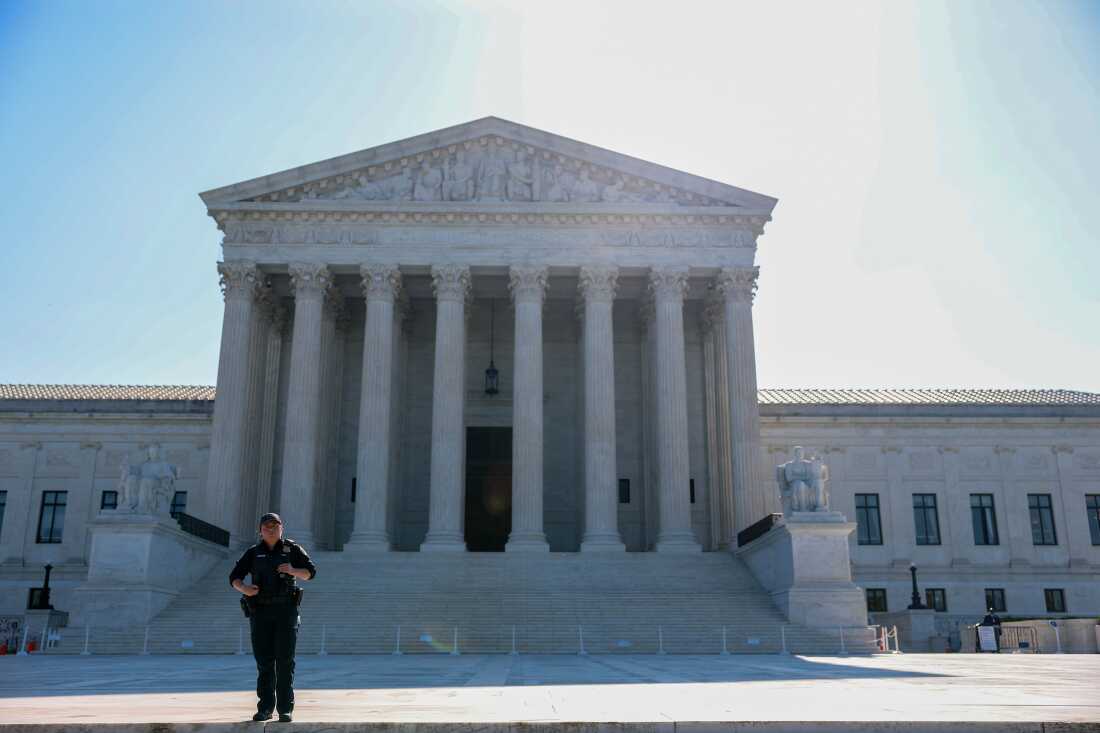
The U.S. Supreme Court recently made a significant ruling regarding the method of execution for an Alabama death row inmate. Late Thursday, the court upheld a lower court’s decision, preventing Alabama from executing a man using nitrogen gas. The reasoning was that the use of nitrogen gas violates the Eighth Amendment, which prohibits cruel and unusual punishment.
In a succinct one-sentence order, the Supreme Court denied Alabama’s request to proceed with the execution. While Justices Clarence Thomas, Samuel Alito, and Neil Gorsuch favored Alabama’s position, they did not write a formal dissent.
This ruling temporarily benefits Jeffery Lee, who was convicted of a double murder in 1998. He was scheduled for execution on July 11. Lee contested the method, arguing that dying by nitrogen gas involves prolonged, painful suffocation.
A federal district court initially opposed Lee’s claim, giving Alabama permission to execute him using nitrogen gas. However, an appeals court found Alabama’s protocol for nitrogen gas executions posed a substantial risk of severe pain. Witness accounts from previous executions using nitrogen gas noted victims showed distress and physical recoil. Justice Sonia Sotomayor labeled the experience “intense psychological torment” in a 2025 dissent concerning a similar case.
In the current situation, a group of doctors informed the court that execution via nitrogen gas inherently causes inhumane suffering. The Supreme Court requires death row inmates challenging execution methods to suggest alternatives that would not breach the Eighth Amendment. Lee proposed execution by firing squad instead.
Alabama argued to the Supreme Court that nitrogen gas executions do not inflict severe pain comparable to historical cruel punishments. The Supreme Court had approved the state’s inaugural nitrogen gas execution in 2024. Since then, Alabama has executed eight prisoners by this method. The state also stated that forming a firing squad is impractical.
This decision arrives as the number of executions rises. According to the Death Penalty Information Center, 47 people were executed in 2025, marking the highest number in over a decade. So far this year, 15 people have been executed, excluding Lee.
President Trump has advocated expanding the death penalty during his second term, although federal death row contains only three individuals. States face challenges acquiring drugs for lethal injections due to pharmaceutical companies’ resistance. Consequently, some states explore alternative methods, like firing squads and gas chambers.
The Supreme Court’s ruling will delay Lee’s execution. He remains subject to the death penalty.