
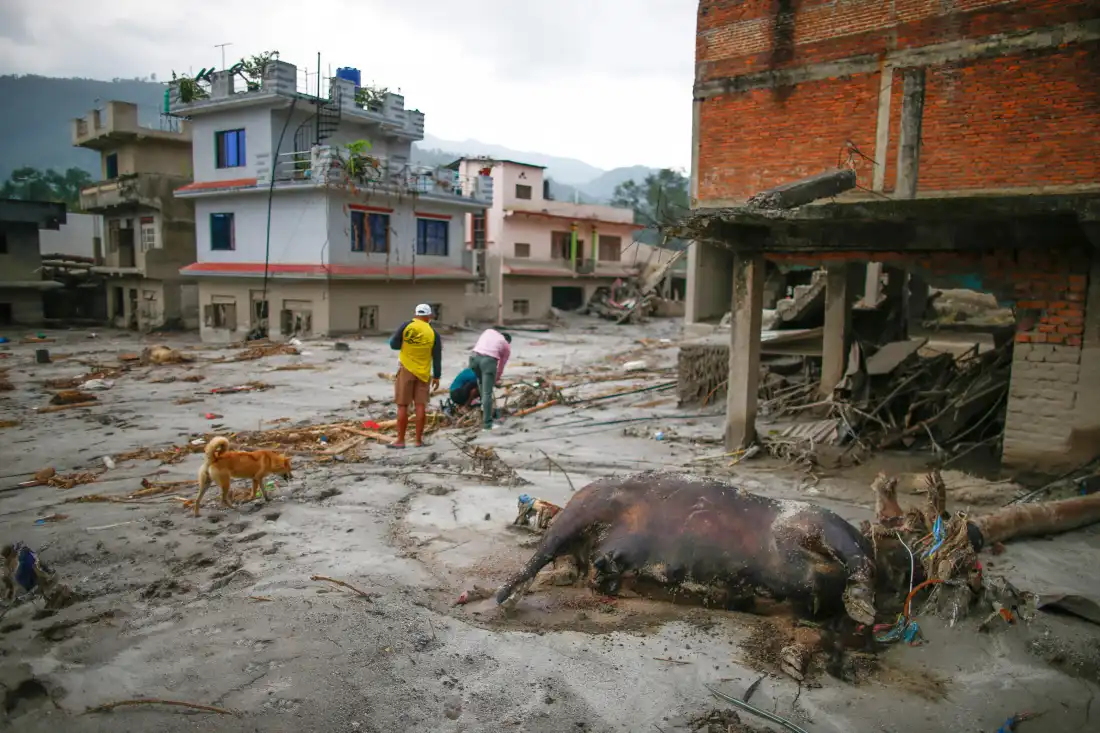
Rescue operations persist in flood-ravaged Devighat, Bidur Municipality, in Nepal’s Nuwakot district. Torrential floods and mudslides devastated the area, triggered by a glacial collapse and mass debris flow along the Trishuli River. The disaster resulted in hundreds of deaths with many still missing.
Skanda Gautam/SOPA Images/LightRocket/via Getty Images
Januka Dhital recounts her harrowing experience: “I thought I wouldn’t survive.” Moments before devastation struck, she was preparing snacks for her catering service in Uttargaya, Nepal. A man on a scooter warned her about the impending danger. Seeing the looming threat, she grabbed her son and escaped on the scooter to safety. During the crisis, her husband and daughter were unaccounted for, causing immense distress.
After hours, her family reunited. Her husband, severely injured, was alive. The flood obliterated their home and livelihood. Dhital transitioned from caterer to aid worker, now helping survivors. “It felt unbelievable that our family had survived,” Dhital expresses.
Dhital’s story is one among many. Over 100,000 lives were disrupted by these floods, exacerbated by climate change. At least 1,500 have died, with more than 5,000 missing. Thousands live in makeshift shelters. Vital facilities, including seven health centers, 23 schools, 10,000 toilets, and 64 water systems, are destroyed, as reported by the United Nations. Malnutrition signs rise as winter approaches.
Shyam Pathak from UNICEF describes the situation: “The magnitude of devastation is unimaginable.” International aid and interest have waned. Many face the challenge of rebuilding not just their homes but their lives too, like Dhital.
Initially, Dhital’s family resided in a temporary center before relocating to a relative’s home. “For almost a month, I felt like I was losing my mind,” she shares. Through Helen Keller Intl, Dhital began community work after a brief training, focusing on mental health and rebuilding efforts.
She addresses malnutrition, with recent data indicating a spike in moderate acute malnutrition in regions like Naukunda Gaunpalika. From June to October, numbers rose from 0.8% to 8.7%, as reported by Pooja Pandey Rana of Hellen Keller. Losses extend beyond homes; gardens and farms that provided nutrition are gone, leading to reliance on packaged foods.
Poor sanitation, loss of income, and damaged infrastructure complicate relief efforts. More than 100 bridges are destroyed, breaking critical connections. Ayush Joshi from Save the Children highlights the ongoing struggle to deliver essentials.
Pushmaya Tamang continues aid work amidst personal loss and community destruction. Her village in Nuwakot is devastated. Many need mental health assistance, as they cope with trauma and loss. Pathak emphasizes the resilience of health workers who, while victims themselves, continue in the relief efforts.
Winter brings additional threats. Temporary shelters offer little protection against harsh cold. Efforts focus on improving living conditions and providing essential support.
Long-term rebuilding plans remain uncertain. Initial estimates place reconstruction costs at around $5 billion. The U.N. Climate Fund allocated $20 million towards recovery. Though international aid exceeds $100 million, significant gaps in funding persist. Organizations prioritize immediate survival needs, while the total restoration remains a looming challenge.
Tamang’s resolve captures a common sentiment: “Life goes on, and we have to accept what nature has brought upon us.”