
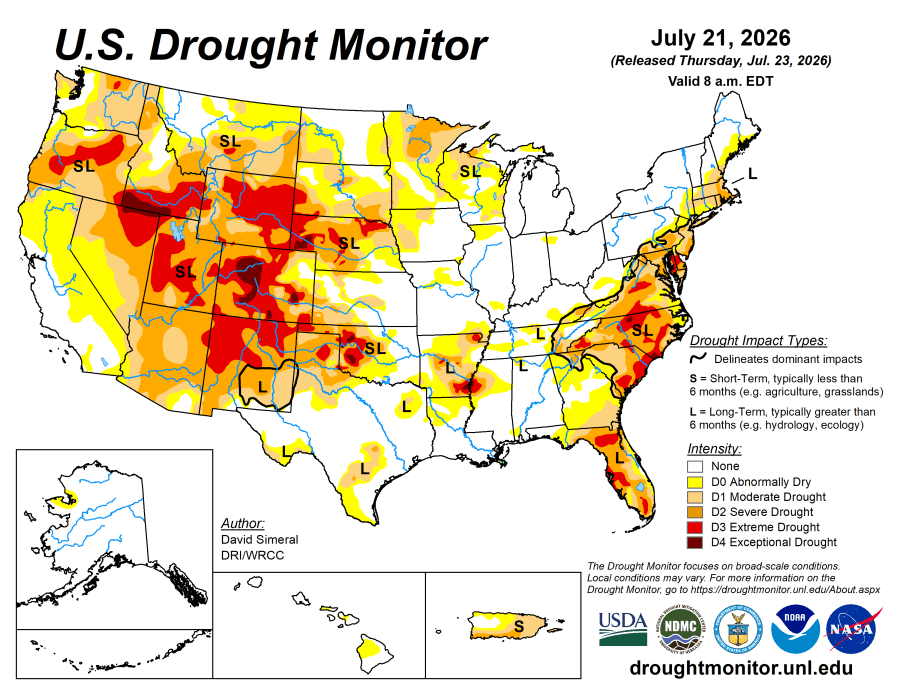
Drought conditions are severe across the Western United States. States like Oregon, Idaho, Nevada, Wyoming, Utah, Colorado, New Mexico, Nebraska, Oklahoma, and the Texas Panhandle are experiencing extreme drought as of mid-July. The dry season is not over for many of these regions, and future forecasts suggest little improvement.
AccuWeather warns that a powerful El Niño might affect the Plains states long-term. Paul Pastelok, a long-range forecast expert, notes the potential for a ‘mini Dust Bowl’ if the current drought persists. Joel Myers, AccuWeather’s founder and executive chair, emphasizes the economic consequences alongside weather impacts. Crop yields, such as soybeans, could suffer, driving food prices higher.
El Niño’s impact varies; it may bring more rain or less, depending on location. Dillon Amaya from North Carolina State University highlights that the American Southwest usually sees more rain, while the Pacific Northwest remains dry. However, the Plains experience less predictable effects from El Niño.
Long-term drought challenges are evident in the Southern Plains, including Texas, Oklahoma, and Kansas. Joel Lisonbee of the National Integrated Drought Information System points out that a single wet year cannot make up for years of water deficit. Even heavy rains and flooding might not refill depleted reservoirs and aquifers sufficiently.
An exceptional El Niño from 1957 to 1959 ended severe drought through heavy rainfall, but outcomes are generally unpredictable. This year’s El Niño is expected to be significant. The Climate Prediction Center notes an 81% likelihood of a ‘very strong’ El Niño, potentially lasting until spring 2027.