
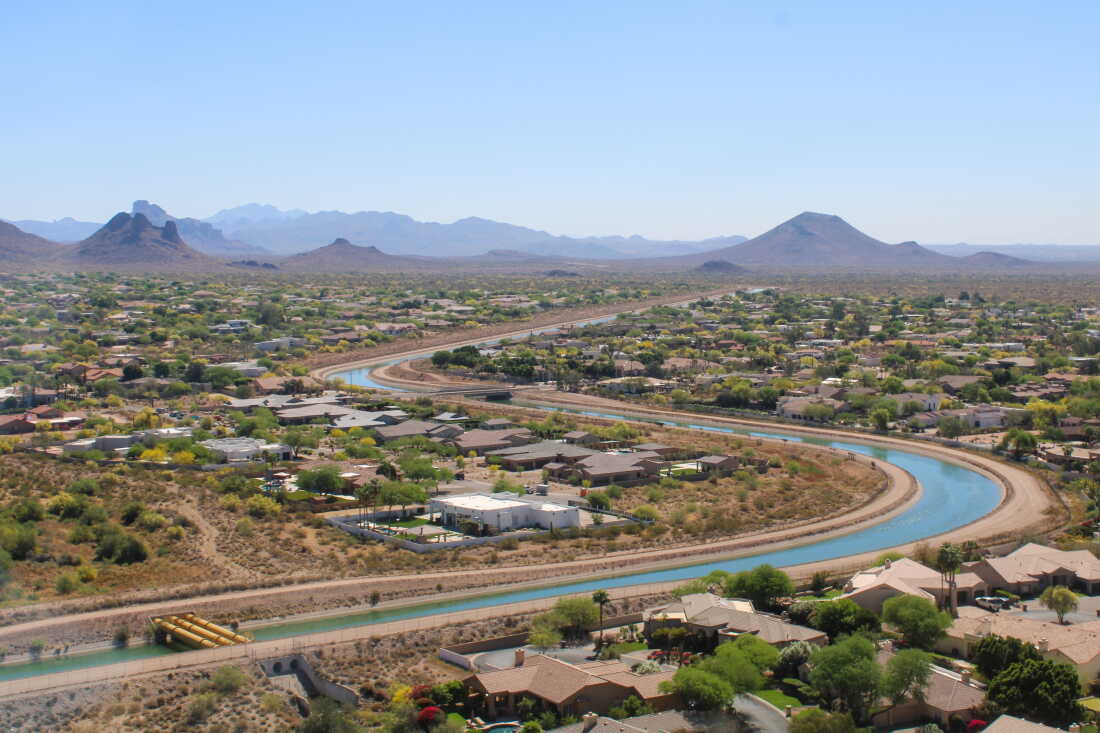
The Central Arizona Project canal winds through Phoenix, pumping water from the Colorado River to the Phoenix and Tucson areas. This 336-mile canal system is a crucial water supply line, but users will face reductions under a new management plan. Max Wilson, Phoenix’s water resources management advisor, oversees these cuts to ensure the taps serving over 1.7 million people don’t run dry.
Wilson’s confidence stems from Arizona’s history of solving water issues. “Arizonans have been solving water problems for our entire history,” Wilson said. “We’re going to do it again now.” The federal government has mandated a new strategy due to over 26 years of drought and climate change affecting the river’s flow. This includes a 27% annual reduction in Arizona’s water allocations from the Colorado River until 2028, with possible steeper cuts thereafter.
Despite these cuts, water managers assure Phoenix residents that their water delivery won’t be disrupted. The Central Arizona Project — delivering 40% of Phoenix’s water supply — faces the most significant impact. Secure backup plans and infrastructure updates, despite their costs, support this assurance.
Several decades of preparation have led to diverse water portfolios. When one source, like the Colorado River, falls short, Phoenix can rely on alternatives like the Salt and Verde River systems and groundwater. Historically, the Salt River’s reservoirs evolved from farmland supply to supporting Phoenix’s urban growth.
Preparations are underway to handle water shortages, partially due to investments in projects like the $300 million “drought pipeline.” This pipeline connects south Phoenix’s Salt River water access to the previously Colorado River-dependent north, addressing supply disparities.
Doug Dunham from EPCOR USA highlights the forethought that has gone into water resource planning statewide. Infrastructure, including interconnected pipes and access to legally protected water, supports consistent supply.
Significant costs for new infrastructure will primarily impact the residents who benefit from these developments. Gilbert faces steep rate hikes as short-term plans aim to cope with losses from Colorado River supply reductions.
Higher water rates may serve as an effective conservation tool, especially when mandatory restrictions are limited. Kathryn Sorensen from the Kyl Center for Water Policy points out that pricing effectively influences water usage, reducing unnecessary consumption.
The future holds uncertainty. Reservoirs storing Colorado River water may not refill soon, necessitating big demands reductions. The federal cutback plan suggests potential 40% reductions by 2028, requiring continuous negotiation.
Local water banking through the Arizona Water Banking Authority, storing excess river water underground, faces disputes over retrieval policies. Cities like Cave Creek must prepare, with temporary alternatives lasting five to eight years amid uncertainty.
Wilson emphasizes the construction of Phoenix’s new water reclamation facilities, which will transform sewage into potable water. The project, costing $359 million to build and $8.5 million annually to run, aims to ensure sustainable water supplies for future generations.
Looking ahead, partnerships with Mesa, Glendale, and EPCOR will bolster Phoenix’s drought resilience, supported by federal assistance. Wilson argues that federal leadership should financially support states handling water scarcity challenges.