
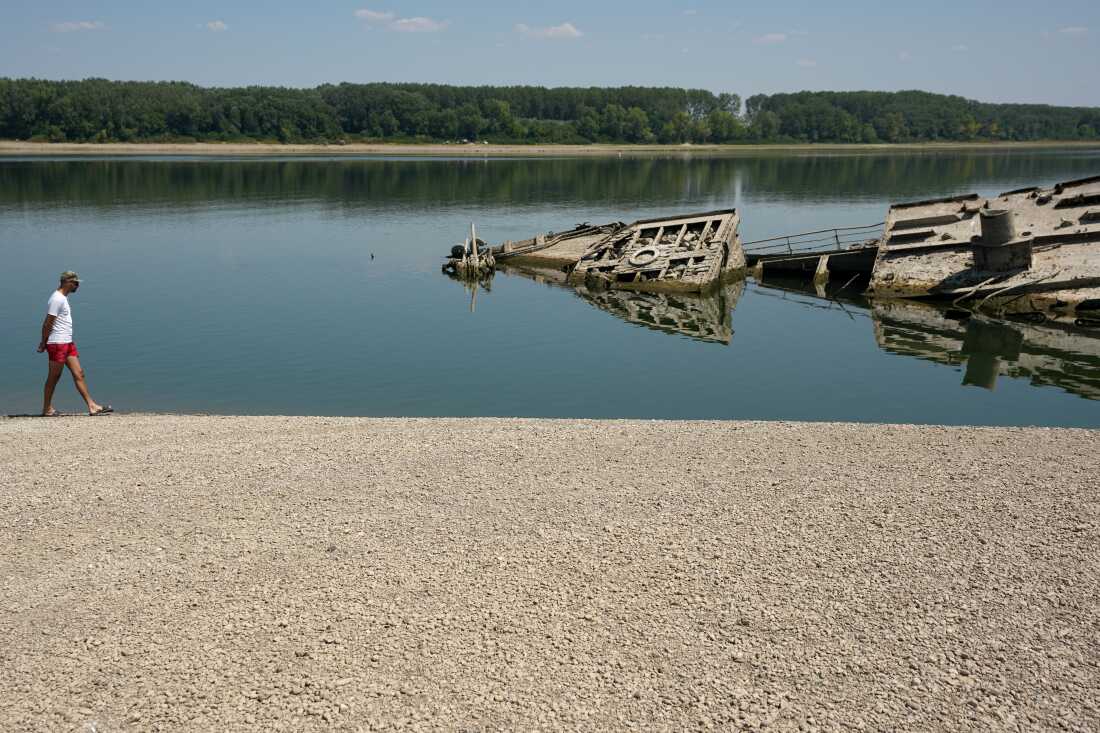
The heat wave across Europe has led to historic low water levels in the Danube River, significantly affecting power operations and unveiling the impacts of climate change. The Danube’s decreased flow nearly forced Hungary to shut down its Paks Nuclear Power Plant. Fortunately, water levels rose slightly by morning, preventing a complete shutdown, as stated by Prime Minister Péter Magyar.
Romania, dealing with similar low river levels, used controlled explosions to divert river water to its nuclear facility. Meanwhile, in Bulgaria, a cruise ship grounded due to the Danube’s conditions.
The declining water has also brought historical artifacts to the surface, including WWII German warships in Serbia, which serve as reminders of the river’s dramatic retreat.
Wildfires and Heat-Related Challenges
Persistent hot weather has spurred wildfires in Europe, especially in Greece. Firefighters have been working to manage fires near Athens, with additional crews from helicopters. Unfortunately, a helicopter collision resulted in fatalities, along with previous firefighter deaths in Crete and the Peloponnese.
In France, most wildfires have been controlled, although unexploded WWII munitions were discovered due to fire exposure.
Health Concerns and Warnings
The extreme temperatures have prompted health warnings. Italy reported that most major cities are on high alert due to the heat. Similarly, the UK issued alerts for several regions. Notably, the Czech Republic recorded its highest overnight temperature at over 82 degrees Fahrenheit, highlighting the ongoing weather challenges across Europe.