
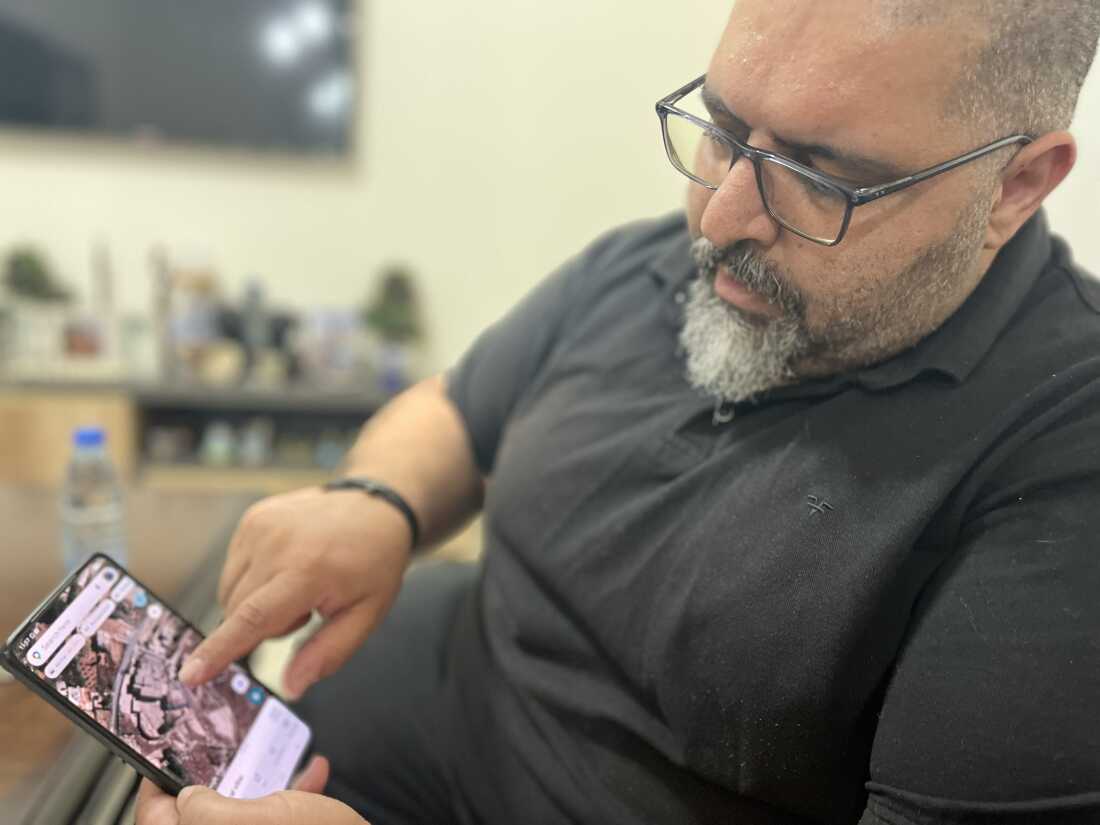
In southern Lebanon, villagers like Mazen Farah are confronting the grim reality of their homes’ destruction through satellite imagery. Using his phone, Farah views satellite images of Yaroun, specifically the Christian section, to assess damage caused by recent conflicts. He highlights his family home, stating: “This is what it shows from the satellite – it shows that it has been destroyed.” Despite visible destruction, Israeli officials deny striking certain sites, such as a local convent, claiming alternative evidence as proof.
The village of Yaroun suffered major destruction following renewed conflict involving Hezbollah and Israeli airstrikes. In March, hundreds of thousands were displaced as over 100 villages were targeted. Although a ceasefire was declared on April 17, Israel proceeded with demolition of buildings, citing Hezbollah infrastructure as targets. However, details and evidence have not been widely shared, fueling skepticism among affected residents.
Israel’s strategy, announced by Defense Minister Israel Katz, involves depopulating villages near the border to form a so-called “buffer zone” and avert threats in northern Israel. Consequently, displaced residents are barred from returning, even temporarily. The persistent threat of retaliation deters locals from documenting the damages through video or photography. Consequently, communities resort to acquiring commercial satellite images to verify the state of their properties. Each image, however, costs a minimum of $112, a financial burden for many. To compound the issue, U.S. government interventions led to refusals from some satellite companies to provide images of Lebanon.
Resilient families like Geryes Saloum’s wait anxiously for pictures of their homes. Saloum built his house a decade ago but now lives with uncertainty about its fate. When reports emerged of another home’s demolition, his nights were sleepless. The U.N., alongside aid groups, invested millions rebuilding infrastructure post-ceasefire, instilling hope. However, renewed conflict in March following escalations involving the U.S., Israel, and Iran doused these hopes.
Around 90 percent of Yaroun, encompassing both Christian and Muslim sectors, lay in ruins. Mayor Hafez Ghacham confirmed significant devastation caused since March. The village’s key cultural landmarks including the Greek Catholic Saint George Church faced obliteration.
Displaced villagers momentarily returned to pray before restrictions tightened again. By early May, the demolition of a convent and a Catholic school—vital community institutions—further strained residents’ resilience. Despite Israeli denials of this destruction, corroborating satellite imagery tells a different story.
Yaroun, part of the historical Galilee region, held significance as a place of beauty and religious relevance. Once a picturesque locale adorned with olive and citrus trees, the greenery and historic stone houses now stand mostly leveled. With elevation of 2,600 feet, it offered a view into Israeli farming settlements, yet now it features a stark emptiness.
Israeli occupation of southern Lebanon spanned until 2000, driven out by Hezbollah’s resistance. During those years, young men fled to avoid conscription, forming diasporas across the U.S., Canada, and Australia. Still, they maintained ties, investing in homes and summer visits, only to now rely on satellite images to measure loss.
Mazen Farah is a case in point. His family treasures memories of their home, which embodied years of labor. Today, satellite-imaged rubble marks where their house stood. Despite accusations against Hezbollah, villagers affirm the absence of militant presence or equipment, citing security systems installed to ensure transparency.
Americans with roots in Yaroun find themselves especially aggrieved. As property owners, they grapple with the implications of U.S.-funded military actions indirectly affecting their ancestral homes.
The economic toll plagues many. For instance, Hanna and Nehmi Farah invested extensive savings into residences, integral to their retirement plans. Despite initial relief from receving images showing intact properties, subsequent updates often bear grim confirmations of demolition. As they weigh their options, the conundrum of reconstructing amidst looming threats of destruction persists.
Yaroun’s residents, like Qasem Fares, share stories of hard-won success tracing back to humble beginnings. Fares invested millions in his home, attributing its prominence to labor abroad. Despite these accomplishments, Fares now faces the harsh reality of residing in a vanished homeland, clinging to faded dreams.
As displaced individuals recount their narratives, reflections on loss are interspersed with hopes for restoration. Despite elder residing populations likely missing a chance to return, younger generations share ambitions of reclaiming and rebuilding. Their optimism, however, must confront continual geopolitical uncertainties and past precedents.
In the wake of adversity, residents hope international dynamics may someday allow for peace and rebuilding. As families navigate the intricate maze of international relationships and geopolitical strain, rebuilding faith and homes remains a challenging endeavor, shadowed by past disruptions and future uncertainties.