
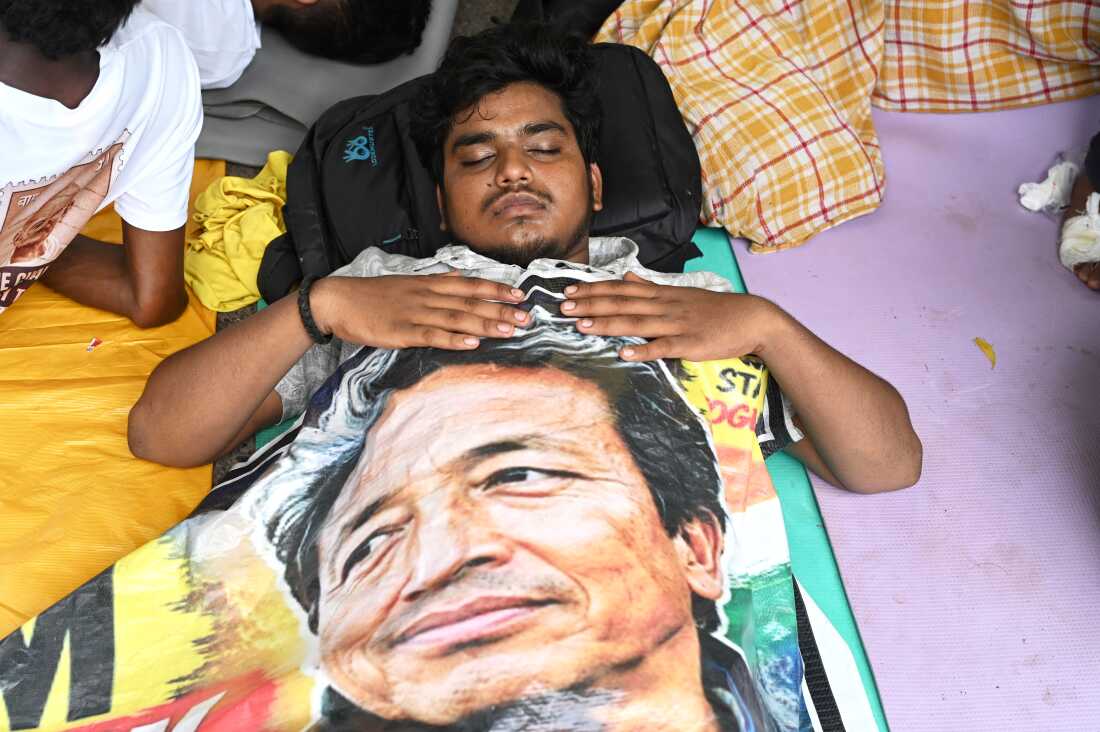
NEW DELHI — Prominent Indian activist Sonam Wangchuk concluded a 26-day hunger strike on Friday, igniting a significant youth movement. The protests, centered around education reforms, have escalated into one of India’s most notable demonstrations in recent years.
The catalyst for the uprising, known as the ‘Cockroach’ protests, was alleged leaks in competitive entrance exams. Since its inception over a month ago, it has captured public outrage about unemployment, government accountability, and economic opportunity. This movement has encouraged participation from diverse groups, including professionals, families, and activists in New Delhi and cities nationwide.
We won’t let Sonam sir’s sacrifice go in vain,”said Abhijeet Dipke, founder of Cockroach Janta Party, which leads the movement named after a comment by the supreme court chief justice comparing some unemployed youth to cockroaches.
The protests persist despite police efforts to disperse marchers with tear gas and batons earlier this week. Thousands returned to the streets, demonstrating profound dissent against Modi’s administration.
Wangchuk, in a post on X, mentioned ending his fast with the presence of federal ministers after negotiations and concerns over potential violence. The specifics of the discussions were not disclosed.
Organizers demand the resignation of Education Minister Dharmendra Pradhan and have planned nationwide demonstrations. Solidarity is shown with students who suffered police brutality during a march to Parliament, which attracted thousands.
A day prior, Modi addressed the protests, proposing fast-track courts for exam paper leak cases and promising new legislation to tackle these leaks. These announcements have not calmed protesters, who continue to demand government accountability and reforms, including compensation for families of students affected by exam paper leaks.