
At Coherent’s facility in Sherman, Texas, AI innovation is taking center stage. CEOs Jim Anderson of Coherent and Jensen Huang of NVIDIA discuss how using light for data transmission can enhance efficiency in AI data centers. Coherent has ambitious plans to significantly increase its production next year.
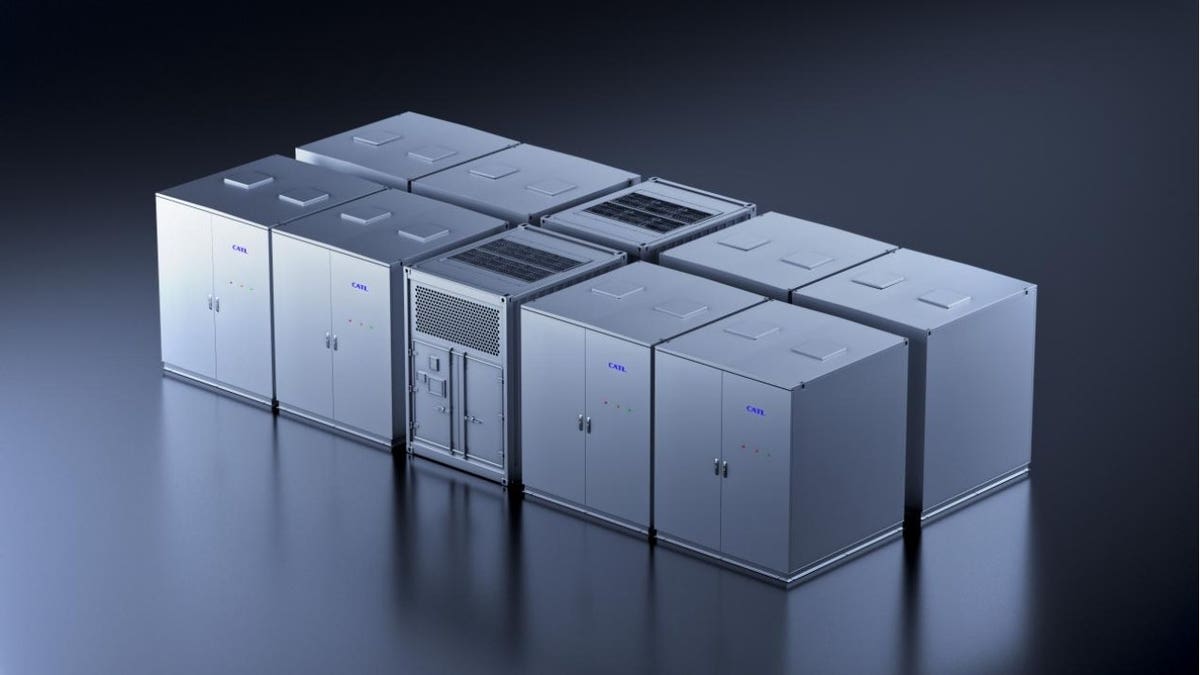
The introduction by Chinese battery giant CATL of the TENER Sodium Energy Storage System could revolutionize the power grid. This system is heralded as the first sodium-ion energy storage solution ready for commercial use. It’s designed for use in large storage facilities, crucial as energy demands rise owing to factors like AI data centers and renewable energy storage.
Despite the lack of a U.S. launch date, this highlights the potential future of grid storage. CATL’s system was recently showcased in Munich, with plans to roll out globally by June 2027. By then, sodium-ion batteries may play a significant role in energy storage, supporting solar and wind power projects during peak demand hours.
Sodium presents a viable alternative to lithium for battery storage. It’s far more abundant, potentially easing the pressures on lithium supplies and prices. However, CATL doesn’t foresee sodium replacing lithium entirely; instead, it could complement lithium in diverse storage systems.
A major selling point for CATL’s TENER Sodium system is its compatibility with existing lithium iron phosphate energy storage platforms. This adaptability can simplify infrastructure adjustments, offering more flexible storage durations ranging from 1 to 8 hours.
Moreover, the system is engineered to perform well under extreme temperatures, with claims of enhanced safety and reduced operating costs. Its design reportedly lowers heat generation and auxiliary power consumption, key advantages for large-scale projects.
CATL’s commitment to sodium-ion technology is evident in its extensive research investment and pre-arranged orders. The company has significantly expanded its production capabilities in China, positioning sodium-ion batteries as a serious contender in commercial energy storage.
While you might not purchase this battery system directly, its impact on electricity storage could be profound. Reliable sodium-ion storage offers utilities a new way to support the grid, especially as AI data centers increase demand. While not a cure-all, this development could lay the groundwork for more adaptable energy storage solutions.
CATL’s initiative represents a forward step in balancing energy supply and demand. However, the adoption of such systems in the U.S. remains speculative, pending evaluations by utilities and regulators. Ultimately, the promise of sodium-ion batteries lies in their potential to diversify and improve grid storage options.