
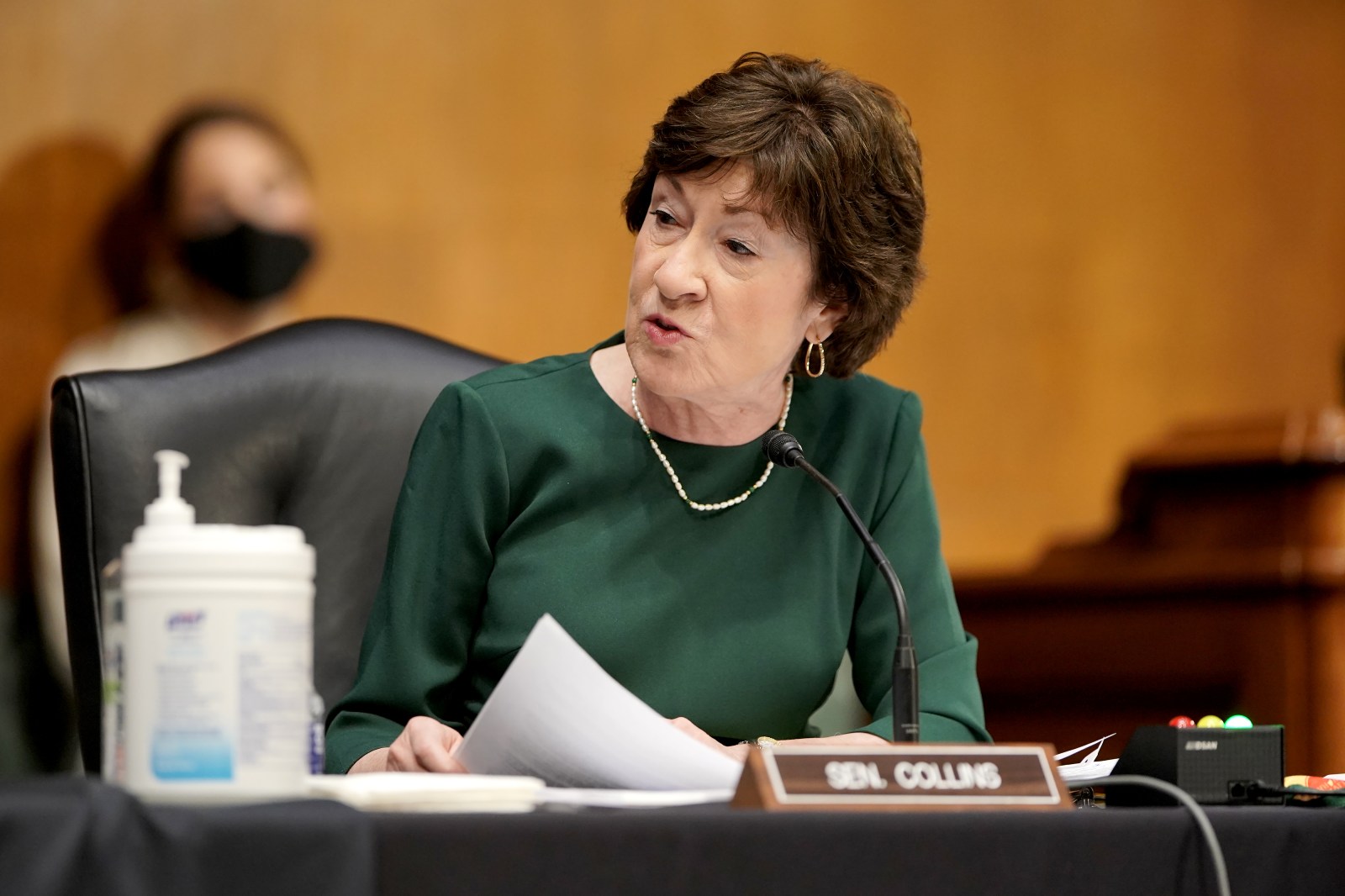
Senator Susan Collins Raises Alarm
Senator Susan Collins has issued a stern warning to the Trump administration, accusing it of attempting to politicize federal health research funding. This comes amid a contentious debate over the oversight of National Institutes of Health (NIH) grants, during Collins’ reelection campaign, which polls indicate could be one of the most competitive in her career. Democrat Troy Jackson holds a slim lead according to a recent CNN/SSRS poll, which shows Jackson at 48 percent against Collins’ 45 percent, signaling a highly competitive race, rated a toss-up by election experts.
Executive Order Controversy
The dispute escalated following a report by The Washington Post, stating President Donald Trump is contemplating an executive order to establish a commission that would review NIH grants. This raises concerns that political appointees might influence the allocation of nearly $50 billion in biomedical research funding. The report highlights White House budget chief Russell Vought’s criticisms of NIH, suggesting a need for increased scrutiny over initiatives perceived as conflicting with Trump’s agenda.
Collins and Other Lawmakers Express Concerns
The Office of Management and Budget (OMB) should not interfere with agency grant decisions.” Collins asserted on social media, cautioning that any political involvement contradicts congressional intent.
Collins emphasized the negative impact of politicizing grant awards, which traditionally rely on scientific criteria. She argued that shifting focus from scientific need to political ideology undermines established principles. Collins’ statement was echoed by bipartisan congressional leaders, including Senate Appropriations Committee Vice Chair Patty Murray and House Appropriations Committee ranking member Rosa DeLauro, all of whom voiced opposition to expanding White House control over NIH grants.
Previous Concerns from Collins
Collins has a history of opposing political interference in grant processes. In a July letter to Vought, she urged withdrawal of certain aspects of a proposed government-wide grant-making rule, citing potential harm to scientific research and burdens for small communities. Central to her objection was the proposal for senior political appointees to review grants post scientific evaluation, assessing alignment with presidential policies.
She noted that politicizing grant decisions could undermine scientific merit and lead to ideological bias. Additionally, Collins opposed measures allowing federal agencies to terminate grants deemed inconsistent with national interest, warning of severe repercussions for ongoing medical studies.
Controversial Oval Office Meeting
Tensions increased following reports of a heated Oval Office session involving Trump, Vought, and NIH Director Jay Bhattacharya. According to The Washington Post, Vought pushed for increased oversight, claiming NIH supported projects conflicting with Trump’s agenda, whereas Bhattacharya defended current review protocols.
NIH spokesman Joshua Pradko commented, reaffirming the commitment to funding biomedical research and dismissing suggestions of grant rescissions.
Legislative Action and Public Statements
Congress recently included language in a continuing resolution to temporarily halt OMB’s grant-making rule through mid-December. Collins reiterated that any attempt to achieve similar changes through executive measures would defy congressional intent.
Lawmakers across party lines have condemned the proposal. Senator Patty Murray emphasized that medical research funding decisions should remain under the purview of NIH experts, not influenced by political appointees.
A single political appointee could terminate critical studies without scientific rationale,” Murray warned in a statement to Newsweek.
She urged Republicans to resist efforts to infuse medical research funding with political agendas.
Impact on Maine Senate Race
As Collins confronts the NIH funding dispute, she faces a challenging political climate. Recent polling indicates a neck-and-neck race with Jackson. A CNN/SSRS survey shows continuous competition, with Collins having a favorable rating of 41 percent against a 51 percent unfavorable rating. Jackson’s ratings were 36 percent favorable and 42 percent unfavorable. Moreover, data reflects significant disapproval of Trump among Maine voters.
Despite historical polling challenges, Collins has demonstrated resilience, notably winning reelection in 2020 despite trailing in most polls against Democratic opponent Sara Gideon.