
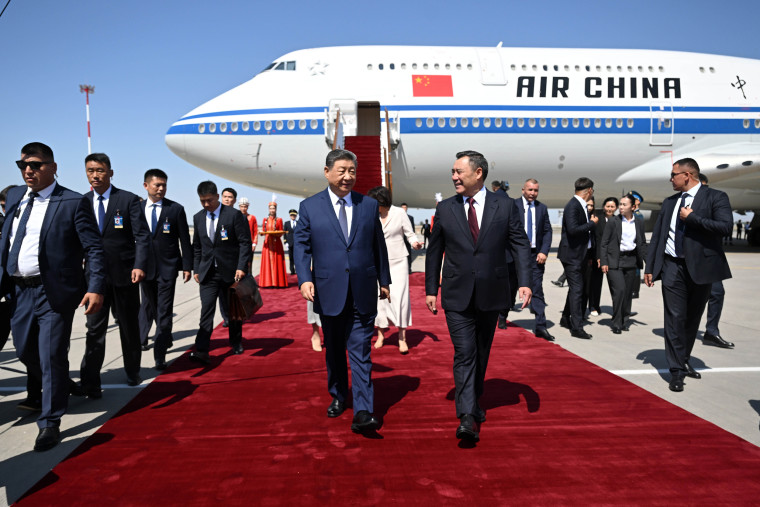
Gathering of Global Leaders
Leaders from China, Russia, and India joined other heads of state in Kyrgyzstan for the Shanghai Cooperation Organization (SCO) summit. This event aimed to present an alternative to U.S. global influence. Chinese President Xi Jinping, Russian President Vladimir Putin, and Indian Prime Minister Narendra Modi attended the summit in Bishkek, Kyrgyzstan’s capital.
Bilateral Sessions
Putin held separate meetings with Xi and Modi. During these sessions, Putin expressed Russia’s willingness to make the visa-free regime with China permanent. He also highlighted the growing relationship between Russia and India. Discussions between Putin and Iranian President Masoud Pezeshkian are expected as part of the official SCO sessions.
Strengthening Non-Western Alliances
The summit is seen by Russia and Iran as a platform to reinforce ties with non-Western partners amid ongoing conflicts. Russia continues its invasion of Ukraine, while Iran maintains its war with the United States and Israel. Modi conveyed India’s support for concluding the war in Ukraine, emphasizing the importance for all humanity.
Origins and Expansion of the SCO
Established in 2001 by China, Russia, and four Central Asian states, the SCO began as a security forum. Over 25 years, it has expanded in size and influence. Despite its growth, the organization’s goals remain vague and its recognition limited. Today, the SCO includes 10 member nations, such as Russia, China, India, and Iran. Many countries hold the status of “dialogue partners.”
China’s Role in the SCO
China, alongside Russia, presents the SCO as an alternative to Western organizations like the G7. China aims to expand SCO’s influence, pledging development and financial aid. According to China’s Ministry of Foreign Affairs, the SCO has explored new regional cooperation paths. Beijing consistently promotes an alternative world order with Russia.
Disagreements Among Members
For SCO members, the summit offers a chance to show strong global ties despite deteriorating relations with the West. Despite its significance, the SCO is not a unified bloc. Analysts highlight significant disagreements among members, reflecting distinct national interests.
India’s Strategic Participation
For India, experts suggest the summit focuses on optics and strategic signaling. The forum is heavily influenced by China and includes Pakistan, both rivals of India. Security expert Dinakar Peri notes SCO provides India with a strategic position, allowing it to track geopolitical shifts and project itself as a reliable player.
Turkey’s Objectives
Turkey seeks to fortify its regional position through its partner status within the SCO. It balances traditional West ties with increased influence in Eurasia. President Recep Tayyip Erdogan wants Turkey to become a permanent member. Turkey maintains close European Union trade ties since a 1995 deal, though its EU membership bid remains stagnant.
Security Measures in Bishkek
As part of security precautions during the summit, major shopping malls, markets, and other sites in Bishkek were closed. Commercial flights to and from Manas Airport faced restrictions. Kyrgyz President Sadyr Zhaparov’s spokesman advised residents to avoid city center traffic. The school year start was delayed until Sept. 15, making Tuesday a non-working day for Bishkek’s public sector.