
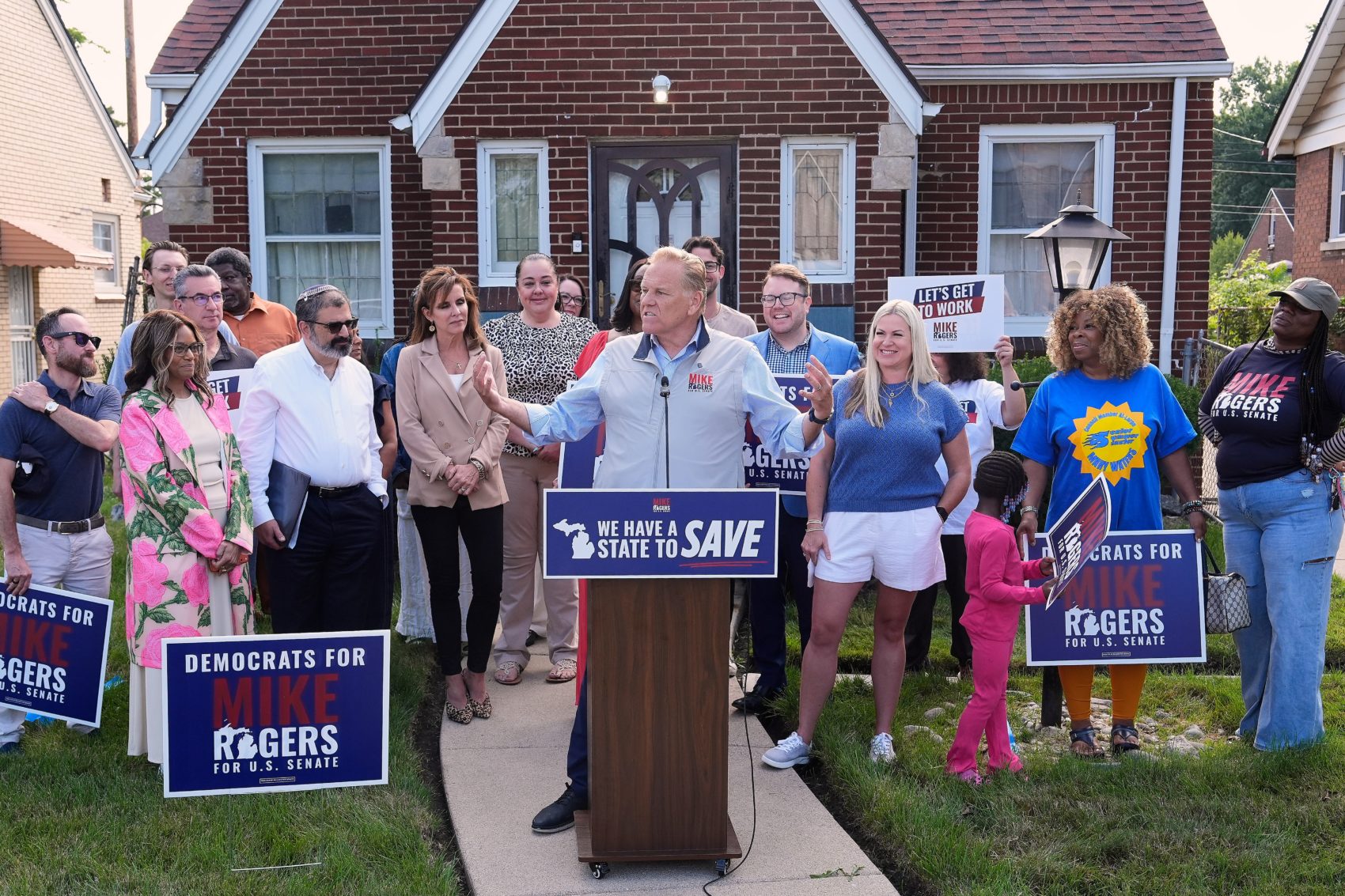
The U.S. Senate race in Michigan is about more than party control. In Detroit’s suburbs, Jewish Democrats face tough decisions about faith and identity while considering support for their party’s nominee. Nearby in Dearborn, Arab American leaders alarmed by Republican rhetoric express growing concerns about the political landscape. These issues have become central in the race between Republican Mike Rogers and Democrat Abdul El-Sayed. El-Sayed, a former public health official, could be the first Muslim senator in U.S. history.
Rogers, a former congressman, portrays El-Sayed as an extremist and a threat to Jewish voters. A recent Republican senator’s comments linking El-Sayed to terrorist imagery have further fueled these sentiments. The race divides communities, with a synagogue attack in West Bloomfield and Dearborn’s ‘Wall of Tears’ offering stark reminders of broader conflicts.
Rogers Seeks Jewish Support
Rogers focuses on swaying Jewish voters, capitalizing on divisions from a previous Democratic primary where Israel was a key topic. Democrat Haley Stevens received support from pro-Israel groups, emphasizing her backing of Israel. Rogers plans an event with Senator Ted Cruz to address security issues in the wake of attacks.
Efforts to win Jewish voter support include visiting synagogues and speaking against violence. A recent attack at a synagogue involving an individual from Lebanon heightened tensions. El-Sayed’s response, although condemning the act, drew criticism and became a focal point for Rogers’ campaign.
Democratic Struggles
Democrats remain divided over El-Sayed’s candidacy. State Sen. Jeremy Moss, a Jewish candidate, has not endorsed him. While Stevens has expressed support, she has abstained from active campaigning with El-Sayed. Skepticism stems from El-Sayed’s associations with controversial figures and misinterpretations of his comments.
El-Sayed’s supporters hold talks with Jewish voters to address these differences. Former Rep. Andy Levin, endorsing El-Sayed, emphasizes open discussions about their community concerns. The dialogue is aimed at addressing misconceptions and calming fears.
Arab American Backlash
The Arab American community in Dearborn reflects political shifts. Once supportive of Trump, this community has grown critical of his and other Republicans’ rhetoric. Dearborn Mayor Abdullah Hammoud highlights issues with how Republicans discuss Muslim politicians like El-Sayed and NYC Mayor Zohran Mamdani, citing religious discrimination.
Leaders in the Arab American community, like Bishara Bahbah, stress that discrimination based on religion is unacceptable. Bahbah notes the importance of considering such rhetoric as the elections approach, recalling how Arab Americans previously supported Trump but face new concerns.
Trusted journalism and open dialogue remain essential in tackling these complex voter concerns.