
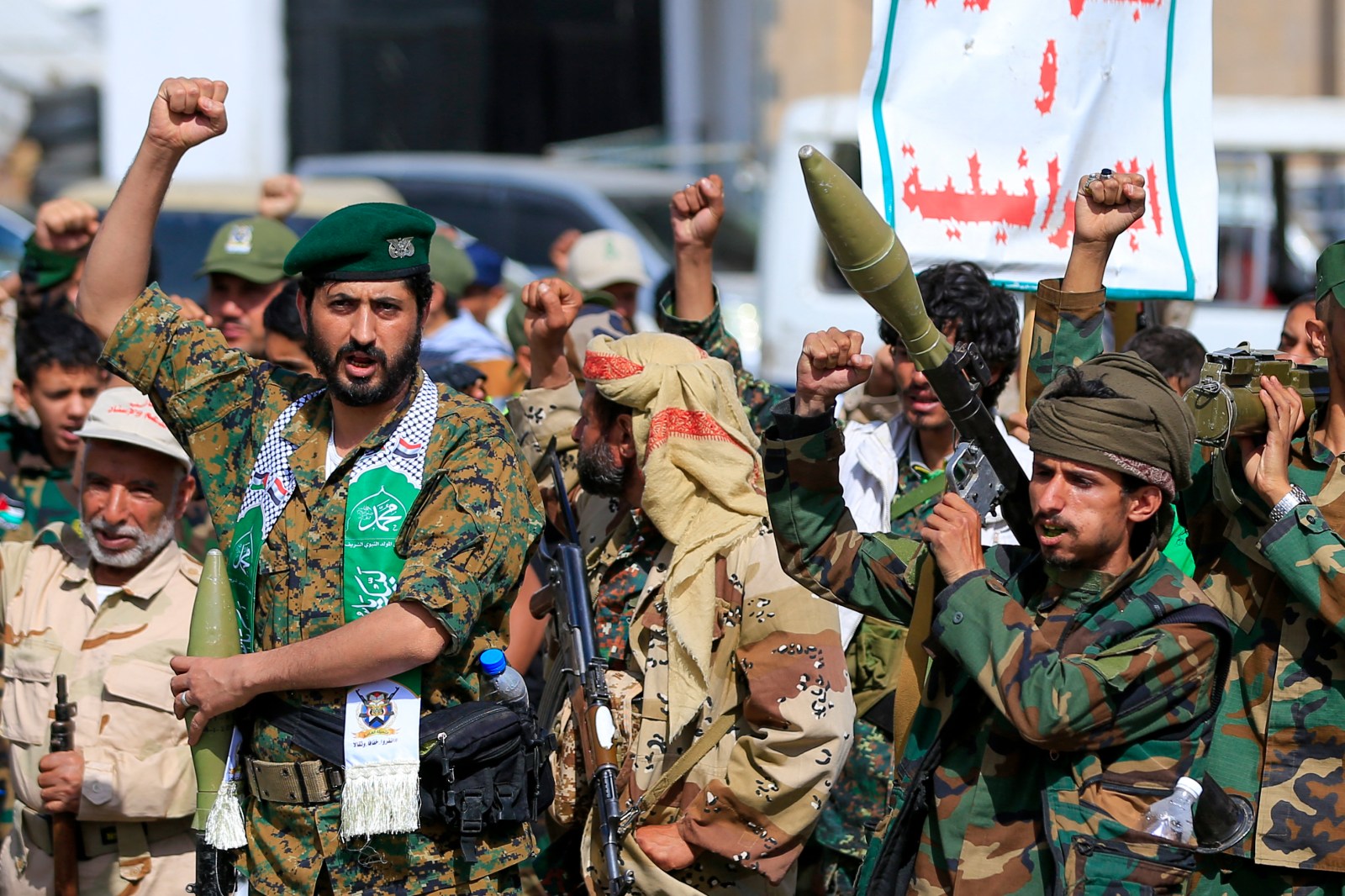
Saudi Arabia stands at the center of the Middle East crisis, grappling with increasing pressure from Iran and its allies, referred to as the Axis of Resistance. Since the United States and Israel’s initiation of conflict with Iran on February 28, Saudi Arabia has encountered attacks from Iran, Iraqi militias under the Islamic Resistance in Iraq, and Yemen’s Ansar Allah, also known as the Houthi movement.
Escalation in Yemen
Recently, Yemen’s southern border has become exceedingly volatile. Ansar Allah has intensified cross-border attacks against Saudi Arabia, while gaining ground against Riyadh-supported local government forces. The clashes have been the fiercest since an April 2022 ceasefire paused the Yemeni civil war.
The situation could spill further, with Pakistan stepping in under a mutual defense pact with Saudi Arabia, signed last month alongside Turkey. The U.S. and Israel have previously retaliated against Yemen following the initial missile and drone attacks by Ansar Allah during the October 2023 Gaza conflict.
Ahmed Nagi, a senior Yemen analyst at the International Crisis Group, described Ansar Allah’s seizure of the port of Mokha as significant for Saudi Arabia.
Mokha’s capture moves Ansar Allah closer to the strategic Bab el-Mandeb Strait. This passage offers an alternative to the disrupted Strait of Hormuz amidst Iranian aggression. The situation places Saudi Arabia in a precarious position.
- Returning to negotiations: Saudi Arabia could address some Houthi demands but risks weakening its stance.
- Military escalation: This path demands substantial resources and effort, posing significant difficulty.
Historical Context and Recent Developments
Saudi Arabia has a longstanding intervention history in Yemen. In the 1960s, Riyadh struggled against an Egypt-backed republican uprising. In 1970, Saudi Arabia recognized a moderate revolutionary government. More directly confronting Ansar Allah years later, Saudi-led airstrikes stalled their advance but left them controlling a portion of Yemen.
The April 2022 truce endured through significant regional upheavals. Despite Ansar Allah’s attacks following a Hamas assault on Israel in October 2023, Yemen’s internal lines stayed largely unchanged. Clashes between Saudi-backed forces and UAE-supported southern separatists marked the notable changes.
The joint U.S.-Israeli conflict with Iran presented a more challenging test. Tehran’s response targeted multiple Middle Eastern countries, including Saudi Arabia. Tensions escalated in Yemen post a Saudi airstrike on Sanaa International Airport before Ansar Allah’s delegation’s return from Tehran in July.
The Emerging Security Framework
Traditionally reliant on U.S. support, Saudi Arabia may explore alternative security partnerships amidst U.S.-Iran tensions. Nawaf Obaid, a consultant for the Saudi Royal Court, indicated that a new regional security framework is forming around Saudi Arabia.
The Mecca Accord extends beyond the Houthi conflict, linking Saudi Arabia, Pakistan, and Turkey in a post-war Middle East landscape.
This coalition aims to counter Iranian influence, constrain Israeli actions, and diversify regional security dependencies.
Potential Escalations
Saudi Arabia’s position as a central player in the Middle East’s emerging order also marks it as a key target.
Obaid emphasized Saudi Arabia’s economic transformation vulnerabilities due to potential missile and drone attacks.
The region’s stability hinges on degrading Houthi military capabilities, thus neutralizing threats to Saudi sovereignty and global commerce. Saudi Arabia might escalate conflict using support from the U.S. or its new allies, Pakistan and Turkey.
Sanaa-based journalist Hussein Albukhaiti warned of possible Ansar Allah retaliations. Should Saudi Arabia engage militarily with U.S. or Pakistani aid, Yemen might close the Red Sea to their fleets, similar to Iran’s strategy in the Persian Gulf.
Albukhaiti highlighted the potential for further Houthi attacks on Saudi infrastructure should Saudi aggression persist. The journalist underscored the severe threat to Saudi energy facilities, urging an end to Saudi military actions as a solution.
Challenges Ahead for Saudi Arabia
Saudi Arabia already feels the effects of the expanding conflict within its borders. Kristian Ulrichsen, a Middle East expert, noted that Saudi oil production has plummeted to its lowest since 1990, with export levels hitting a 13-year low.
Blocking the Bab el-Mandeb Strait could worsen internal economic challenges. Prolonged conflict raises questions regarding the Kingdom’s ambitious Vision 2030.
Ulrichsen highlighted the risks to Saudi development plans due to potential Houthi strikes on civilian infrastructures.
Support for Yemeni groups under the official government may not suffice in deterring or overcoming the Houthis. A failure here leaves Riyadh uncertain of the next course of action.
Newsweek contacted representatives from Ansar Allah and Saudi Arabia for their comments.