
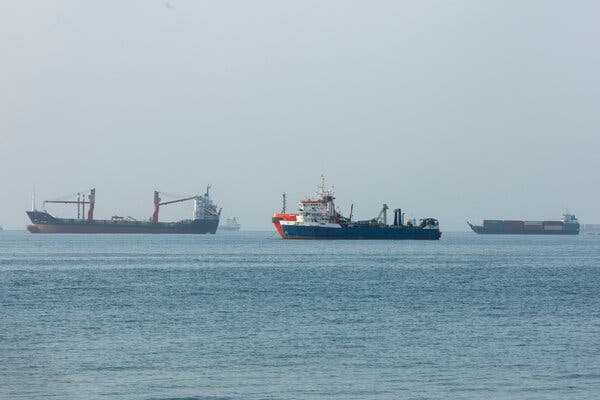
On May 25, 2026, American military forces executed what the U.S. Central Command has described as “self-defense strikes” in southern Iran. These actions were taken to safeguard U.S. troops from threats posed by Iranian forces, according to a statement by Capt. Tim Hawkins, a spokesperson for Central Command. The strikes focused on missile launch sites and Iranian boats attempting to deploy mines.
“U.S. Central Command continues to defend our forces while using restraint during the ongoing cease-fire,” stated Captain Hawkins. He did not disclose the identity of the ships that were attacked, their locations, or the exact sites of the U.S. strikes.
A senior U.S. military official revealed that Iranian surface-to-air missiles posed a threat to nearly two dozen U.S. Navy warships. These included two aircraft carriers and their escort vessels stationed in the Gulf of Oman and Arabian Sea. The U.S. forces are enforcing a blockade against vessels attempting to enter or leave Iranian ports. The American strikes targeted areas near Bandar Abbas, a crucial Iranian port and naval base.
American and Iranian forces have engaged in several skirmishes since a cease-fire took effect approximately six weeks ago. The recent strikes coincided with the arrival of Iranian negotiators in Qatar, aiming to discuss ending the ongoing war. These events risk undermining tentative agreements that President Trump indicated might lead to reopening the Strait of Hormuz and alleviating major energy disruptions.
The targeting of U.S. Navy ships by Iranian missile batteries was not unforeseen, despite claims from President Trump, Defense Secretary Pete Hegseth, and other military leaders. They stated that the 38-day American-Israeli military campaign had significantly weakened or dismantled much of Iran’s combat capabilities.