
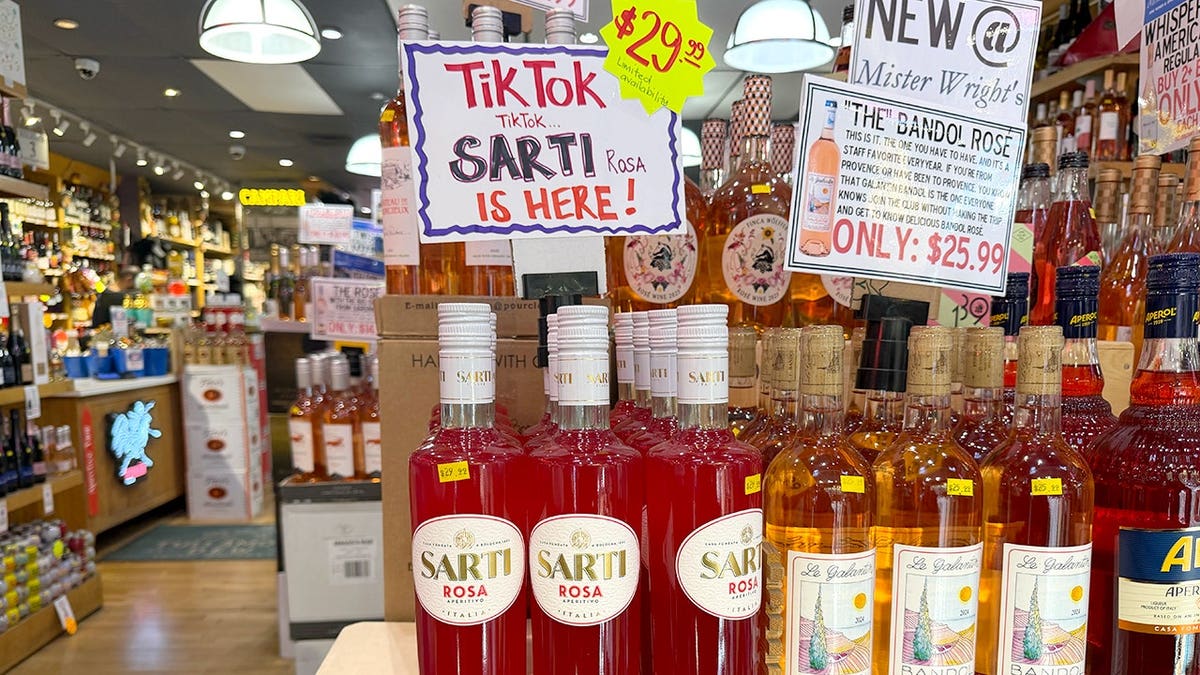
Sarti Rosa, a newcomer to the American market, is creating quite a buzz. Previously exclusive to Europe, this aperitif from Italy is now available in liquor stores across the United States. Its arrival has sparked a viral trend.
The spirit originates from Italy and comes from Casa Luigi Sarti & Figli, a distillery with a history dating back to 1885 in Bologna. The liqueur offers a blend of blood orange, mango, and passion fruit flavors.
Recent trends in summer cocktails include the Aperol and Hugo spritz. These drinks have set the stage for the Sarti spritz. With its vibrant pink color and sweet, fruity taste, experts believe this new spritz could attract many drinkers.
“Aperol spritz is out, Sarti spritz is in,” stated an influencer from Florence, Italy, reflecting the sentiment of many social media users.
Sarti Rosa has become a sensation on platforms like TikTok. Fans in the U.S. continue to request its arrival in their cities via the official @sartispritz Instagram page. In a response, Sarti confirmed their intention to expand availability in the States.
In New York City, Sarti Rosa retails for around $29.99 per bottle. Though popular online, according to Derek Brown of Drink Company, it hasn’t reached all bars yet. “Social media can be its own bubble,” he noted.
Brown pointed out that although the Sarti spritz has great potential, it is still gaining recognition in the U.S. The drink’s appeal lies in its pink hue, limited availability, and a 14% ABV, which could increase its desirability.
Restaurants like The Farm Italy in New York have started adapting the Sarti spritz to their menus. Their “Saint Sarti Spritz”, combining St-Germain, Sarti, lemon sorbet, mint, and prosecco, has already proven popular.
Even before diners enter, they express interest in the drink. Camacho, from The Farm Italy, noted that guests often request Sarti spritzes while making reservations.
The demand likely won’t fade with summer’s end, as new variations of the drink are expected for the fall and winter seasons.