
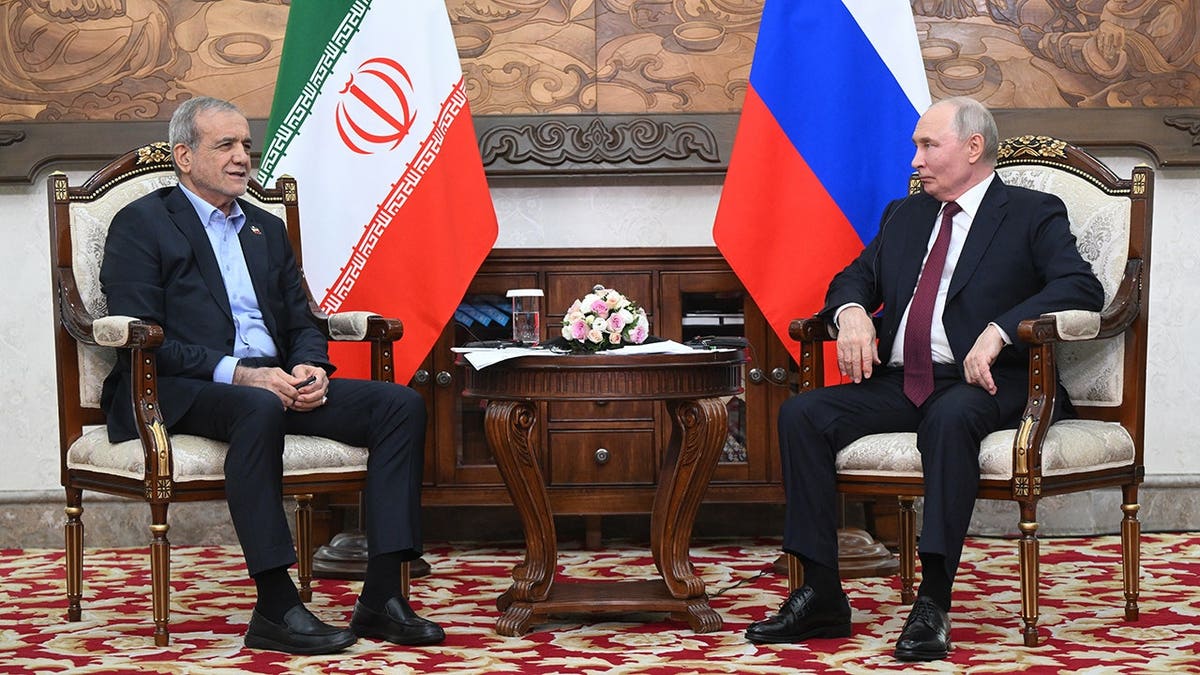
A confidential document from the Russian government outlines an extensive collaboration with Iran beyond simple trade. This plan includes alternative financial channels, nuclear cooperation, development of aircraft components in Iran, major energy projects, and new transport routes reaching the Persian Gulf.
Details of the Cooperation Plan
The 44-page document, titled “Plan for Cooperation Between the Russian Federation and the Islamic Republic of Iran for 2024-2026,” carries a “For official use” label. Approved on September 2, 2024, it assigns responsibility to various ministries, agencies, and state companies, with deadlines extending to the end of 2026.
The plan predates the ongoing conflict involving Iran and the United States, leaving uncertainties about the current status of the projects due to geopolitical changes. However, evidence confirms several initiatives mentioned have progressed over time.
Financial and Economic Strategies
Keti Korkiya, a research analyst with the Foundation for Defense of Democracies’ Russia Program, assessed the document for Fox News Digital, highlighting its architectural significance in the Russia-Iran relationship.
Significant progress includes increasing bilateral trade in national currencies from 68% in 2024 to 71% by 2026. It emphasizes the development of central bank digital currencies for cross-border settlements. Russia and Iran aim to circumvent Western financial systems by using independent messaging systems for financial transactions without explicitly mentioning the intention to bypass systems like SWIFT.
Evidence shows that in early 2025, Russia and Iran had largely shifted their settlements into national currencies using their own messaging systems. Tehran declared the start of a linkage between Iran’s Shetab and Russia’s Mir systems.
Strategic Nuclear and Energy Projects
The relationship includes critical arrangements in the nuclear sector. Rosatom, Russia’s state nuclear corporation, oversees Iran’s Bushehr nuclear power plant operations, including fuel supply and maintenance. On September 2, 2026, Rosatom confirmed Russian activity at Bushehr’s Unit 1 for scheduled maintenance, while work on Units 2 and 3 is ongoing. This cooperation integrates existing projects into a broader strategic framework.
The roadmap pinpoints specific Iranian oil and gas fields like Shadegan, Kish, and North Pars for Russian involvement. Certain financing specifics remain confidential. By February 2026, Russian state-owned ZN-Vostok advanced development in the Shadegan oil field, revealing partial implementation of the roadmap’s milestones.
Aviation Cooperation
Noteworthy is the plan for Iran to produce parts for Russian aircraft. Russia sought to identify which components could be manufactured in Iran and certify production sites through Rosaviatsiya. By 2025, Iranian firms gained approval for maintenance work on Russian planes, yet there is no independent confirmation that component manufacturing in Iran commenced.
Transportation and Communications Network
Efforts to expand transportation include plans for a railway linking Russia to Iranian ports on the Persian Gulf. Simultaneously, the Rasht-Astara railway project progressed, moving beyond the planning stage with engineering surveys launched by May 2025.
The roadmap also suggests further media and technology exchange, proposing content exchange and journalist training alongside technology contracts in “information security” and telecommunications.
Political Implications and Coordination
A European intelligence source notes that overseeing the Russian-Iranian commission is Russian Energy Minister Sergei Tsivilev, linked to President Putin’s extended family, underlining the political importance Moscow places on this partnership.
This cooperation reflects a strategic extension into trading, nuclear projects, and geopolitical alliances, suggesting an enduring partnership.