
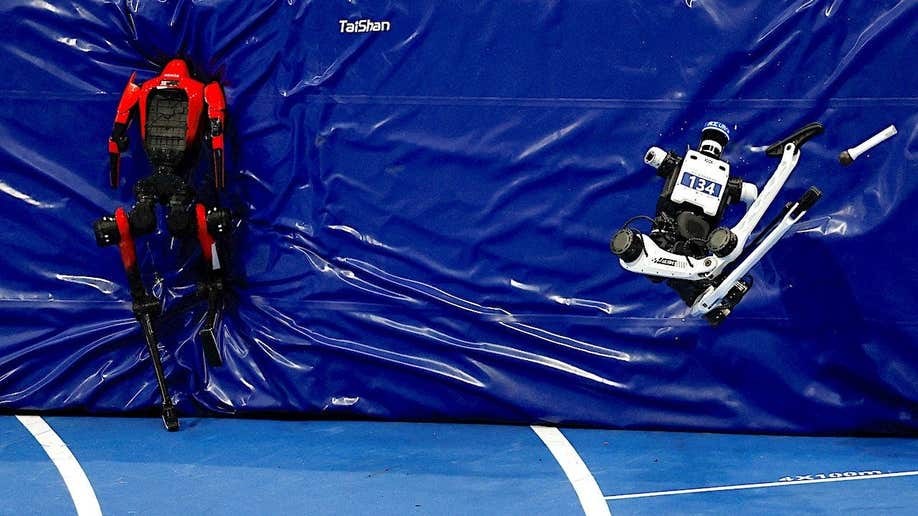
This week, the World Humanoid Robot Games captured attention globally with remarkable displays of robotics technology. The event showcased not only technological feats but also humorous mishaps, leaving spectators entertained and robotics experts fascinated.
Professor Christian Hubicki, from Florida State University, emphasized the event’s purpose: testing technological limits while easing public fears about robots taking over the world. The games aim to push robots to their speed limits, often resulting in dramatic crashes as they halt without finesse.
“Our aim was to demonstrate robot speed,” Hubicki remarked. “Post-run chaos is part of the spectacle.”
During the games, robots aimed to exceed human speed records, sometimes resembling missiles in their pursuit. A Chinese robot, Tiangong Ultra, surpassed Usain Bolt’s 100-meter sprint record with a time of 8.64 seconds, showcasing the rapid advancement in humanoid robot capabilities.
Despite impressive speed demonstrations, the event highlighted limitations in robot decision-making. Hubicki noted that while humanoid robots display incredible speed, they rely heavily on human input for navigation and actions.
“Humanoid robots excel in athletic tasks,” Hubicki explained, “but their higher-level intelligence still falls short compared to human capabilities.”
The games featured over 2,000 robots from 666 teams, primarily focusing on athletic feats and task-based challenges in various simulated environments. Although AI enhancements continue to evolve, the practical application of robot technology remains an ongoing challenge.
Hubicki remarked on the distinction between AI used in humanoid robots and more complex artificial intelligence systems. The current AI guiding robot movements is simpler, prioritizing quick reactions over deeper reasoning.
Incidents of robots interacting unexpectedly in real environments underscore the need for further advancements in AI comprehension and adaptability. As robots progress, understanding real-world contexts remains crucial for their integration into practical uses.
The event, described as the “Robot Olympics,” underscores both achievements and challenges within the realm of robotics. As robots evolve, addressing these limitations is vital to harness their potential effectively.