
Financial Struggles in Northwest Indiana
In Northwest Indiana, 39% of households are struggling to afford essential needs such as housing, childcare, food, transportation, healthcare, and technology. The recent Asset Limited, Income Constrained, Employed (ALICE) report highlights this issue, revealing that 114,782 households in the region face financial strain.
Across Indiana, the situation is similar, with 38% of households, numbering over one million, finding it challenging to meet their basic needs. ALICE households earn below the cost of essentials, yet their income exceeds the federal poverty level, which disqualifies them from assistance programs.
These households often comprise workers such as childcare providers, nursing assistants, and cashiers. Between 2007 and 2024, the ALICE essentials index in Indiana rose by over 61%, outpacing the broader Consumer Price Index which increased by 52%. United Way Northwest Indiana President Chris White emphasized the organization’s focus on assisting these populations.
Rising Costs and Wage Disparities
Chris White pointed out that while wages have been increasing, they aren’t keeping pace with the rising costs. The U.S. consumer inflation rate reached 4% in May, affecting families statewide and nationwide. In Indiana, the minimum cost to live and work for a single adult in 2024 was $28,764, and $74,028 for a family of four.
In Northwest Indiana, 27% of households lie below the ALICE threshold but above the federal poverty level. Lake County has the highest number of households below ALICE, with 82,388 households, followed by Porter County with 22,396 households.
Racial and Gender Disparities
The report identifies significant racial disparities, with 57% of Black households and 41% of Hispanic households below the poverty or ALICE thresholds. Statewide, 72% of households led by single women and 49% led by single men fall below the ALICE threshold.
Among racial groups in Indiana, 55% of Black households are under the ALICE threshold, compared with 36% of white households and 43% of Hispanic and multiracial households.
Efforts to Alleviate Financial Hardship
Addressing ALICE households requires a coordinated approach involving community infrastructure, employer practices, and public policy. State interventions like Governor Mike Braun’s gas tax holiday have offered temporary relief, but escalating costs for rent, groceries, and healthcare persist.
Chris White noted that families across various job levels face struggles, with earnings reaching $81,000 to $83,000 annually in Lake and Porter counties still insufficient to meet the costs.
Efforts from Community Organizations
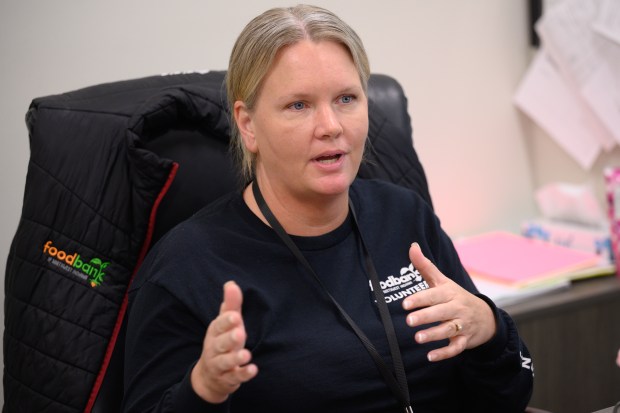
Tricia Sheaks from the Food Bank of Northwest Indiana emphasized the organization’s role in supporting families regardless of income. The food bank serves 60,000 people monthly, distributing up to 11.4 million pounds of food annually. Sheaks highlighted increased demand due to rising gas and food prices.
Lauren Zurbriggen of CoAction described the daily challenges faced by ALICE households and the growing affordability gap. The organization provides assistance beyond budgeting, helping families avoid high-interest payday loans.
The North Township Trustee’s Office, led by Virginia Carter, witnessed increased requests for help with utility bills and other essentials, spending over $200,000 more on assistance in 2026 compared to 2025.
Similarly, the St. John Township Trustee’s Office, headed by Cathy Lareau, sees greater demand for housing and food assistance while seeking long-term solutions for community members.