
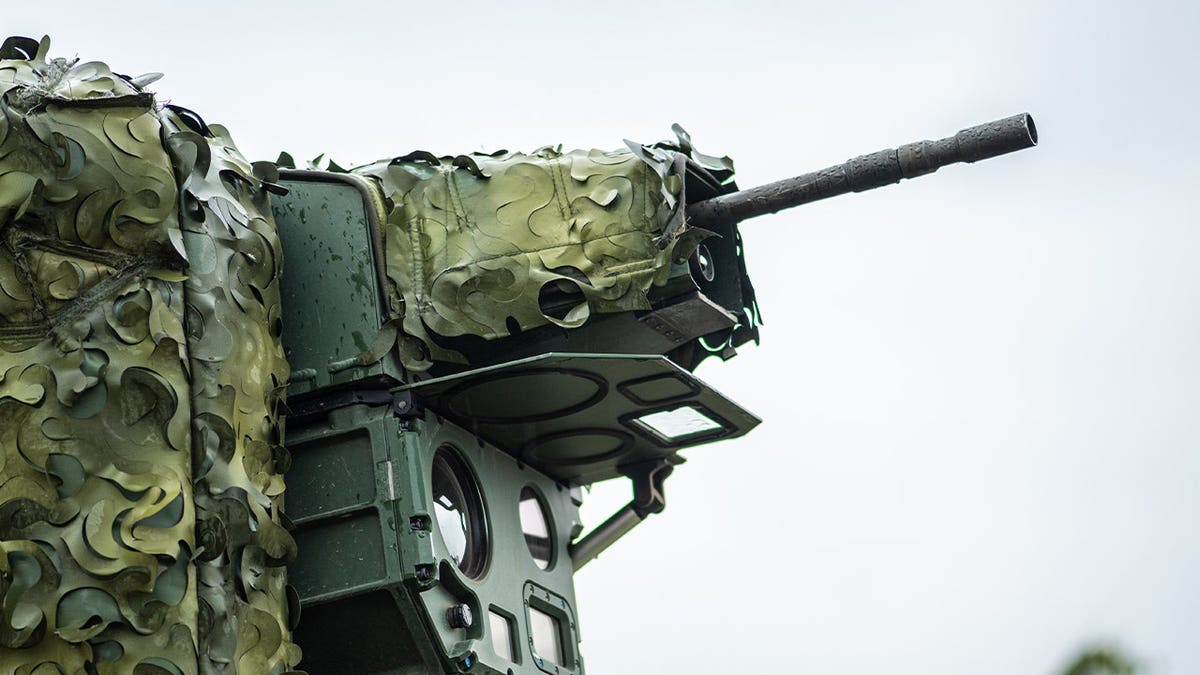
Laser weapons have long been a key focus for the Pentagon, aimed at neutralizing enemy drones and missiles swiftly without expensive interceptors. Now, the Army is nearing a potential milestone with the enduring high energy laser (E-HEL). This system might soon become the military’s first operational laser weapon.
Military Laser Weapons Advancements
The Pentagon is adapting to modern warfare, where low-cost drones can easily bypass traditional air defenses. Unlike missile interceptors that can cost millions, laser weapons offer a cost-effective solution. A notable development is the Army’s evolving deal with AeroVironment for E-HEL. Lt. Gen. Frank Lozano recognized the system’s significant progress during tests at the White Sands Missile Range.
Alongside the Army, the Air Force has been utilizing compact lasers overseas for drone defense. Similarly, the Navy’s continuous tests aboard destroyers highlight the integration of directed-energy weapons across various military branches.
Global Interest in Laser Technology
The advancements aren’t limited to the U.S. Israel’s Iron Beam system and China’s military laser projects showcase a global shift towards directed-energy technologies. Despite challenges in power generation and operational reliability, significant progress has been made, driven by rising threats from affordable drones in regions like Ukraine and the Middle East.
It’s all these other things that make it workable as a weapon system.— Tom Karako
Ongoing Developments and the Future
Despite these advancements, lasers won’t replace missile systems. Lasers, being line-of-sight weapons, have limitations. They excel in close-range defense but can’t engage distant threats over the horizon. Therefore, they are expected to complement rather than replace missile systems.
The military is also working on next-gen counter-drone missiles, priced competitively to present affordable defense alternatives. Beyond lasers, the Pentagon is exploring microwave systems like Epirus’ Leonidas to deal with drone swarms by disrupting their electronics. Radio-frequency technology is also in development to interfere with drone communications and control.