
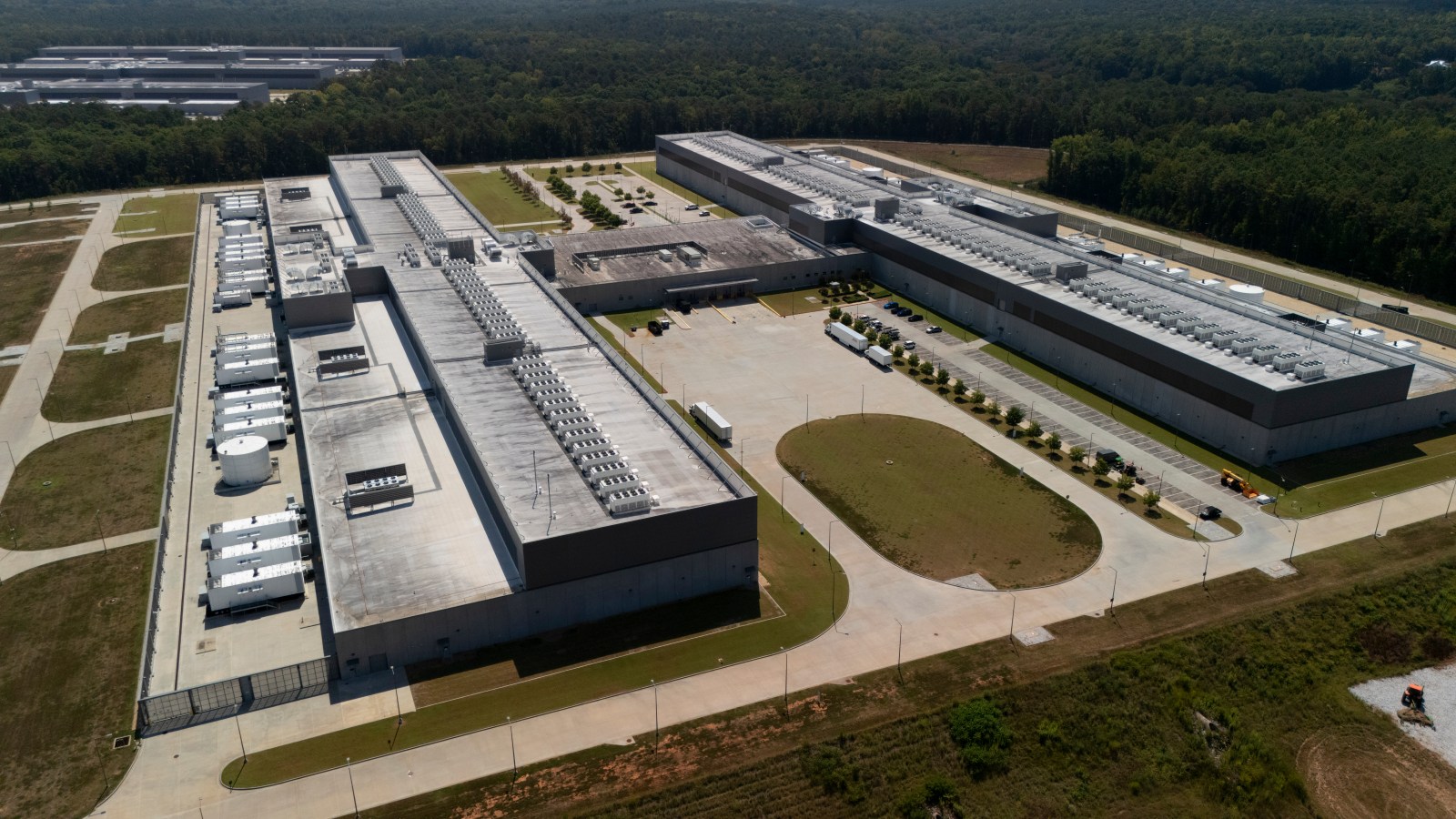
Artificial intelligence is becoming a unifying issue across political lines as midterm elections approach. Many Americans, regardless of party affiliation, are worried about the rapid expansion of AI infrastructure. An NBC News Decision Desk poll found that concerns are widespread across political affiliations: 34% identify as Republican, 29% as Independent, and 37% as Democrat.
The poll shows that 69% of Americans oppose building an AI data center nearby, with 45% strongly opposed. Only 31% support local data centers. Meanwhile, 70% of respondents express worry about AI, compared to 30% who are more excited about it.
This data suggests that AI’s impact on local communities can override traditional political divisions. When asked which political party they trust more for AI policy, 20% chose Democrats, 16% Republicans, 44% neither, 5% both equally, and 15% were unsure.
“Worries about the technology transcend virtually all demographic divides,” stated NBC News. Concerns cut across gender, education level, and geography. Tech-savvy youth and older individuals share these apprehensions.
The poll, conducted online with 7,105 adults from August 20 to September 1, has a margin of error of ±3.3 percentage points.
In a related statement, Microsoft co-founder Bill Gates criticized the quiet public debate on AI. He highlighted risks like cyberattacks and bioterrorism. Gates noted the lack of safeguards, stating concerns to CNN’s Anderson Cooper. He argued that restricting data centers wouldn’t significantly impact AI’s development.
Data Center Debates Ahead of Elections
Data centers are at the heart of political discussions due to their electricity, water, and land usage. Supporters highlight potential job creation and economic benefits. Critics worry about resource strain and rising utility costs. These debates drive political decisions.
As the Trump administration promotes AI development, Republicans like Texas Governor Greg Abbott express concerns about data center impacts. Abbott halted 1,800 projects, citing resource needs. He stressed standards for data centers to limit community disruption.
As midterms loom, data center projects may affect voter decisions. President Trump warned communities against rejecting such opportunities, citing economic growth risks. He conveyed these views on Truth Social, suggesting that opposition could benefit China.
The survey showed 38% of respondents are concerned about China’s potential leadership in AI. This concern is most prominent among Republicans. In a White House briefing, Vice President JD Vance highlighted fears of increased power bills in neighborhoods with data centers.
“A very large chunk of it,” Vance said, “is that people associate data centers with ‘my neighborhood’s going to get worse.’”
Addressing Sunday’s poll, Columbia University professor Robert Y. Shapiro stated that bipartisan consensus on AI means neither party gains advantage, including Trump.
Summary of Poll Findings
On workplace impacts, 53% believe AI harms more than it helps, 27% think it helps more. For government regulation, 81% feel not enough is being done, while 19% think otherwise.
Views on AI’s societal benefits are mixed: nearly 30% rate them high, 38% medium, and over 30% low. On democracy and elections, 64% see more harm, 14% more good. In healthcare, 47% predict more good, 30% see more harm.
Over half of respondents use AI sometimes or often, 26% rarely, and 22% never. For further information, contact Newsweek editors Jason Lemon and Anthony Murray.