
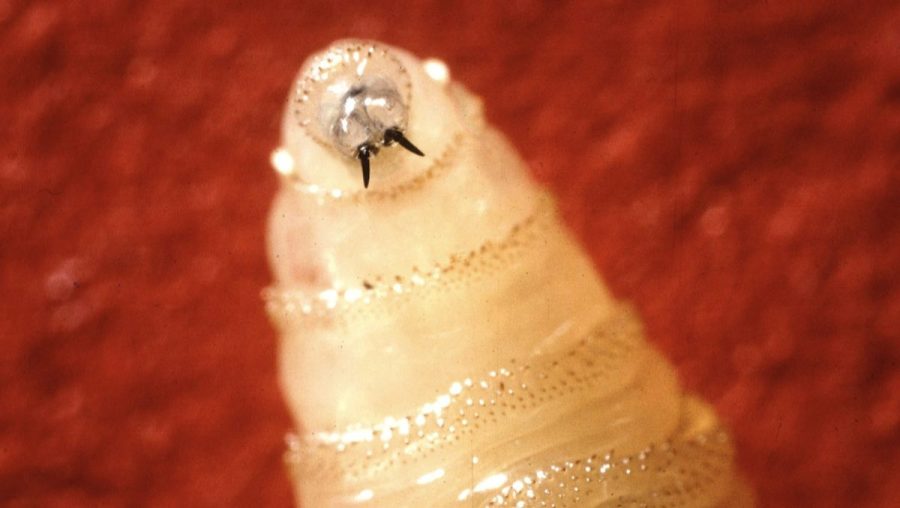
The number of confirmed New World screwworm infestations has reached 45 cases in the U.S. as of August, according to the United States Department of Agriculture. The most recent incident involved a domesticated sheep in Terrell County, Texas.
The New World screwworm has only been detected in animals, such as cattle, sheep, and dogs, since its recent arrival in the U.S. While humans have not been infected, they are not entirely safe. Screwworm flies can lay eggs on any warm-blooded animal, including humans. These eggs develop into parasitic larvae, which feed on the host’s flesh.
The infection is life-threatening if untreated. While the cyclospora parasite spreads through contaminated food, screwworm infections occur when flies lay eggs in live tissue. This can happen in wounds or in areas like the nose, mouth, eyes, and ears.
Wounds as small as a tick bite may attract a female fly to lay her eggs. One female can lay 200-300 eggs at a time and may lay up to 3,000 eggs during her 10- to 30-day lifespan,states the Centers for Disease Control and Prevention.
New World screwworm is less common than cyclospora. People at risk include those spending time outdoors around animals and those with open wounds. The CDC recommends removal of all eggs and larvae from an infected person, sometimes requiring surgery.
Efforts are underway to halt the screwworm’s spread, which endangers the cattle industry. So far, cases are mainly in Texas, with one in New Mexico. The Department of Agriculture aims to release sterile flies to prevent rapid reproduction. The Food and Drug Administration has authorized a preventative medication for emergency use.