
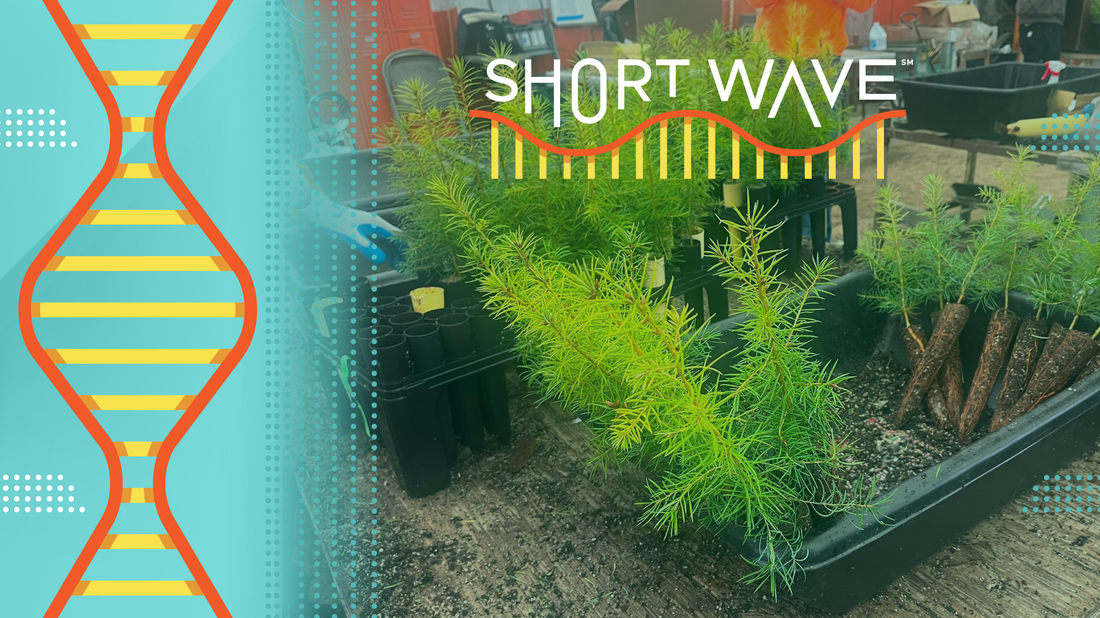
The Dorena Genetic Resource Center in Oregon is a U.S. Forest Service facility conducting a crucial experiment with Douglas fir seedlings. This initiative is part of a broader effort to establish forests capable of enduring the challenges posed by climate change.
Forests play an essential role by absorbing carbon dioxide, producing oxygen, regulating temperature, preventing flooding through water absorption, and offering habitats to many terrestrial species. They also influence climate patterns. However, factors such as land conversion, timber harvesting, and increasing wildfires threaten these critical ecosystems. As a response, reforestation is vital to replace the diminishing forests.
For over a century, the U.S. Forest Service has been actively involved in replanting and managing forests. In light of climate change, innovative strategies are necessary for forest preservation. Traditionally, replanting involves using local seeds adapted to their environment. Yet, as Lisa Winn, the former silviculturist and manager at Dorena Genetic Resource Center, observes, the changing climate may demand a reassessment of this approach.
Under current climatic shifts, seedlings are facing new challenges, such as extreme temperatures and droughts. Their future environment presents unforeseen obstacles. To address this, the Experimental Network for Assisted Migration and Establishment Silviculture (ENAMES) project seeks solutions. ENAMES employs the Seedlot Selection Tool, a database created by the USFS to forecast future climate conditions in forest areas.
“You’re generally moving it from a climate that it was historically adapted to, that it evolved under, and then you’re moving it to a climate that you think is going to exist in the future at a given location.” — Rob Slesak
Forecasters use this tool to determine future forest climates, considering aspects like temperature variations and seasonal changes. They then plant diverse seeds: those suited to historical, current, and projected future climates, ranging from 30 to 90 years ahead.
The tree species include incense cedar, Jeffrey pine, Ponderosa pine, sugar pine, and western larch. Planting sites span various locations in Oregon and Washington. Although still early, Rob Slesak, the ENAMES lead, remains optimistic about the project’s impact.
The U.S. Forest Service’s legacy includes projects like the Douglas-fir Heredity Study, some trees of which, planted since 1912, still thrive. Success in current projects suggests that trees from ENAMES might endure until the next century.
For insights into these initiatives, tune into Short Wave on Spotify and Apple Podcasts. Explore Short Wave episodes without ads and support NPR through Short Wave+ at plus.npr.org/shortwave.
This article was produced by Jessica Yung, edited by Rebecca Ramirez, reviewed by Tyler Jones, and engineered by Jimmy Keeley.