
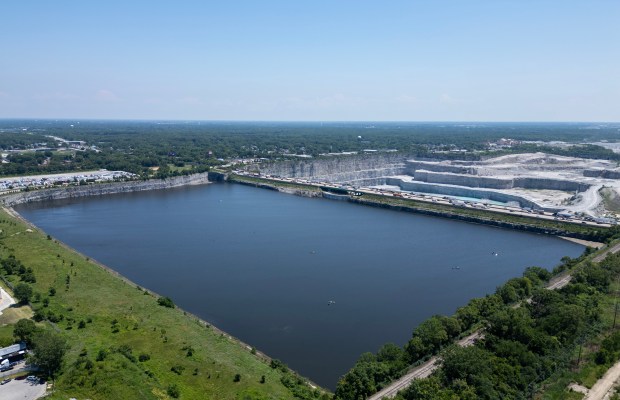
The Thornton Composite Reservoir has reached an unprecedented level of capacity, stirring concerns among residents in the south suburban areas of Chicago. Over the recent weekend, heavy rainfall pushed the reservoir to 94% of its capacity, a record since it began operations in 2015, according to the Metropolitan Water Reclamation District of Greater Chicago. By Tuesday morning, the levels slightly decreased to 93%, equating to 7.3 billion gallons.
The previous high was recorded in 2019 at 54.5%. This accumulation of sewer water is troubling for nearby residents due to the overpowering odor. Thornton Village Clerk Nikki Kitakis pointed out, “It smells. It’s pretty horrific.” The ongoing odor problem intensifies as the reservoir fills, impacting daily life for residents.
The stench is putrid, and it affects all facets of life because it smells so terrible.
Efforts to reduce the odor have continued, albeit with limited success against such a large, foul reservoir. Kitakis remarked on the inadequacy of these measures, noting that, “All we can do is wait and see, but in the meantime, it’s pretty disgusting.” The district is actively working to manage both the Thornton Composite Reservoir and the McCook Reservoir in Bedford Park, which supports central Chicago.
The Thornton facility receives water from 14 communities, including parts of Chicago and several surrounding areas, servicing roughly 556,000 residents. It is known as the largest combined sewer reservoir globally. There’s an increased risk of flooding if the reservoir reaches full capacity, according to the district’s warning. At a recent Dolton Village Board meeting, the issue took center stage as residents recounted flooding experiences. Mayor Jason House communicated his understanding, stating, “I know there are many residents who cringe when it rains, and I promise you, I cringe with them.” He highlighted the costly nature of upgrading flood infrastructure, estimated at around $50 million.
Returning Public Works Superintendent Matt Stacy urged residents to remain hopeful about avoiding further rainfall. He maintained communication with the water district throughout the recent rainfall events, stressing the critical condition of the nearly full reservoir. Forecasts suggest potential rain on Thursday and Friday, possibly easing on Saturday.
A rain gauge in Flossmoor recorded a staggering 6.37 inches of rain from the weekend’s storms.
The reservoir transfers water through a gravity-fed tunnel system to the Calumet Water Reclamation Plant, where treatment occurs before it is sent into the Little Calumet River. The reservoir can hold up to 7.9 billion gallons, leaving space for approximately 600 million gallons at current levels. The district has not yet provided a timeframe for draining the reservoir.