
Reparations advocates are urging the federal government to provide direct cash payments to Black descendants of American slavery. They emphasize that broadening eligibility could weaken the movement, especially amid conservative pushback and resistance from the Trump administration.
Rev. Phyllis Coachman, a supporter of the U.S. Freedmen Project, told Fox News Digital that cash payments are essential to reparations. “[Slavery] ended in 1865, but so many other things happened after that,” she explained, citing the collapse of Reconstruction, Jim Crow laws, legal segregation, disenfranchisement, lynching, racial terror, destruction of Black communities, housing discrimination, redlining, discriminatory lending, barriers to wealth building, the war on drugs, and mass incarceration.
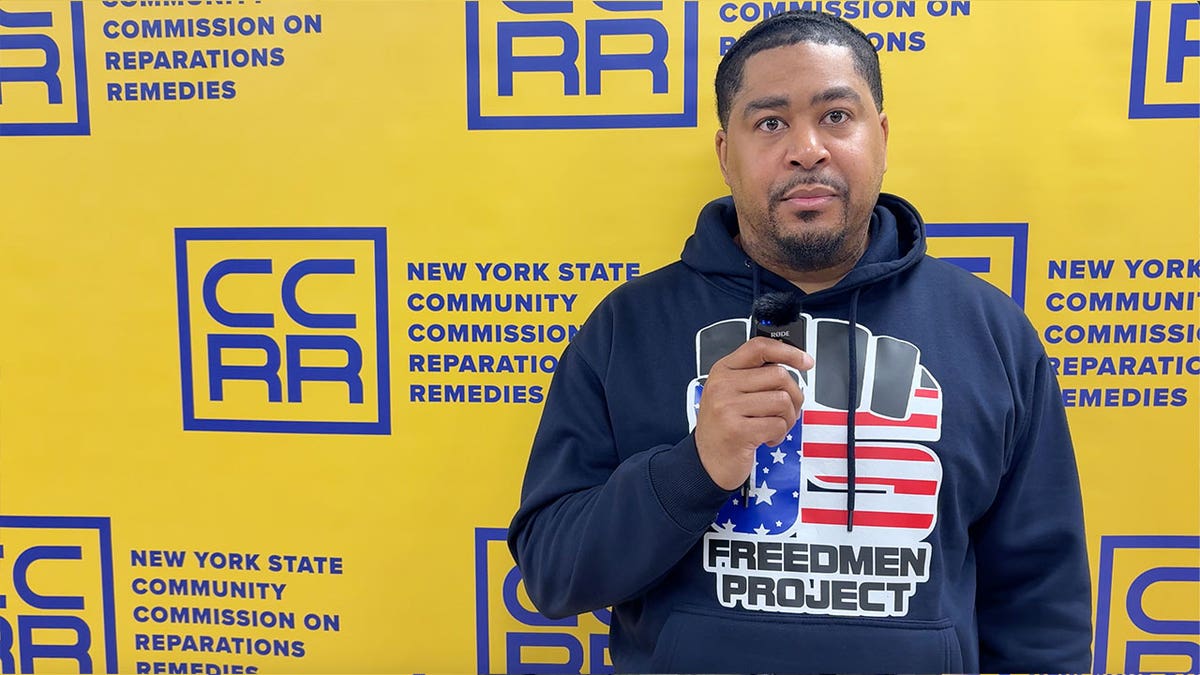
In New York, chaos erupted at a reparations hearing, with foundational Black Americans clashing with left-leaning groups. Black New Yorkers are demanding cash reparations as state officials consider forms of compensation for slavery and other racial injustices. The U.S. Freedmen Project educates the public on the differences between Black Americans descended from enslaved persons in the U.S. and those who immigrated voluntarily. This nonpartisan group seeks to revive the missions of the Freedmen’s Bureau and Freedmen’s Savings and Trust Company from the 19th century.
Supporters argue that broader reparations bills could violate constitutional principles, insisting that eligibility criteria must be based on lineage. The debate continues as several states and local governments explore reparations initiatives. Evanston, Illinois, became the first U.S. city to offer direct remedies, providing up to $25,000 in homeownership grants and cash payments to eligible Black residents to address legacy housing discrimination.
Annette Wilcox, another reparations advocate, disputes critics who label cash payouts as government handouts. She notes the government has distributed trillions in reparations to various groups. “The government has a responsibility for what it did to the citizens — the Black people who were enslaved in this country,” Wilcox added.
According to groups pushing for reparations, addressing the “racial wealth gap,” policing and incarceration, “environmental racism,” and “underfunded schools” is crucial for structural change. A public hearing hosted by the New York State Community Commission on Reparations Remedies saw attendees warn against including recent immigrants and other marginalized groups, fearing it could undermine the movement. The commission was established following legislation by Gov. Kathy Hochul to examine slavery’s legacy in New York and potential remedies.
In Long Island, Aubrey Muhammad, a U.S. Freedmen movement supporter, called for a payout of $800,000 per eligible individual, aligning with costs of living in New York. However, Devine Prince, president of the U.S. Freedmen Project, clarified that such figures are part of broader efforts to address the national wealth gap. Nevertheless, direct compensation remains a non-negotiable demand.
Joshua Q. Nelson of Fox News Digital reports on cultural trends, education, and public policy, with a focus on reparations developments in the U.S. He joined Fox News Digital in 2019 after graduating from Syracuse University’s Maxwell School and receiving the University of Pennsylvania’s Wharton Public Policy Certificate.