
A recent near-miss involving two passenger airplanes at Hartsfield-Jackson Atlanta International Airport has sparked renewed scrutiny of runway safety at America’s busiest airports. This incident is the latest among high-profile airport close calls and collisions, drawing attention to issues like runway incursions, taxiway problems, and airport-surface safety.
A Newsweek analysis of Federal Aviation Administration (FAA) runway-incursion data reveals that several major hubs have seen hundreds of runway-incursion events since 2001. The data, detailing over 35,000 events at 530 U.S. airports, has been used to create a map showing airports with the highest totals. According to an FAA spokesperson, runway incursions decreased by 8% in 2025, reaching the lowest level since 2020. This decline is attributed to outreach efforts and the integration of surface safety technologies nationwide.
FAA runway-incursion events encompass situations where an aircraft, vehicle, or person is incorrectly within a protected runway area. These can range from low-risk incidents to serious close calls where collision was narrowly avoided. Airports with the highest totals include major commercial hubs such as Chicago O’Hare International Airport, Los Angeles International Airport, Charlotte Douglas International Airport, Boston Logan International Airport, and Hartsfield-Jackson Atlanta International Airport, alongside several high-volume general aviation facilities.
Recent Airport Collisions and Close Calls
On July 27, a near miss occurred at Hartsfield-Jackson Atlanta International Airport when two Delta Air Lines planes triggered collision warnings after coming too close during a landing go-around and departure sequence. The arriving flight aborted landing due to tardy runway clearance by another aircraft, creating a conflict with a departing Delta jet. Both aircraft landed safely without injuries, but the FAA is investigating the near miss.
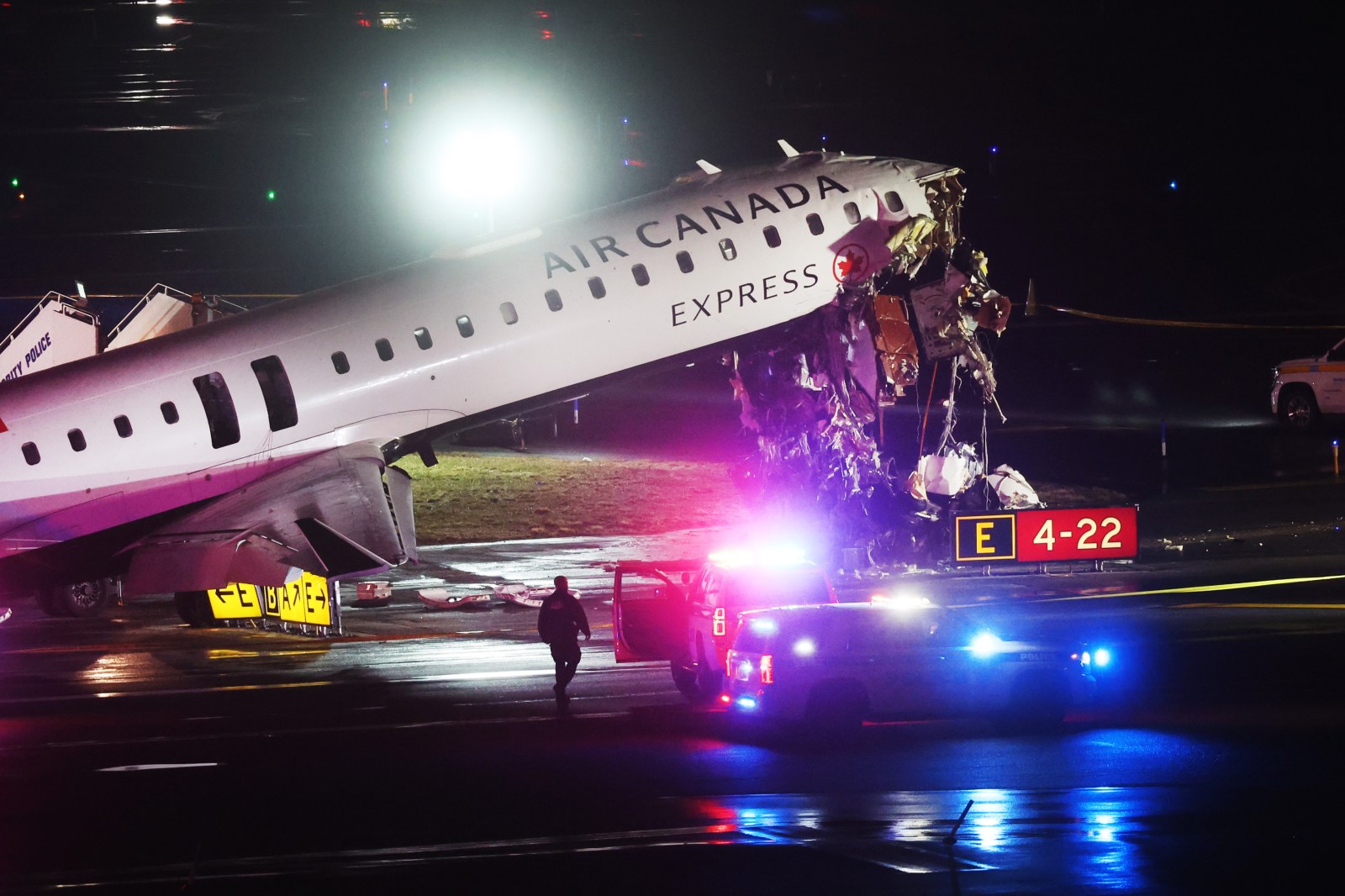
The Atlanta incident is part of a series of notable airport-surface accidents and near misses over the last two years. In March 2026, a severe accident at LaGuardia Airport saw an Air Canada Express collide with a fire truck on Runway 4. The crash killed both pilots and injured dozens, marking one of the most severe airport-surface accidents in recent years.
Another major incident in August 2024 at Atlanta involved a Delta Air Lines Airbus A330 colliding with a Virgin Atlantic Airbus A350 while taxiing for departure. This collision inflicted substantial damage on the Virgin Atlantic aircraft, though no injuries were reported among over 600 passengers and crew on both jets. The National Transportation Safety Board (NTSB) later determined the Delta crew had incorrectly assessed available wingtip clearance while turning onto an adjacent taxiway.
Boston Logan International Airport has also experienced multiple significant events. In February 2024, two JetBlue Airbus A321 aircraft collided on the ground, resulting in substantial damage but no injuries. In June 2026, a Delta crew aborted a landing after another plane was cleared onto an intersecting runway, avoiding a potentially catastrophic collision.
At Chicago Midway International Airport in February 2025, a Southwest Airlines aircraft initiated a go-around after another plane entered the runway, leading to a high-profile runway-incursion investigation involving busy commercial airports.
Frequency of Aviation Accidents
The NTSB records aviation accidents and incidents dating back to 1962, while the FAA separately tracks runway incursions and other operational safety events. The NTSB database has tens of thousands of records, though only a small percentage involve major commercial passenger airlines.
Fatal crashes involving large U.S. passenger airlines are rare compared to the number conducted yearly. Runway incursions, close calls, and airport-surface incidents happen more often, though most do not involve fatalities. FAA data shows 35,308 runway-incursion events recorded between 2001 and mid-2026.
Airports Recording Frequent Collisions
Aside from the fatal LaGuardia runway collision, investigators continue examining the January 2025 crash near Ronald Reagan Washington National Airport. It involved an American Eagle regional jet and a U.S. Army helicopter collision that killed all 67 aboard the aircraft. The NTSB concluded FAA’s handling of helicopter routes near the airport contributed to the accident.
The LaGuardia crash reignited debate over vehicle movements, runway-crossing procedures, and collision-prevention systems at the nation’s busiest airports. While actual collisions are rarer than runway incursions, some airports have reported notable events over recent years.
Investigations have focused on: LaGuardia Airport (LGA)—fatal Air Canada Express/fire truck collision in 2026; Hartsfield-Jackson Atlanta International Airport (ATL)—Delta/Virgin Atlantic taxiway collision in 2024 and the recent close call; Boston Logan International Airport (BOS)—JetBlue ground collision in 2024 and a major runway-incursion close call in 2026; Chicago Midway International Airport (MDW)—prominent runway-incursion near miss in 2025; John F. Kennedy International Airport (JFK)—historical aircraft-ground collision investigations, including the Air France A380 and Comair CRJ case in 2011.
Airports with high traffic volumes tend to record the highest totals due to handling more aircraft movements than smaller facilities.
Understanding Runway Incursions
The map accompanying this analysis doesn’t display plane crashes, but features FAA runway-incursion data. It tracks incidents with the inappropriate presence of an aircraft, vehicle, or person on a protected runway area. These events range from minor operational mistakes to serious close calls with narrowly avoided collisions. FAA classifies runway incursions by severity, from Category D events with no immediate safety risks to Category A incidents with imminent collision risks.
Runway incursions have become a growing focus for aviation regulators and investigators recently. The NTSB has underscored concerns about serious Category A and B events, involving significant collision potential or narrowly avoided situations. NTSB Chair Jennifer Homendy emphasized during a safety roundtable that the agency has investigated multiple serious close calls and pushed for additional measures to mitigate surface collision risks.
Experts caution that airports topping the map aren’t necessarily the most dangerous. Major hubs like Chicago O’Hare, Atlanta, Los Angeles, and Charlotte conduct hundreds of thousands of takeoffs, landings, and taxi operations annually, increasing the chances for incursions. Consequently, airports with the highest volumes often accumulate the most incidents overall, even if risk per flight remains low. FAA data shows over 35,000 runway incursions at U.S. airports since 2001, but only a small fraction resulted in collisions or injuries.
Recent incidents in Atlanta, Boston, Chicago, and New York have intensified scrutiny of airport-surface safety. Investigators are still examining whether these events indicate a broader trend, stem from complex airport operations, or reflect heightened attention to incidents previously overlooked. What remains clear is that federal regulators and the NTSB see runway incursions as a critical aviation-safety issue since a single ground error can have potentially catastrophic outcomes.