
Horror films often serve as allegories for societal issues. Films like Get Out spotlight racism and Obsession addresses male entitlement. The ‘final girl’ trope, where a lone woman confronts the killer, rarely sees her redemption. That changes with Jane Schoenbrun’s Teenage Sex and Death at Camp Miasma.
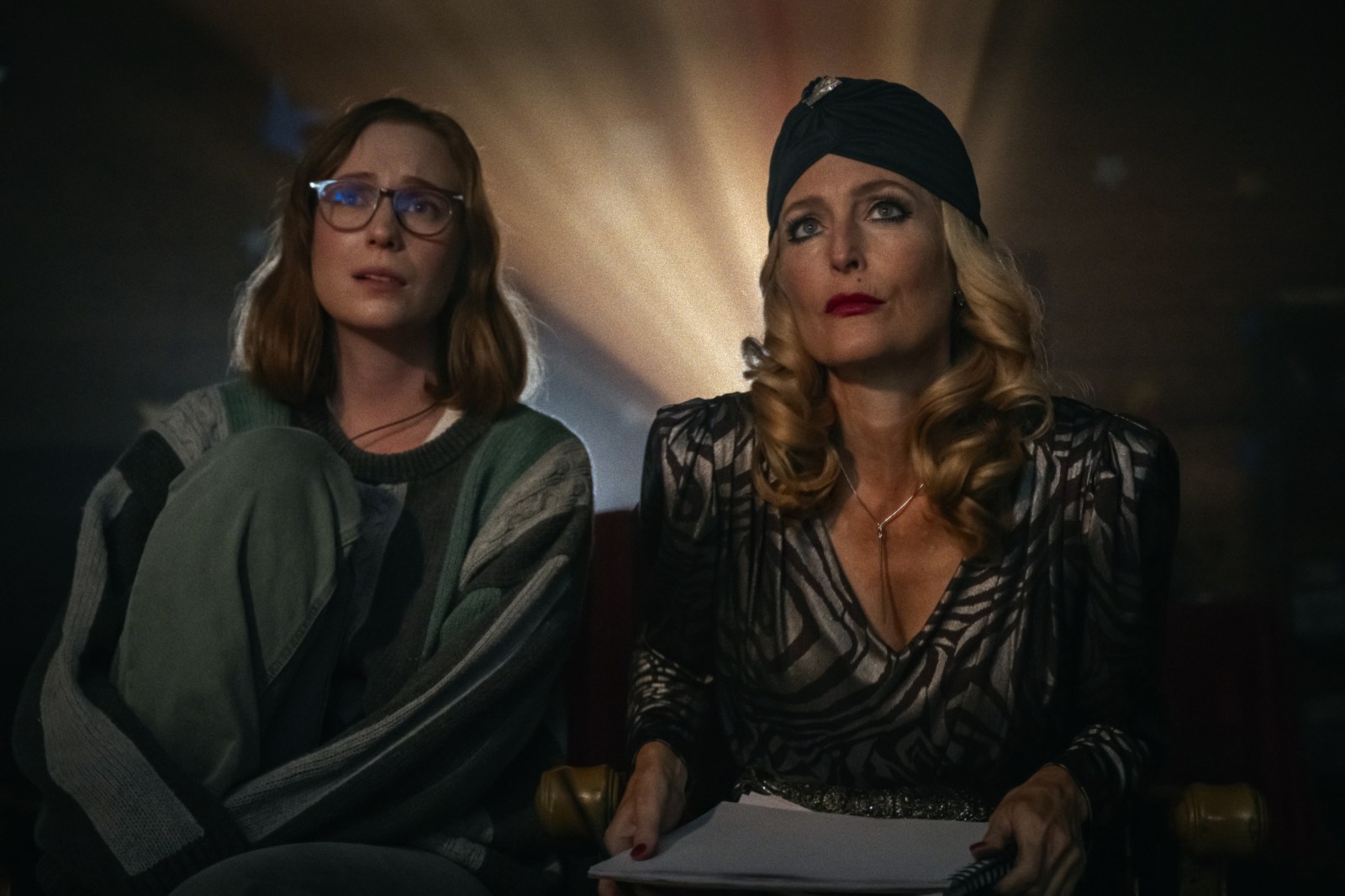
Hannah Einbinder, drawn to the project, told Newsweek, “The genre’s ambiguity, the way it uses slasher tropes to empower, is just cool. I hadn’t seen anything like it.” In the film, Einbinder’s character, Kris, directs a new installment of a slasher franchise and aims to cast the original final girl, Billy Wilder, played by Gillian Anderson. This move seeks to reclaim a male-driven series through Billy’s character.
“I feel like it speaks to so many different subsections of humanity, that if they were all to take ownership of it and embrace it, then agree that it belongs to everybody,” Anderson noted about the film’s message.
On set, Anderson felt the film’s production was meticulously designed. “It’s one thing to read the script, another to step onto a set crafted for the audience, knowing every detail will be scrutinized and discussed,” said Anderson.
Horror traditionally reflected real-world problems, often told by men. Recent films like A Girl Walks Home Alone at Night and The Babadook have introduced new perspectives. Camp Miasma builds a queer, female-led story within a familiar horror structure. Einbinder mentioned, “Knowing this is personal to Jane makes it stand out.”
Anderson’s character, Billy, channels elements of Sunset Boulevard’s Norma Desmond. Unlike Desmond, Billy wasn’t immobilized by aging. She awaited a worthy sequel, overlooked by Hollywood due to her age. In contrast, Camp Miasma portrays someone who sees potential in Billy, not a relic.
Einbinder sees more psychoanalysis in the dialogue. “There’s an honest, modern reflection,” she mentioned, exploring why Billy isolated herself after initial success.
Anderson understands a role that could define a career. She refused to let X-Files‘ Dana Scully dictate her choices, exploring diverse roles like hunting a serial killer in The Fall to an Emmy-winning portrayal of Margaret Thatcher in The Crown.
Discussing their favorite scream queen, Einbinder named Carrie from Brian De Palma’s 1976 film. “Carrie took matters into her own hands,” Einbinder noted. Although imagined by men, this underscores the genre’s core concept of a final girl reaching her limit. Camp Miasma aims to return the narrative to the woman who lived it.