
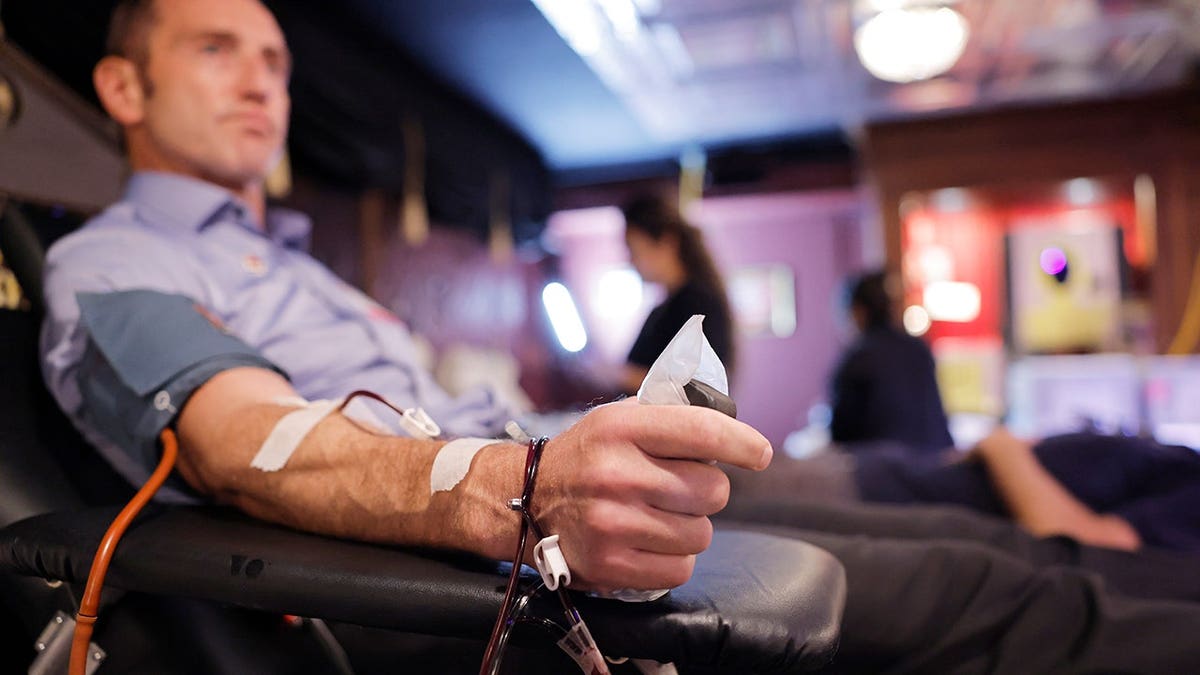
The American Red Cross has declared a critical national emergency due to dangerously low blood supply levels across the United States. Dr. Baia Lasky, the organization’s medical director, discussed the severe impact on hospitals and the urgent need for type O blood donations on ‘Fox & Friends First’.
The Red Cross announced a ‘blood crisis’, marking the second significant warning about blood supply in recent times. A recent drop in donations resulted in a four-year low during the summer. This decline has exacerbated an existing emergency, threatening the availability of lifesaving blood for patients nationwide.
The Red Cross has restricted type O blood distributions to hospitals. As the largest blood product provider, they face a shortage with less than a one-day supply of type O positive blood. Type O blood constitutes about 60% of Red Cross distributions and is crucial for everyday patient care and emergencies.
Type O positive is the most commonly transfused blood type, appropriate for roughly 80% of patients. Type O negative remains the universal type essential in critical situations.
The Red Cross stated, “Additional donations are needed to end the crisis and stabilize the supply.”
The summer conditions, including extreme heat, poor air quality, and foodborne illness, have lowered donor turnout, according to the Red Cross. Other blood collection agencies also report shortages this summer.
Chris Hrouda, president of Red Cross Biomedical Services, expressed concerns about the shortage’s impact. He emphasized the organization’s commitment as the largest provider to strengthening the blood supply, despite challenges.
The Red Cross has urged the public to donate. Booking appointments can be done via the Blood Donor App, RedCrossBlood.org, or by calling 1-800-RED CROSS.
Every donation has the potential to save lives, and the Red Cross is calling on all eligible people to make appointments to donate blood urgently.
For updates, you can download the Fox News app or sign up for the health newsletter.