
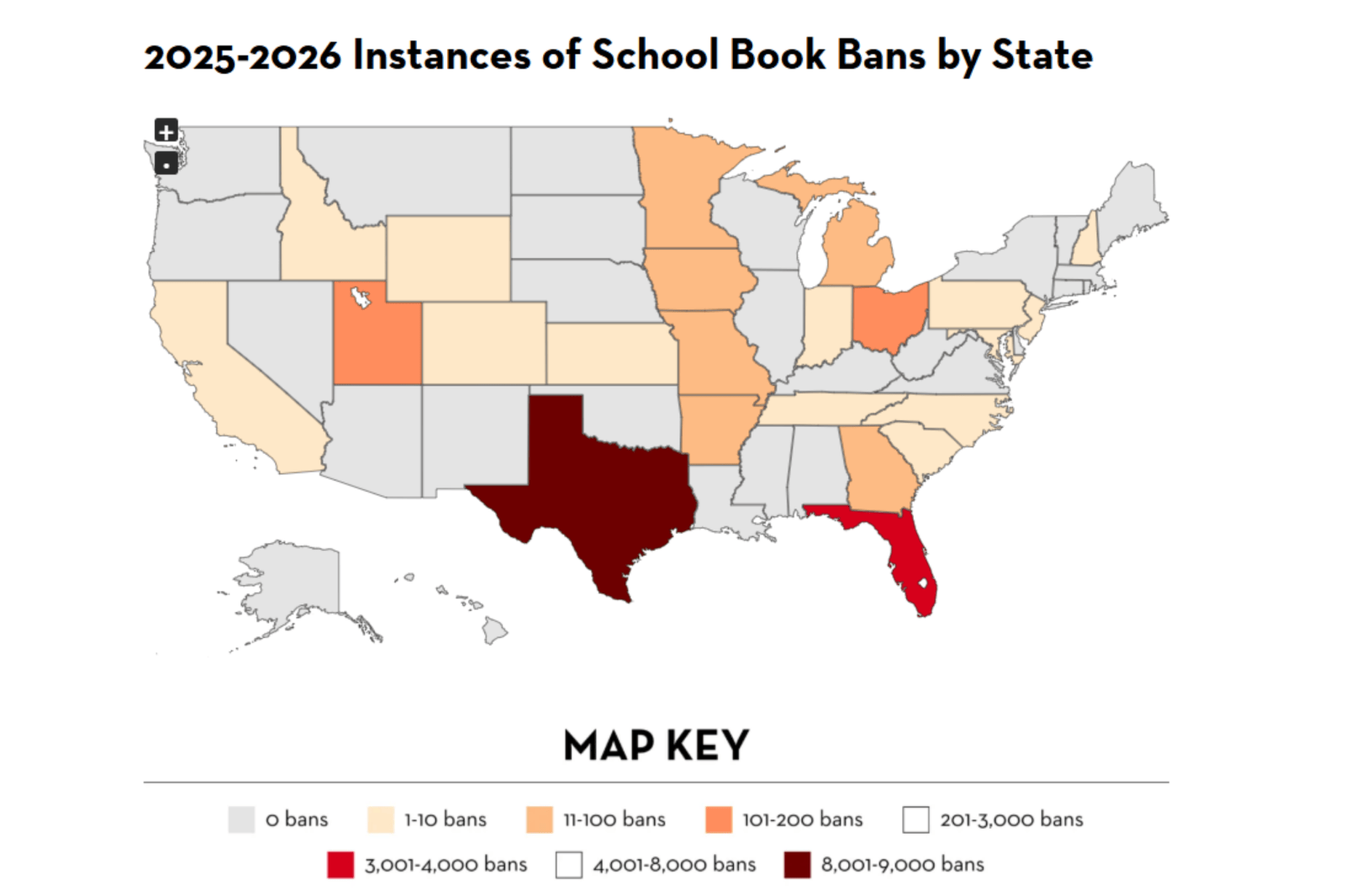
PEN America has reported almost 12,000 books were removed from U.S. public schools during the 2025-26 school year. This marks a peak in documented bans since 2021, when tracking began. The report shows 11,982 books faced bans, with 7,370 being unique titles.
Books Affected by Bans
Among the banned books are Charlotte Brontë’s Jane Eyre, Bonnie Garmus’ bestseller Lessons in Chemistry, and the Japanese manga series Tokyo Ghoul by Sui Ishida. The states of Texas and Florida led the bans, with Texas accounting for over 8,000, and Florida surpassing 3,000. Critics of these bans often reject claims of censorship, insisting parents and communities should have more control over accessible content in schools. They prioritize removing material they deem inappropriate for children.
State Laws and Book Bans
PEN America highlights Texas and Florida as models for what it calls educational censorship. It connects over half of the banned books to state laws and policies. Most bans focus on young-adult and fiction titles, with 114 school districts reported to have imposed bans during the year. State legislation and advocacy group pressures are significant factors in these removals.
Banned Books: Common Themes
The organization repeatedly finds books featuring LGBTQ+ characters, racial discussions, and sexually themed content as primary targets. Manga and graphic novels are also frequently challenged, with objections often focusing on illustrations rather than the broader narrative.
AI’s Role in Reviewing Books
PEN America’s report also notes the controversial use of AI tools in reviewing book content. Some districts use AI to ensure books meet legal standards. Concerns arise as some AI systems suggest removals based on bans in other districts rather than content review, potentially spreading book bans further.
Advocates for Book Restrictions
Proponents of book removal argue for material review processes, particularly focusing on explicit or age-inappropriate content. Laws like Texas’ SB 13 mandate reviews of questionable materials. PEN America counters this, indicating such actions limit literary access and diverse viewpoints for students.
PEN America states, “Book bans impede the freedom to read, cutting students’ access to a diversity of views, voices, and literature they deserve to encounter.”
Opposition to Book Bans
Book bans have sparked national debates on censorship, parental rights, and free expression, with voices like Illinois Governor JB Pritzker vocally opposing the trend. Pritzker has positioned book bans as contrary to democratic values. Prominent authors such as Margaret Atwood, Judy Blume, and LeVar Burton have criticized the increasing censorship. They draw parallels with past censorship and express concerns over growing intolerance, with Atwood fearing further suppression of ideas.
As book bans in schools increase, the battle between proponents of free speech and advocates of more stringent controls shows no signs of resolution, maintaining the issue at the forefront of American education discussions.