
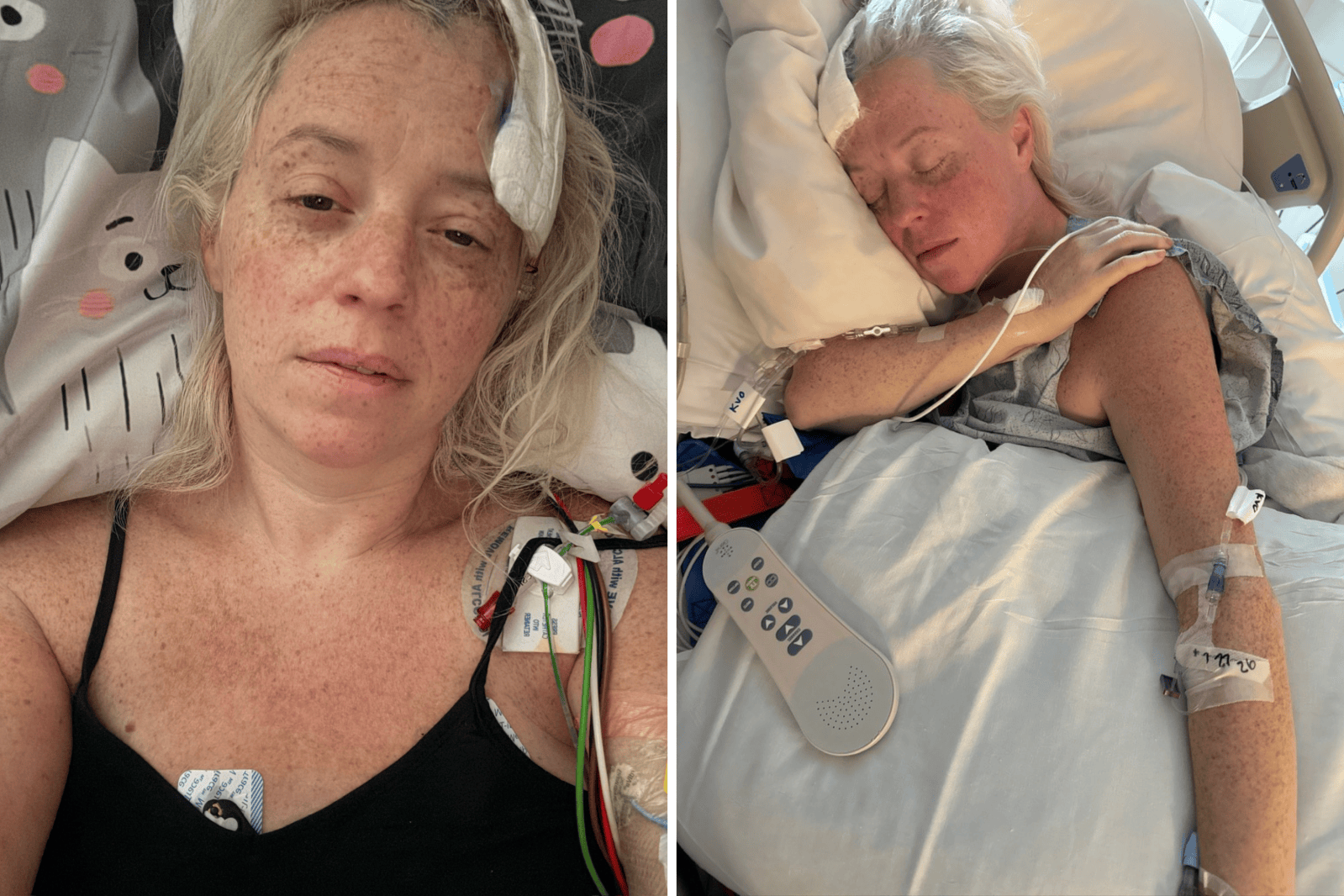
It was supposed to be an ordinary workday when Julie Nashawaty experienced a life-altering event. On July 27, during her lunch break, the 46-year-old felt an intense headache and a rapid increase in her body temperature.
“Out of nowhere, it felt like my brain was exploding,” Nashawaty recounted about that day.
Her condition deteriorated quickly, and she lost coherence. Her husband promptly called emergency services, and within half an hour, she was at the hospital. Nashawaty spent 25 days in intensive care.
Doctors diagnosed a 3-millimeter brain aneurysm rupture, which is a weak and bulging spot in a brain blood vessel. The Brain Aneurysm Foundation (BAF) states that in the U.S., around 6.8 million people have unruptured brain aneurysms. Approximately eight out of every 100,000 people suffer a rupture annually.
Nashawaty was aware something was severely wrong:
“I didn’t know it was an aneurysm, but the symptoms were entirely unfamiliar,” she said.
Symptoms of a Ruptured Brain Aneurysm
Quick treatment is crucial for a ruptured brain aneurysm. The BAF outlines these symptoms:
- A sudden, intense headache described as “the worst headache of my life”
- Nausea and vomiting
- Stiff neck
- Blurred or double vision
- Sensitivity to light
- Seizures
- Confusion
- Loss of consciousness
- Weakness or numbness
- Eye symptoms, such as drooping eyelids, dilated pupils, or pain behind the eye
Causes of a Ruptured Brain Aneurysm
Brain aneurysms often form quietly without symptoms. Aneurysms are suspected to develop through arterial wear over time. Some factors that may elevate the risk include:
- Smoking
- High blood pressure
- Family history of aneurysms
- Being over 40
- Certain genetic disorders
- Drug or excessive alcohol use
- Infections
- Severe head trauma
Brain Aneurysm Treatments
Nashawaty underwent an endovascular procedure to treat her ruptured aneurysm. This involved inserting a catheter via an artery in the arm or groin to either insert tiny coils into the aneurysm or place a stent to alter blood flow.
Brain Aneurysm Recovery
“Treating the aneurysm was only the beginning,” Nashawaty shared.
She experienced vasospasms, where her brain blood vessels narrowed. Doctors provided medication through a drain in her head and conducted three separate procedures to administer medication directly to the affected vessels.
“I spent 25 days in the hospital,” she recounted. After her discharge, she received physical and occupational therapy, with nurses visiting her home regularly.
“The initial two weeks were dreadful. I encountered post-intensive care syndrome, muscle weakness, mental fog, emotional stress, sleep difficulties, and overwhelming feelings,” Nashawaty explained. “Recovering wasn’t immediate upon returning home.”
More than three months have passed, and Nashawaty is regaining strength daily. Doctors discovered a second, unruptured aneurysm. Plans for further scans and treatment with a flow diverter to prevent rupture are in progress.