
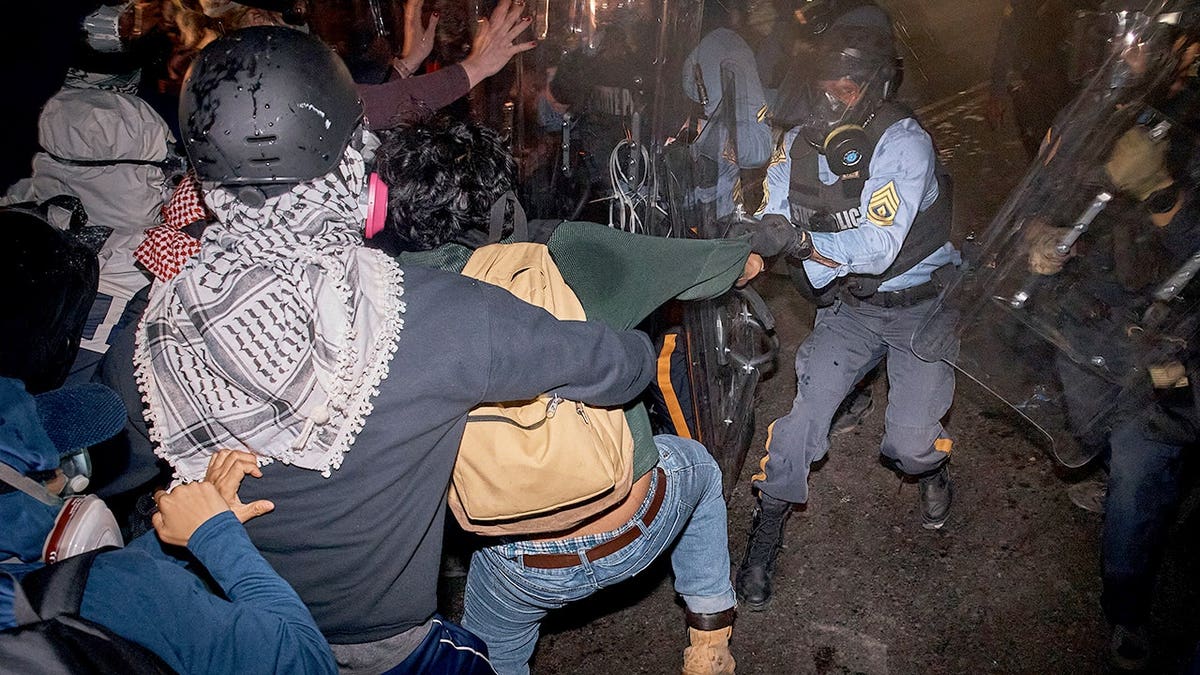
At 11:30 a.m. on June 3, an alert went out through social media urging protesters to gather at Delaney Hall. This facility in Newark, N.J., serves as a controversial immigration detention center, becoming the focal point of recent turmoil.
The Instagram post commanded, “CURFEW IS OVER. BACK TO DELANEY,” with promotions by groups like the Palestine Solidarity Working Group, Al-Awda, and Indivisible. They called for action against the ICE, Newark police, and New Jersey state troopers.
Within moments, the message spread through encrypted Signal groups, mobilizing hundreds. These activists used aliases to organize logistics, including transportation and protest gear like goggles, masks, and protective pads.
Investigations reveal protests at Delaney Hall are not spontaneous. They are well-planned by organized groups familiar with leveraging local matters to spotlight federal immigration policy concerns.
The Network Behind the Protests
A Fox News Digital investigation, utilizing on-ground observations and various documents, indicates that this movement is a product of years of strategic planning. It showcases a network driven by more than 100 organizations, including the ACLU and Democratic Socialists of America, with annual revenues of about $850 million.
Roughly 70 organizations in this network have tax-exempt status with the IRS. This allows them to receive tax-free benefits and donations. Recent government inquiries have focused on whether these organizations misuse nonprofit laws to instigate conflicts.
Strategic Communication Tactics
The network uses a well-defined communications strategy. Documents obtained by Fox News Digital instruct activists to label the facility as a “concentration camp” and avoid words like “arrest.” Instead, they refer to detainees as “kidnapped” or “abducted.”
These tactics drive the narrative, much like approaches previously seen in Minneapolis protests against ICE actions. The actions resemble military insurgency techniques, enabling activists to use a city’s resources against themselves.
Protest Support and Coordination
Protests involve intricate planning; multiple groups form alliances to promote shared goals. The coalition named “Eyes on ICE NJ” regularly monitors activities at the detention center, while “ICE Out of NJ” works on broader legislative goals.
Financially, these coalitions rely on major donations from entities like Open Society Foundations and NEO Philanthropies. These contributions help sustain their operations and influence.
Lawmakers and officials, while engaging with the issue, have faced pressures from protesters. These interactions underscore the complexity of balancing advocacy with governance.
The actions and preparations of the Delaney Hall protests signify not only a well-funded network but also a shift toward more aggressive activism in response to immigration policies.