
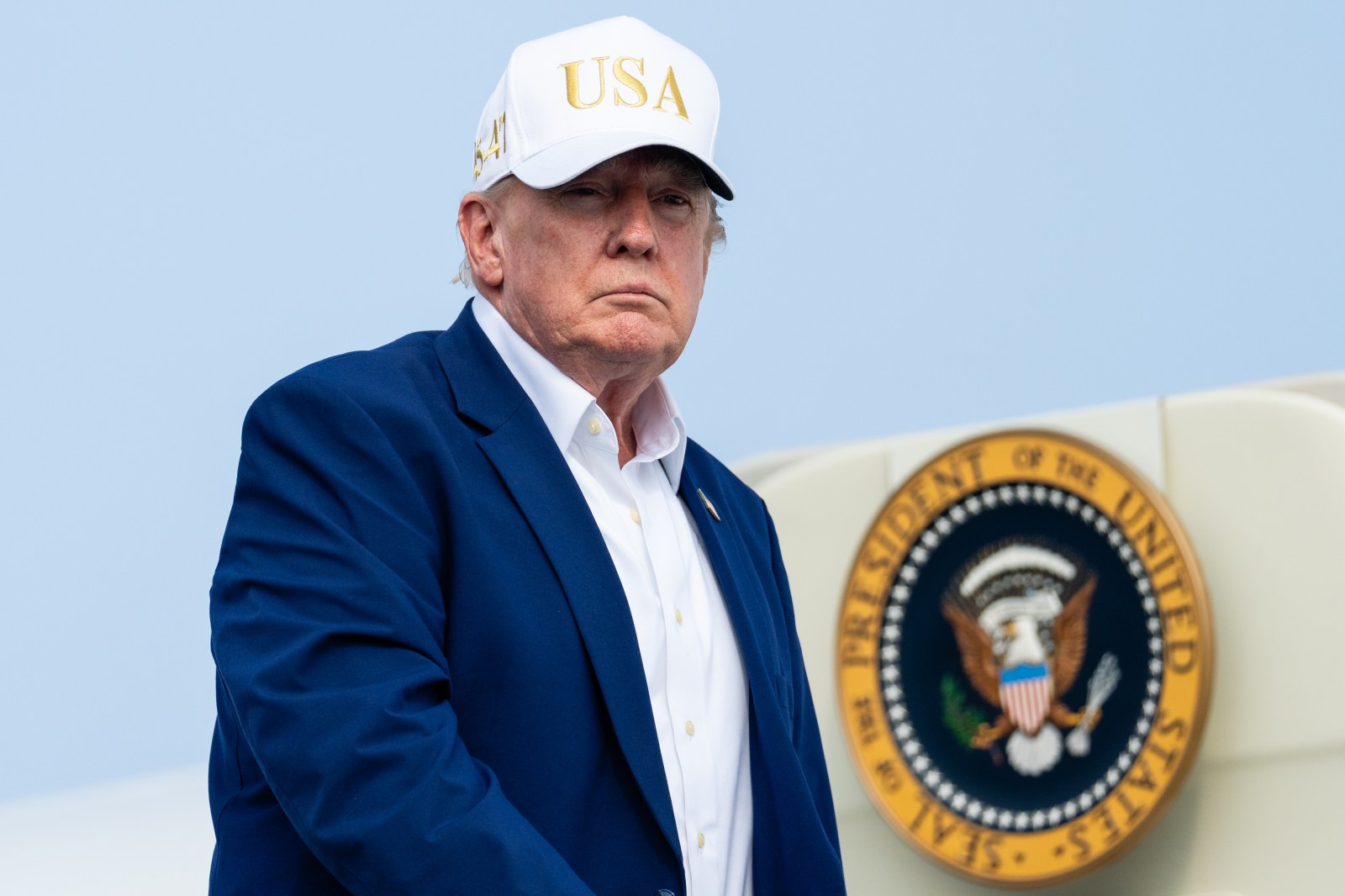
President Donald Trump gave an ambiguous response when questioned about declaring a national emergency before the midterm elections. Speaking to Wayne Allyn Root on Real America’s Voice, Trump addressed plans concerning voter ID and mail-in ballots included in the SAVE America Act. The U.S. Senate has not yet passed this act, causing frustration for Trump.
When asked about his power to declare a national emergency, Trump replied, “Stranger things have happened. I’ll leave it at that.” He and his administration argue that measures in the bill are crucial for election integrity. They believe Republicans need these measures to secure victories. Opponents argue the legislation would disenfranchise thousands of voters lacking required identification such as passports. Concerns also exist over a potential national emergency impacting election outcomes.
Democratic Senate Minority Leader Chuck Schumer reacted to Trump’s comments by posting on X, “Donald Trump wants to take over American elections. Senate Democrats are prepared to combat his unprecedented, illegal efforts at every turn. Your vote belongs to you. We will ensure it stays that way.”
Newsweek attempted to contact the White House for comments.
Could Trump Declare a National Emergency?
The U.S. Constitution assigns election administration primarily to states, with Congress holding significant federal election rule authority. Legal experts agree a national emergency would not grant the president the power to alter state election laws or qualifications unilaterally.
Reports suggest a draft executive order detailing foreign election interference as a rationale for emergency measures. However, the Constitution grants states and legislatures control over elections. Attempts to enforce nationwide voting rules through emergency powers would likely face court challenges.
Jeffrey Toobin of CNN, on Newsweek’s The 1600 podcast, discussed Trump’s potential impact on the midterms. He noted that restricting mail-in voting could equally harm Republicans as Democrats. “It’s unclear which party benefits more from mail-in voting,” Toobin mentioned. Historically, Republicans supported mail-in voting, complicating assumptions about party advantage.
Where Does the SAVE America Act Stand?
The SAVE America Act, or Safeguard American Voter Eligibility Act, remains unpassed in the Senate. It has repeatedly cleared the House. The bill demands U.S. citizenship proof to register for federal voting and proposes a federal photo ID requirement.
Earlier this year, Republicans advanced the act to Senate debate without ensuring passage. On August 7, Republican Senate Majority Leader John Thune, Trump, and others postponed full act action, lacking sufficient votes. Senate Republicans now consider focusing on photo ID requirements separately, according to The Hill.
For further details, contact Newsweek editors Jason Lemon and Geoffrey Rowland.