
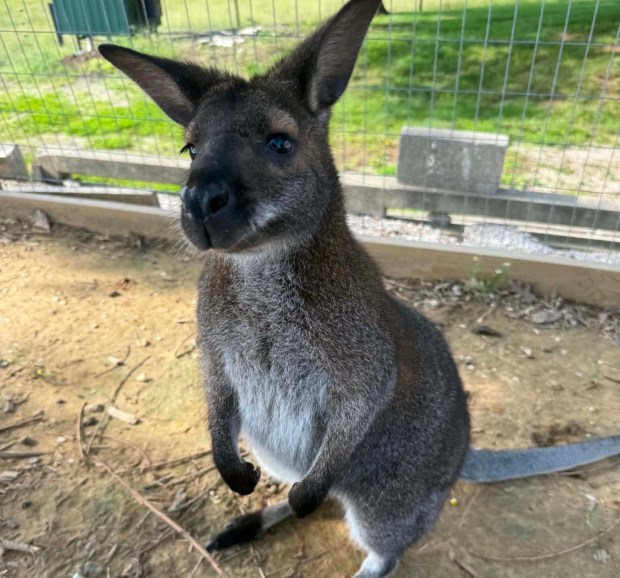
Phillips Park Zoo in Aurora has introduced a pair of new inhabitants, two young wallabies named Wally and Bindi. These wallabies, just over one year old, were relocated to the zoo on August 5, marking the arrival of the first marsupials at the facility.
Anna Borozenets, the manager of Phillips Park Zoo, confirmed the wallabies are expected to reside at the zoo for their entire lives, which typically range from 10 to 15 years. Bindi, the female wallaby, shows a keen curiosity, while Wally, the male, displays a more reserved demeanor, often observing from a distance. Borozenets highlights that Wally is particularly devoted to Bindi.
They’re very sweet, very social, at least with our zookeepers, and they’re really enjoying being out with the public. They seem to be adjusting really, really nicely.
Both wallabies were obtained from Santa’s Reindeer Ranch, a facility approved by the U.S. Department of Agriculture. Borozenets had been searching for a suitable animal to fill an empty exhibit spot when a professional contact mentioned the wallabies. Having had experience working with wallabies, she knew they would captivate visitors and become a valuable addition to the community.
Due to their simple upkeep and the pre-existing exhibit, the wallabies haven’t imposed significant costs on the zoo. Although new animals naturally lead to increased food and veterinary expenses, these were already accounted for in the zoo’s budget.
As of August 20, 2026, Wally and Bindi can be seen at the exhibit between Tito the Lynx and the zoo’s barnyard. Located at 1000 Ray Moses Drive, Phillips Park Zoo is open Thursday through Tuesday, from 9 a.m. to 5 p.m. City officials indicate that the wallabies will spend time both on exhibit and in their designated indoor space as they adapt. Over time, they are expected to be more visible to visitors.
Bennett’s wallabies, or red-necked wallabies, inhabit Australian and Tasmanian forests and coastal shrublands. Adult wallabies weigh between 25 and 60 pounds and graze on grasses, herbs, and roots in their natural environment.