
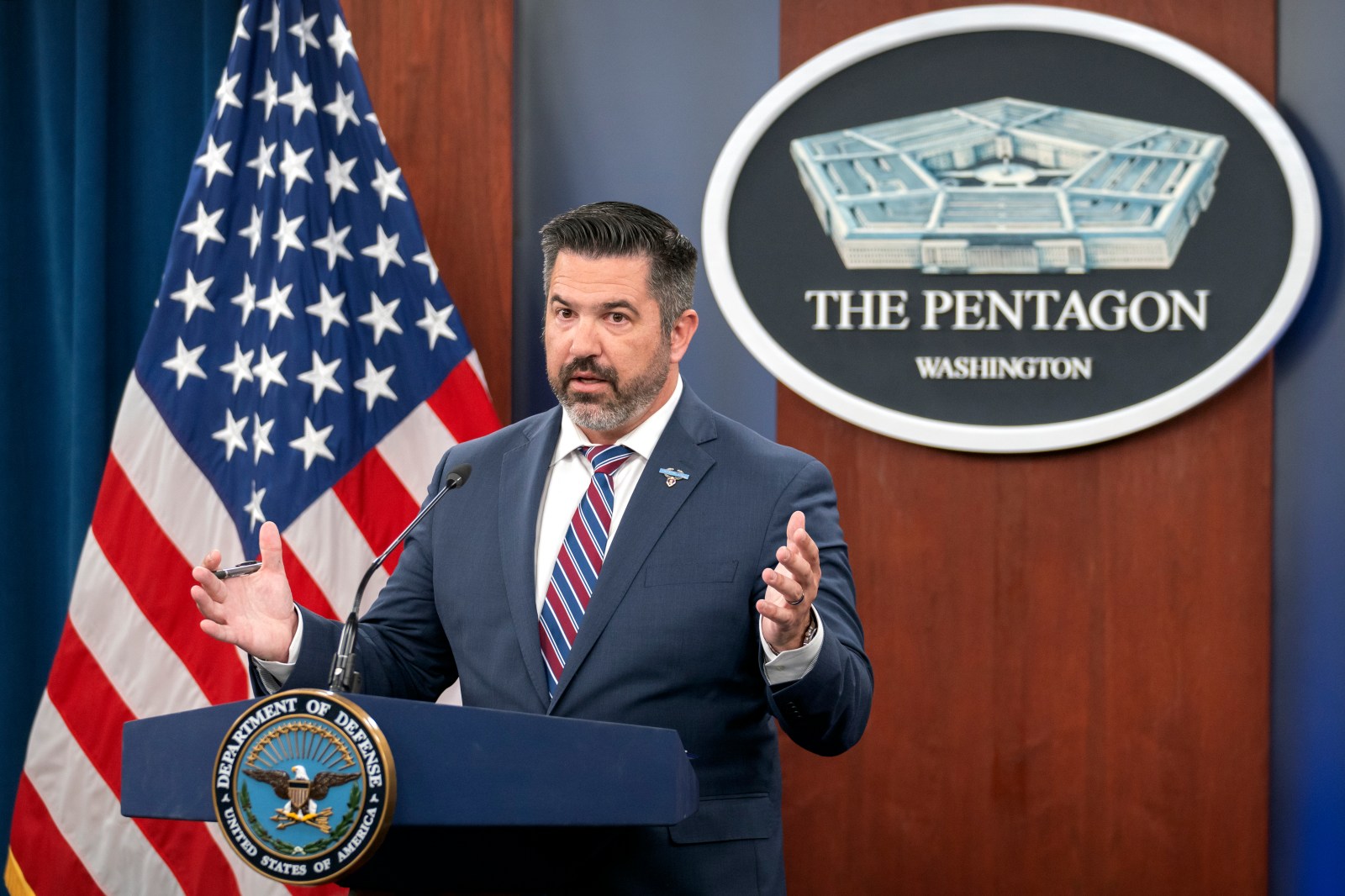
The release of a classified military assessment has intensified a political and national-security debate over the U.S. conflict in Iran. Chief Pentagon spokesman Sean Parnell condemned this disclosure, creating tension as new findings from The Washington Post suggested top commanders warned Defense Secretary Pete Hegseth about the strain on the military. The commanders expressed concerns that extended operations were impacting U.S. defensive readiness globally.
Military Leadership’s Concerns
The Washington Post’s report, based on the August 14 Secretary of Defense Orders Book (SDOB), highlighted warnings from leading military figures. They cautioned that ongoing deployments and resource reallocations related to the Iran war were reducing their defensive capabilities in other critical regions, including the U.S. mainland.
Sean Parnell’s Response
Sean Parnell labeled the leak as a “crime” and “betrayal.”
In a statement to Newsweek, Parnell criticized the Washington Post for inaccuracies and emphasized Secretary Hegseth’s active participation with military leadership to maintain readiness. He stated that decisions on forces depend on current threat assessments, presidential priorities, and recommendations from military leaders. However, he clarified that internal processes, such as the SWOB, remain confidential.
On social media, Parnell reiterated that publishing information from the Secretary’s orders book is a serious offense and questioned the accuracy of the published details.
Legal Perspectives on Publishing Classified Information
Post reporter Dan Lamothe asserted on social media that independent journalism is protected under the First Amendment, even when addressing government decisions in times of active conflict. Legal experts agree that media outlets have the right to report on classified information unless it endangers sensitive operations.
Details from the Leaked Assessment
The SDOB revealed concerns over the military’s ability to manage other responsibilities due to prolonged involvement in the Iran conflict. European Command, Pacific Command, and Southern Command raised formal objections to the current resource diversions, highlighting potential risks to homeland defense capabilities.
Admiral Daryl Caudle of the Navy stressed significant operational challenges, noting that only a fraction of the Navy’s destroyers were deployable. This shortage, alongside maintenance issues, threatened global response readiness. Army and Air Force leaders noted similar challenges, with extended deployments potentially straining resources and readiness.
Missile Stockpile and Trump’s Warning
Reports suggest a depletion of U.S. missile stockpiles, prompting President Donald Trump to threaten legal action against those responsible for information leaks. The White House dismissed claims that the Iran conflict has drained crucial stockpiles. However, ongoing ammunition shortages pose risks for addressing potential conflicts with nations like Russia and China.
The U.S., Israel, and allies used a significant number of munitions early in the conflict. By July, U.S. interceptor missile stockpiles were notably reduced. The Pentagon faces pressures to replenish these assets amid growing defense needs globally.
Future Considerations
Congress is considering substantial funding requests to support the military’s efforts in Iran. Additional leaks or calls for transparency may shape future military strategies and decision-making processes.