
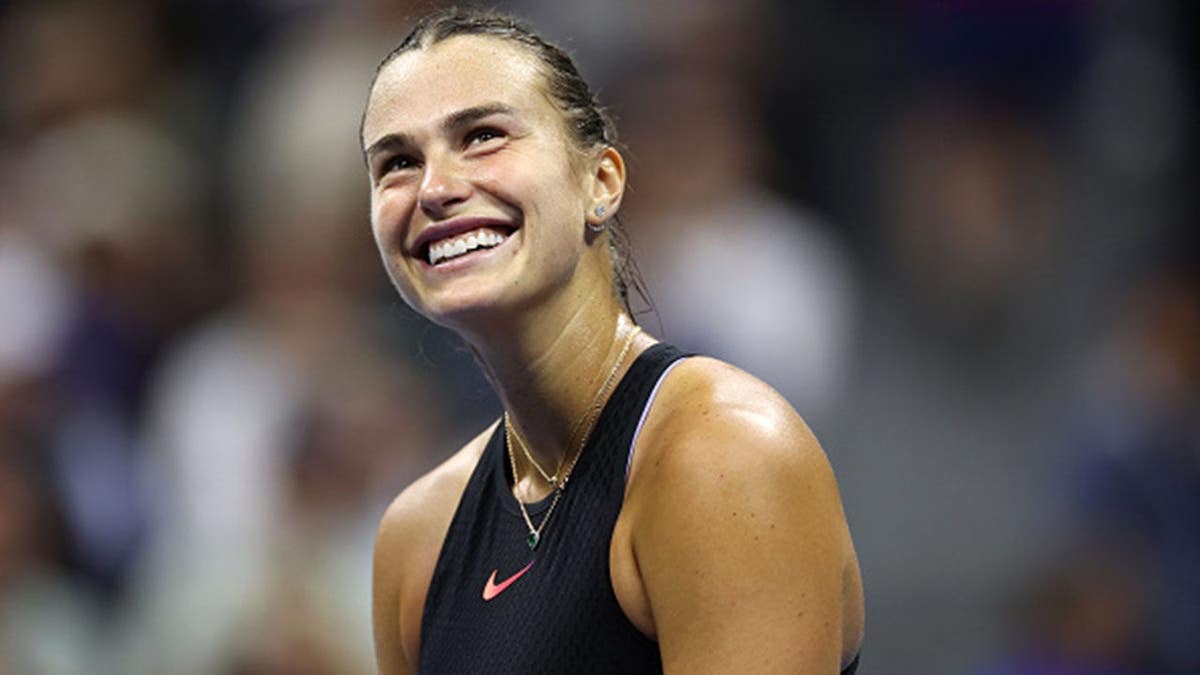
Women’s sports advocate Paula Scanlan expressed support for Aryna Sabalenka, the top-ranked women’s tennis player, after she publicly backed the World Tennis Association’s (WTA) ruling on biological males competing against women. Sabalenka agrees with the new policy, which aims to maintain fair competition by requiring sex testing to verify eligibility.
Scanlan, a former teammate of transgender swimmer Lia Thomas, also discussed Martina Navratilova’s critique of Caitlin Clark’s neutral stance on the issue. The debate intensified when the WTA announced that players must undergo sex testing to compete, a requirement also linked to the 2028 Los Angeles Olympics.
Some argue this policy could be invasive, yet top players like Sabalenka support it. Coco Gauff did not oppose the policy, posing a challenge for activists. Jessica Pegula, ranked No. 3 in the world, also voiced no opposition and noted a lack of complaints from other players.
The policy requires a one-time screening for the SRY gene, typically found on the Y chromosome. Testing can be done by cheek swab, blood, or saliva. A negative result qualifies players to compete; positive results lead to further review.
The WTA aims to ensure equal opportunities, dismissing unfounded claims of invasive exams. While there are privacy and process concerns, these are not grounds to oppose defining eligibility in women’s tennis.
Sabalenka has consistently spoken for fairness in women’s sports, emphasizing the biological differences between men and women. Tennis, reliant on power and endurance, demands such clarity.
Gauff recognized the complex nature of the debate, acknowledging biological differences, yet supporting the trans community. Despite her nuanced approach, she didn’t outright reject the policy, complicating the activists’ efforts to have it denounced.
Jessica Pegula remains mostly apolitical, focused on tennis. Her acceptance of the WTA policy reflects a viewpoint that aligns not with politics, but with a basic understanding of biological reality.
In the locker room, little outcry exists against the policy, contradicting external claims of athlete distress. Complaints have been minimal, suggesting broader acceptance than critics claim.