
Oregon’s spending on low-income housing has surged significantly over the past five years. The state has allocated $1.4 billion to developers, and the cost for constructing each apartment has increased to $540,000. Plans are in motion for another $850 million in state funding for additional projects. Federal tax credits will contribute further funds.
A critical issue persists: the public cannot access details on how these funds are spent. Oregon remains among few states with a public records law exemption that conceals the financial specifics of subsidized housing projects. This prevents researchers and journalists from analyzing costs, crucial in the Pacific Northwest, where affordable housing shortages are linked to homelessness crises.
Margaret Van Vliet, a former director of Oregon’s state housing agency, advocates for revisiting this exemption. Despite fiscal efforts, the homeless population in Oregon grows. Van Vliet states, “For all the public money, we seem to be digging a deeper hole.” In other states, transparency in developers’ financial records has provided insights into escalating housing project costs.
For instance, Los Angeles Times reporters in 2020 exposed costs exceeding $1 million per unit in California, driven by government policies increasing construction expenses. A UC Berkeley study demonstrated California’s annual spend of $300 million on development fees for subsidized housing, sufficient to finance 1,250 additional apartments each year. Gov. Gavin Newsom signed legislation to reduce these fees in July.
Research has shown California’s construction costs are notably high due to requirements for paying above-market wages and high architectural fees. Comparatively, Oregon’s data secrecy obstructs similar analyses. Economist Jason Ward from Rand Corp.’s Housing Center calls Oregon’s secrecy indefensible, asserting that transparency should be paramount, especially as public funds are used.
Oregon’s legislative exemption exists since 1997. Officials warned of revealing financial details, fearing corporate vulnerability. The exemption passed almost unanimously. However, not all subsidized housing details are secret. Portland’s regional government shares project costs funded by a local bond, though it represents only 20% of Oregon’s subsidized housing efforts.
Most housing projects are backed by private developers through the state housing finance agency, Oregon Housing and Community Services. While initial project cost declarations are available, itemized expenses remain confidential, including material costs and fees.
Oregon’s sunshine committee reviews public records exemptions. Charlie Fisher, its co-chair, suggests examining the low-income housing carve-out due to significant public spend implications. Transparency is emphasized for verifying public dollar usage.
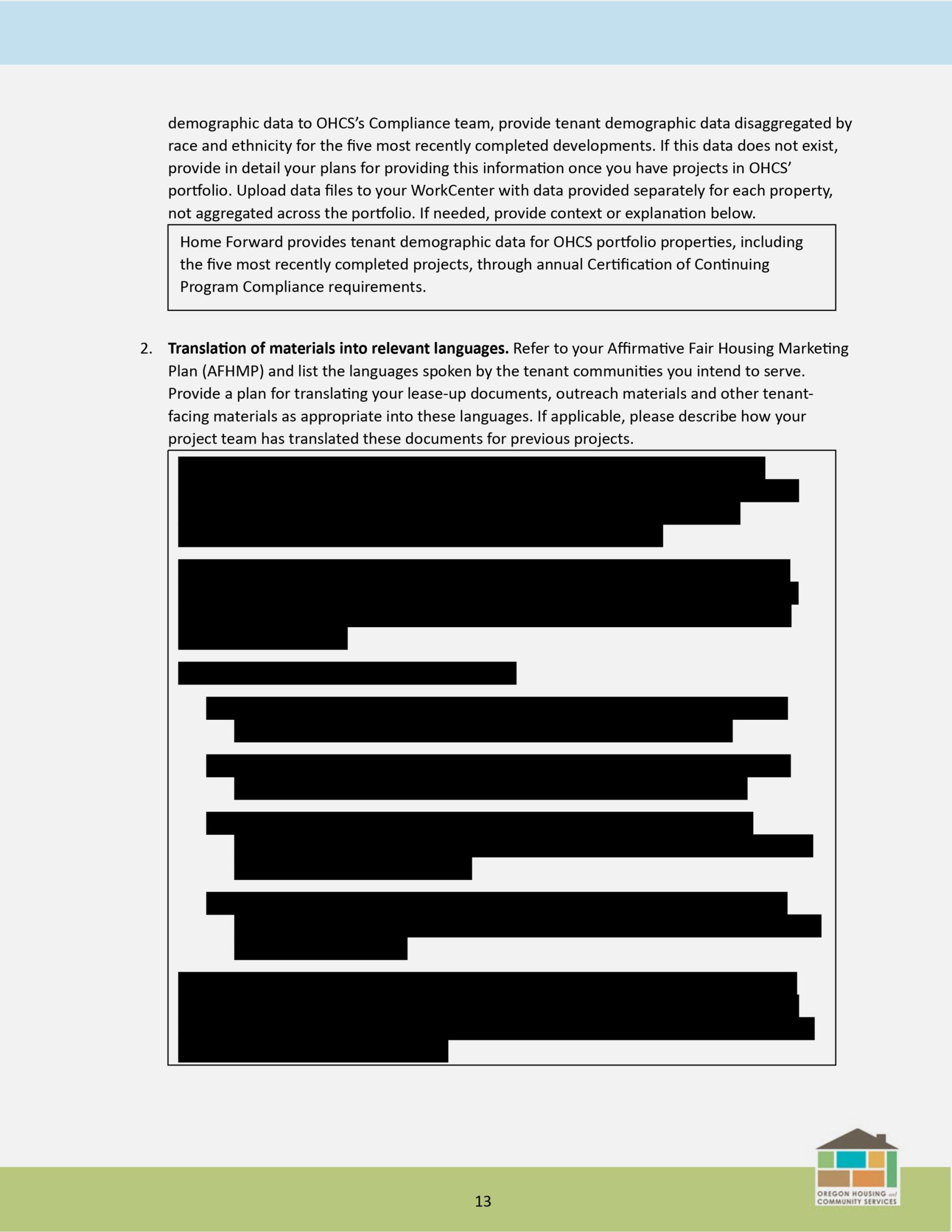
State law mandates secrecy beyond financial specifics. ProPublica’s inquiry into three apartment projects near Portland faced extensive redactions, including tenant language lists and translation plans, which were available without redactions from Portland’s local housing authority.
Andrea Bell, director at Oregon’s housing agency, claims commitment to transparency yet adheres to legal exemptions. Bell acknowledges growing interest in construction costs, expressing consideration of ways to share these costs publicly.
Despite transparency elsewhere, Oregon charged ProPublica $130 for redacted documents, choosing not to waive fees under public resource preservation pretenses. West Coast neighbors like California and Washington have not slowed development due to transparency. Oregon’s opaque practices contrast with these states, where financial details are accessible without hindrance to housing project development.