
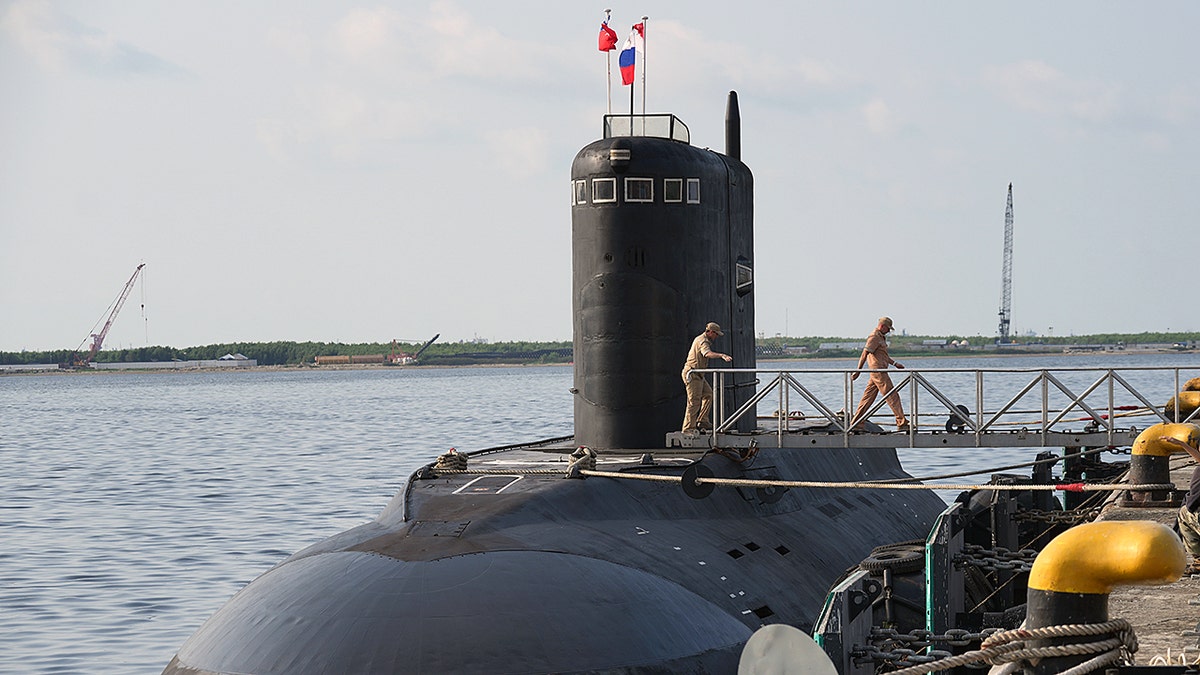
Russia’s advanced nuclear-powered submarines are intensifying the pressure on NATO’s northern defenses. As the alliance works to secure the Arctic and North Atlantic approaches to North America, a former NATO commander highlighted President Vladimir Putin’s new weapons and capabilities accumulating in the region.
The challenge involves Russia’s highly militarized Kola Peninsula, which Moscow has fortified with airfields and ports. Russia aims to strengthen its control along the Northern Sea Route and the waters leading to the Greenland-Iceland-United Kingdom Gap (GIUK Gap).
NATO’s Allied Joint Force Command Brunssum has pointed out that Russia’s submarine threat in the region is serious. The command posted on X about the activity beneath the surface and emphasized the expanding threat.
Russia is modernizing its submarine force, with the Kola Peninsula serving as a strategic hub for the Northern Fleet. These new-generation nuclear-powered submarines are equipped with long-range strike and sea-denial capabilities in the High North. Despite their invisibility under the waves, NATO is monitoring developments closely.
Retired Gen. Philip Breedlove explained that submarines pose a tough threat due to their difficulty to locate and track. Russian submarines are capable of reaching close proximity to the shores of NATO countries, presenting a significant missile threat.
NATO is adjusting its stance in light of increased Russian military activity and the growing strategic importance of the Arctic region.
NATO’s response includes Arctic Sentry, a multidomain initiative led by Joint Force Command Norfolk. This aims to coordinate allied land, air, and maritime activity in the Arctic and High North. Additionally, Finland hosts Forward Land Forces Finland, a multinational force bolstering deterrence in the northeastern flank.
The Arctic’s melting ice has opened the Northern Passage, enabling faster trade routes between Europe and Asia. Russia sees economic potential in controlling these northern waters, prompting upgrades to its Arctic infrastructure.
Russia’s military expansion has prompted caution from NATO. Russian Foreign Minister Sergei Lavrov warned that increased Western military activity risks destabilizing the Arctic region. He stated that it poses a direct threat to Russia’s security and heightens the risk of incidents leading to potential confrontations.
Emma Bussey, the author, is a breaking news writer for Fox News Digital with prior experience at The Telegraph.