
The world of NASCAR regularly presents action both on and off the track, and the events surrounding the latest Bristol night race are no exception. The decision to move this iconic race to September brings challenges with scheduling, especially when pitting it against significant college football games.
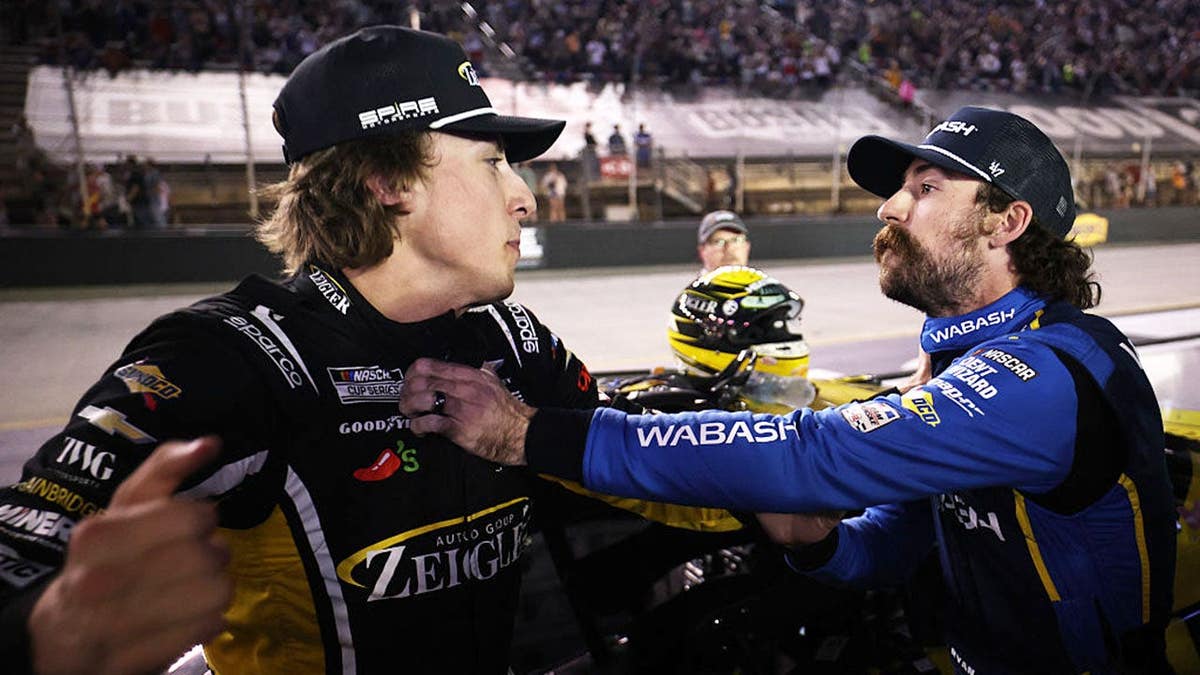
Saturday night saw NASCAR’s most viral moment of the season unfold during the Bass Pro Shops Night Race at Bristol Motor Speedway. The incident involved Ryan Blaney and Carson Hocevar, igniting discussions among fans.
Blaney and Hocevar’s Altercation
After a wreck during the race, an altercation ensued between Blaney, driver of the #12 WABASH Ford, and Hocevar, driver of the #77 Zeigler Auto Group Chevrolet. The confrontation was notable, with Hocevar getting in more hits before Blaney was separated. Spectators reportedly saw Blaney seeking out Hocevar after the wreck, leading to the confrontation.
For those keeping track, Hocevar has been involved in skirmishes over recent weeks, including an encounter with Brad Keselowski. Despite Hocevar’s statement at Daytona that he expected no track enemies during the 10-race Chase, the situation quickly changed.
Reactions and Commentary
Gianna Tulio Blaney, Ryan’s wife, soon added fuel to the fire with pointed comments on social media regarding Hocevar’s alleged behavior. Her statements received attention for their directness, with additional comments from McCall Gaulding, wife of Zane Smith, highlighting a perceived pattern of aggression.
Social media has amplified these exchanges, with NASCAR not requiring the deletion of these posts, suggesting a broader discourse within the community. Further details remain unaddressed publicly, leading to speculation without substantiated evidence.
Ty Gibbs, another NASCAR driver, contributed to the spectacle, hurling a water bottle during the altercation. The incident exemplifies tensions in the racing world.
Broader Implications
As NASCAR navigates these dramatic moments, the need for a ‘villain’ character could be considered advantageous for the sport’s narrative. Carson Hocevar seems to be filling this role, drawing attention both positive and negative.
Those interested in the sport anticipate further developments as the circuit moves to Kansas, while the discourse around NASCAR personalities and behaviors continues.
Writer Zach Dean of OutKick covers these unfolding narratives, highlighting the intersection of sport and personal exchanges.