
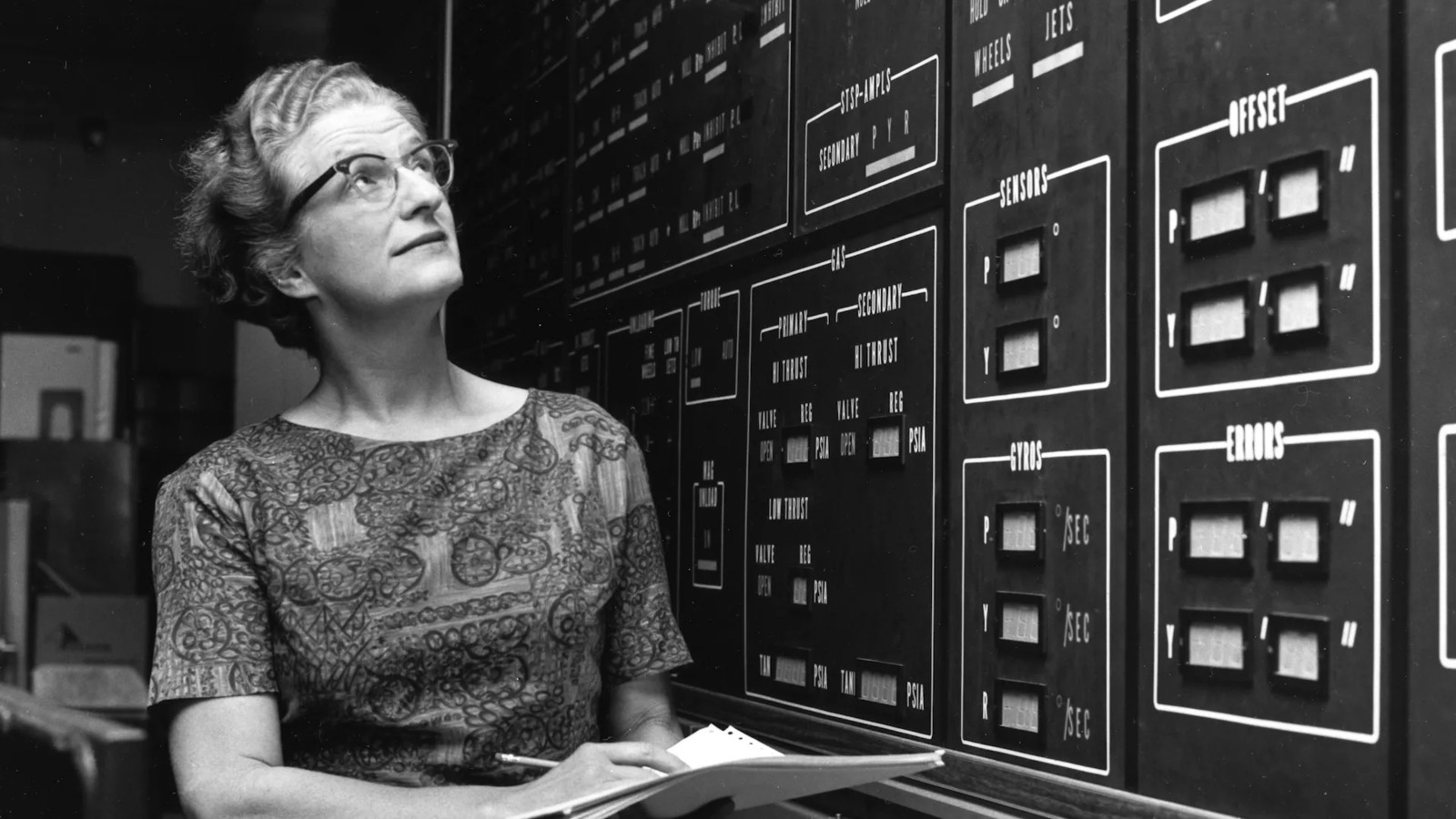
The NASA Nancy Grace Roman Space Telescope commenced its journey on Sunday, launching aboard a SpaceX Falcon Heavy rocket. This mission, valued at $4.3 billion, carries ambitious goals for exploring some of the universe’s most profound questions. The telescope honors Nancy Grace Roman, an influential astronomer, affectionately dubbed the ‘Mother of Hubble’ for her pivotal contributions to NASA’s space astronomy initiatives.
Significance of the Mission
The launch represents one of NASA’s most critical scientific undertakings in recent years. The telescope features an exceptionally wide field of view, poised to enable astronomers to chart large areas of the universe more efficiently than earlier observatories. It aims to enhance the efforts of the Hubble and James Webb space telescopes.
Nicky Fox, director of NASA’s science mission, stated that the telescope is anticipated to discover thousands of supernovae, tens of thousands of planets, billions of galaxies, and tens of billions of stars.
Its findings could significantly alter the comprehension of galaxy formation, planetary development around stars, and the universe’s evolution across billions of years.
Legacy of Nancy Grace Roman
Nancy Grace Roman was NASA’s first chief astronomer and a crucial figure in American space science history. Born in 1925, she advanced in astronomy at a time when gender barriers were strong, as noted by NASA.
Upon joining NASA during its formative years, Roman played a leading role in setting up its astronomy program. She passionately argued for positioning high-powered telescopes beyond Earth’s atmosphere, allowing observations free from atmospheric disruptions. Her vision paved the way for the Hubble Space Telescope, earning her the moniker ‘Mother of Hubble.’ Roman dedicated her life to advocating for scientific progress and increasing access for women in astronomy. She passed away in 2018 at the age of 93.
Purpose of the New Telescope
The Nancy Grace Roman Space Telescope is engineered to perform wide-field surveys of the universe with unprecedented capabilities from space. NASA highlights its field of view as being over 100 times the size of the Hubble Space Telescope’s, enabling rapid imaging of large sky sections without losing sensitivity.
The observatory will undertake a journey lasting more than three months to a location near the second Lagrange point, a stable gravitational area around 1 million miles from Earth, shared by the James Webb Space Telescope.
Roman’s five-year mission involves searching for exoplanets, mapping billions of galaxies, studying black holes, and examining the essence of dark energy and dark matter. By scanning massive areas of the sky, scientists believe it will uncover previously unseen objects and phenomena.