
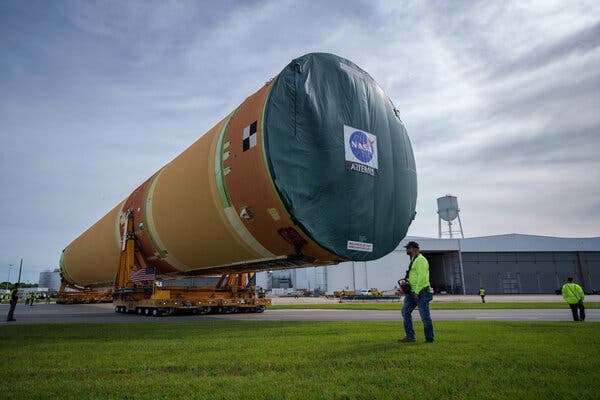
NASA is gearing up to send humans back to the moon, aiming for a more permanent presence and potential future missions to Mars. Artemis III is the third mission advancing this goal.
In April, Artemis II completed a 10-day mission around the moon’s far side. However, Artemis III will focus on closer maneuvers. The mission will see the crew orbiting Earth to test NASA’s Orion spacecraft capabilities. The main goal is to ensure it can successfully rendezvous and dock with lunar landers.
The tests conducted during Artemis III are crucial for future missions. During an actual moon landing, astronauts will transfer from Orion to a lander, which will transport them to the lunar surface and back. SpaceX and Blue Origin are developing two landers for the Artemis program.
Originally planned for 2028, the Artemis III timeline has advanced. NASA now targets mid-2027 to perform these tests in low-Earth orbit, making the mission simpler and less risky.
Increasing the frequency of flights with NASA’s Space Launch System and Orion is beneficial. It allows engineers to identify and resolve potential issues with the rocket or spacecraft.
Unknowns remain, such as the mission’s duration and whether astronauts will try entering a lunar lander. NASA will provide updates during the crew announcement scheduled for Tuesday.
The report comes from Katrina Miller, a science reporter and physics Ph.D. holder, based in Chicago.