
Across the United States, July 4, 2026, will be marked by fireworks displays as Americans celebrate the 250th anniversary of independence. Several cities plan to host impressive shows. However, individual fireworks use also raises significant fire risks, particularly wildfires.
Fire Risks From Fireworks
Fireworks are a common cause of fires in the U.S. Annually, they ignite around 32,000 fires, as observed in 2023. July 4 sees a noticeable increase in fires started by humans.
As of 2026, many areas across the U.S. are experiencing dry conditions. Moderate to severe drought increases the likelihood of fire outbreaks. To combat the dangers, some communities have proactively banned fireworks. Certain regions, such as parts of Colorado, have even canceled professional firework shows in favor of drone displays due to ongoing wildfires and evacuations.
Current Drought Conditions
The first half of 2026 has seen more wildfires than any previous year in the decade. The southeastern U.S. experienced significantly low rainfall, creating an extremely dry spring. By June’s end, over 40% of the area faced severe drought.
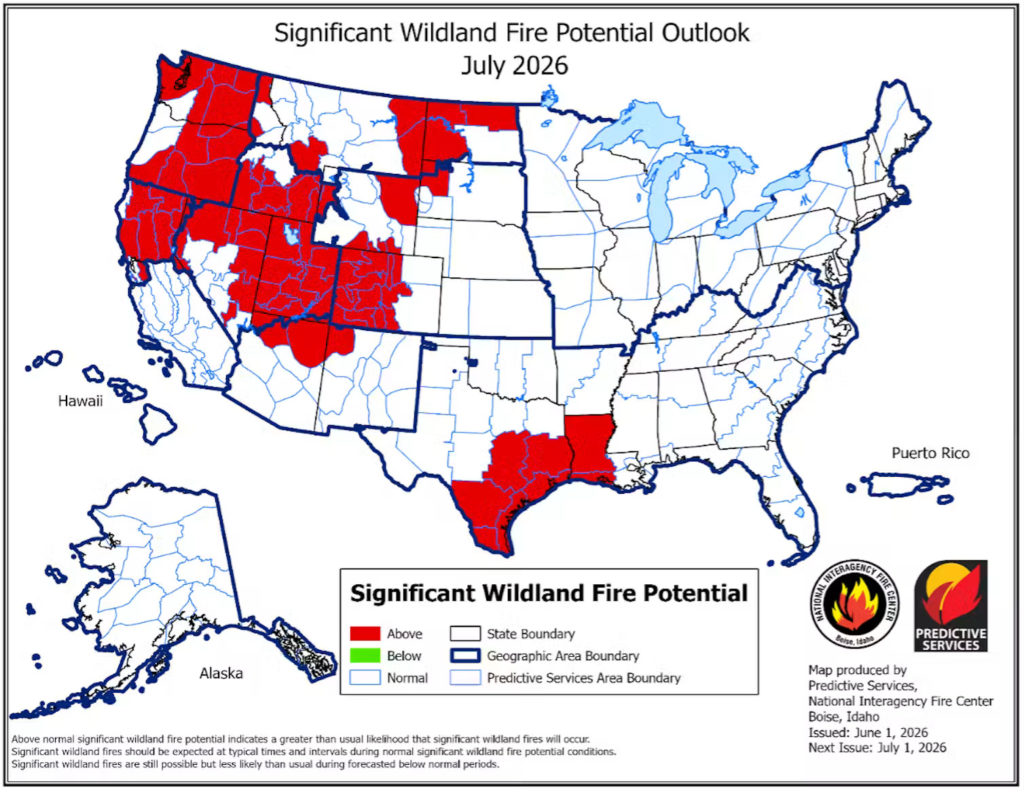
In the West, a lack of winter snow has deprived forests of essential moisture. The Great Plains and West face extreme drought across states like Oklahoma, Nebraska, and Utah. Here, late June fires demanded entire community evacuations. Predictions indicate an above-normal fire risk extending into July, particularly in western U.S. regions and Texas.
Impact of Heat Waves
Coupled with dryness, elevated temperatures in the U.S. West and Southeast augment the fire hazards. Study data between 2001 and 2024 highlight that 42% of land burned in the West occurred during heat waves.
July 4 Firework-Related Fires
Even minimal sparks can trigger fires in hot, arid conditions. Vegetation like shrubs and grasses acts as fuel. Wind elevates the chances of fire spreading. Human activities, be it fireworks or vehicles, are primary culprits.
Between 1992 and 2015, humans started 97% of wildland-urban interface fires. July Fourth features prominently with about 15,000 fires from 1992 to 2020 occurring on this day. Even regions outside the usual fire season, like the eastern U.S., witness an increase of 400 fires on Independence Day.
Professional Advice and Safety
In light of the risks, many states discourage personal firework use. Banning them ensures community safety as injuries from them remain high, with 9,700 cases in 2023. Children accounted for a third of these injuries.
The National Fire Protection Association advises entrusting firework displays to experts who can contain accidental sparks. Public shows not only reduce personal firework expenditures but promise more spectacular and safer experiences for all.
A free press is essential for a strong democracy. Support reliable journalism and public dialogue.