
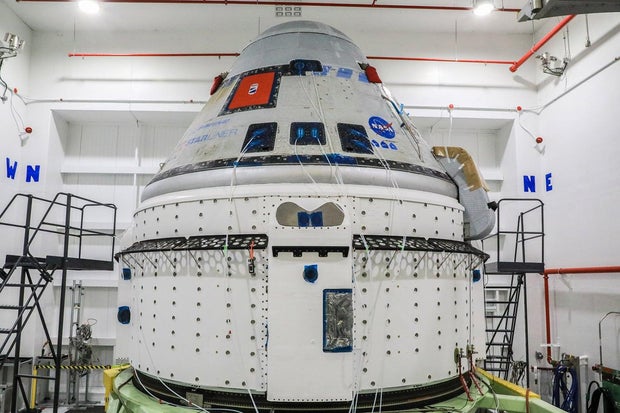
NASA, collaborating with Boeing, plans to launch an unpiloted Starliner capsule between December and January to test enhancements made after a problematic 2024 mission left two astronauts stranded on the space station for over nine months. Should this test flight succeed, NASA and Boeing aim to conduct a piloted Starliner mission by mid-2028. This mission will feature redesigned propulsion system valves, more resilient subsystems, and other modifications to prevent the failures experienced in 2024. Veteran astronaut Warren “Woody” Hoburg is set to command the mission.
Currently, SpaceX’s Crew Dragon capsule is the only operational U.S. astronaut ferry ship. NASA is keen to reintegrate Boeing into the service to maintain a continuous U.S. capability to transport astronauts and researchers to the International Space Station until its scheduled retirement in 2030. Boeing’s Starliner spacecraft is currently housed at the company’s Kennedy Space Center hangar.
Nasa managers also plan to ensure an American spacecraft can support journeys to commercial space stations in the 2030s, post the phase-out of SpaceX’s Falcon 9 rockets and Crew Dragon spacecraft. According to Dana Weigel, manager of NASA’s low-Earth orbit operations, achieving two crew transportation providers is a crucial goal of the Commercial Crew Program to guarantee commercial access to low Earth orbit. The certification of Boeing’s Starliner is vital for supporting the ISS and future commercial destinations.
A post from Boeing stated, “Together with NASA, we’re enhancing Starliner hardware and adding resources for human spaceflight certification. These changes support the spacecraft as a long-term provider of crewed missions to low Earth orbit.”
Astronauts Barry “Butch” Wilmore and Sunita Williams embarked on a Starliner on June 5, 2024, for a planned 10-day test flight to the International Space Station. This was the first piloted launch of a Starliner following two uncrewed test flights, both encountering problems. Upon reaching the space station, Wilmore and Williams experienced several propulsion system helium leaks and thruster failures. Although they docked, their return was repeatedly delayed as NASA and Boeing resolved the technical issues.
An independent review board classified these propulsion mishaps as “close calls” that jeopardized the astronauts. Ultimately, the Starliner returned to Earth without its crew three months post-launch. Wilmore and Williams stayed an extra six months aboard the station, returning home via a Crew Dragon on March 18, 2025. Their predicted 10-day flight extended to 286 days.
The review board identified three major Starliner issues and several less severe shortcomings requiring attention. During the capsule’s approach to the station, five thrusters in the capsule’s service module failed, causing temporary maneuverability loss. The failures were attributed to Teflon “poppets” causing restrictions in the propellant valves. Additionally, a thruster in the Starliner crew module failed during the unpiloted descent, compromising system redundancy. Finally, helium leaks occurred in the propulsion system pressurization plumbing.
The board also concluded the Starliner lacked essential redundancy in the system managing the rocket firing necessary to exit orbit. Despite technical challenges, the Crew Flight Test Starliner safely returned to Earth.
Boeing claimed all identified issues are being addressed alongside operational changes to mitigate unexpected heating contributing to thruster problems. The company aims to replace valves in crew module maneuvering thrusters and implement erosion prevention measures. Service module thruster poppets are undergoing redesign, data recording devices will be faster for detailed thruster performance measurement, and battery and parachute upgrades are underway.
NASA and Boeing plan the unpiloted Starliner 1 mission for December or January to rendezvous with the space station. During flight, controllers will rigorously test the thrusters and pressurization systems, evaluating the implemented fixes. Weigel noted, “Our goal is to fly Starliner One as soon as the vehicle and the team are ready. Testing thermal modifications and challenging the propulsion system are pivotal.”
The performance parameters during Starliner One’s mission near the space station will be stricter. Combining mission data with redesign results will guide final crewed vehicle certification. Weigel reiterated NASA’s commitment to Starliner certification and ensuring commercial crew access to low Earth orbit.
Historically, the Starliner has used United Launch Alliance’s Atlas 5 rockets for space transport, though only six such boosters remain in inventory. Consequently, NASA intends to assist in certifying ULA’s new Vulcan rocket for carrying astronauts aboard Starliner capsules.
ULA posted on X, “We are already working towards the Starliner-1 mission and look forward to continued collaboration with Boeing and NASA to integrate and certify our Vulcan Rocket for human spaceflight.” The company affirmed its commitment to long-term human spaceflight capability in low Earth orbit.